


Browse and search a portion of the collections of the Tides Institute & Museum of Art available online (now consisting of over 8,000 online records in process of completion). The Online Collections are best viewed using Google Chrome or Mozilla Firefox. Search Hints: To search by phrase or multiple word names wrap your criteria in quotes. Example: “Martin Johnson Heade” or “Grand Manan”. For an overview of the collections, see: Collections Overview.
Decorative Arts
This collection consists of examples of decorative arts of the region dating from the early 18th century to early 20th century. Ranging from furniture to ceramics, from clocks to light fixtures, from silver to glass to jewelry, most of the items had passed down through families and houses in the region before coming into the collections. They reflect the cultural legacy of the region. Many other items had left the area and were returned when they came into the collections.
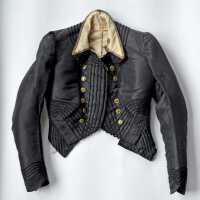
19th Century Clothing | Haas Brothers, New York City
Artist: Haas Brothers, New York City Classification: Textiles Circa: 1890 Old Accession Number: 3022 Gift of Nancy Raye, Eastport, Maine. Came down from the Raye/Wadsworth family of Eastport, Maine.
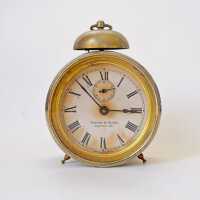
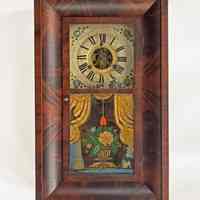
Alarm Clock, c.1880 | Forrest & Roche | Eastport, Maine
Classification: Decorative arts Old Accession Number: 2253 Description: Alarm clock, c. 1880s. Clock has label for Forrest & Roche, jewelers, Water Street, Eastport, Maine. Made by Waterbury Clock Company of Waterbury, Connecticut.
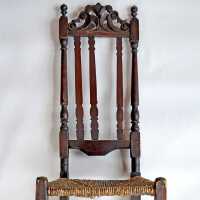
Banister Back Side Chair, c.1710-1735 | Auclair House | Eastport, Maine
Old Accession Number: 2228 C. 1710-1735. Chair came from Roger Segien's grandmothers (Emily Auclair, 1921–1995) house, Washington Street, Eastport, Maine.
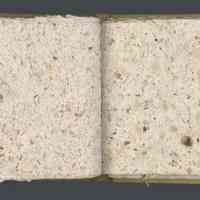
Baychar 15 | Charlotte "Baychar" Morris (1949-2024) | Sample Book of Handmade Papers
6" x 9" x 1 1/8" Gift from the Estate of Charlotte "Baychar" Morris (1949-2024), 2025.
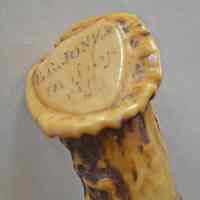
Benjamin R. Jones (1776-1859) | Walking Stick | Dennysville, Maine
Gift from estate of June Hallowell, Dennysville, Maine, 2022.
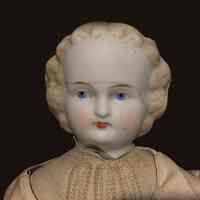
Bisque Porcelain Doll | c.1880s
THREE GENERATIONS PORCELAIN DOLL, 1880s! A family handed down bisque porcelain doll, likely made in Germany or France, that recently came into our collections. It was a childhood doll that belonged to the donor's grandmother, Helen Prince Wadsworth Raye (1880-1968), of Eastport, Maine and dates to the early 1880s. The doll's current dress was made from the grandmother's wedding dress and was likely made by the grandmother later in her life. When her grand-daughter, the donor, was a young child, the grandmother gave her the doll. The donor's first name is the same as her grandmother's and she was likely named for her. Gift of Helen Raye of Buffalo, New York, 2024.
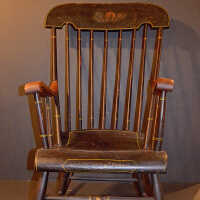
Boston Rocker, c.1820 | Eastport, Maine
Classification: Furniture Circa: 1820 Old Accession Number 2260 Description: Boston rocker. c. 1820. From Eastport, Maine house.
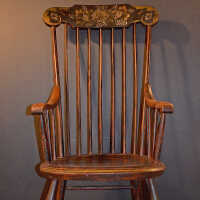
Boston Rocker, c.1830 | Eastport, Maine
Classification: Furniture Circa: 1830 Old Accession Number: 2261 Description: Boston rocker. c. 1830. From Eastport, Maine house.
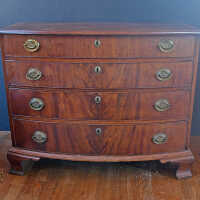
Bow Front Chest of Drawers | Indian Island, New Brunswick | C. 1810
Classification: Furniture Circa: 1810 Old Accession Number: 3004 Description: Bow Front Chest of Drawers that originally came from Indian Island, New Brunswick.

Brass & Iron Standing Lamp, c.1900 | Eastport, Maine House
Classification: Furniture Old Accession Number: 2262 Description: Brass & iron standing lamp. c. 1900. From Eastport, Maine house.
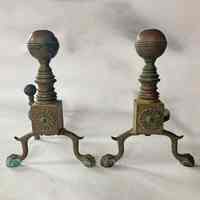
Brass Andirons | Hayden House, 17 Boynton Street, Eastport, Maine
From Hayden House, 17 Key Street, Eastport, Maine.
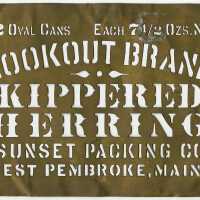
Brass Stencil Plate | Lookout Brand Kippered Herring | Sunset Packing Company, Pembroke, Maine
KIPPERED HERRING, C.1930! Brass stencil plate from our collections for Lookout Brand kippered herring produced by the Sunset Packing Company of West Pembroke, Maine. Brass plate dates to about 1930.
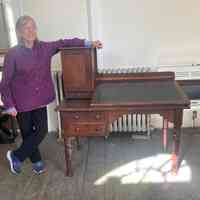
Business Desk | Wadsworth-Raye Family | Circa 1860 | Eastport, Maine
Gift from Susan Raye, Falmouth, Maine 2025 Susan said the desk came from the house of her great-great-grandfather, George Ferdinand Wadsworth (November 1, 1808 - May 15, 1903), at 62 High Street in Eastport, Maine. The desk then descended to George's son, Henry Howard Wadsworth (March 1, 1833 - February 10, 1934), and to his house at 22 Key Street. The desk then descended to Henry's daughter, Mary Howard Wadsworth (July 13, 1872 - November 6, 1970), who never married and lived at 22 Key Street until she died in 1970. Susan's father, Henry Wadsworth Raye (May 24, 1912 - August 5, 2002), got the desk around 1970 and kept it at his home in Eastport. His mother was Helen Prince (Wadsworth) Raye. The desk then descended to Susan Raye of Falmouth, Maine.
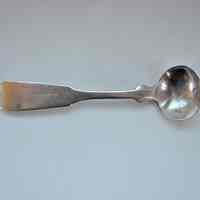
Calais Temperance House Coin Silver Mustard Spoon, c.1840.
CALAIS TEMPERANCE HOUSE, C.1840! Coin silver spoon in our collections that dates to about 1840. It was made by Boston silversmith, Newell Harding. The silversmith maker’s mark with the initials NH are on the back of the spoon as are stamped the words, Calais Temperance House. The Calais Temperance House building in Calais, Maine was built in 1835. By the late 1840s, the house had changed hands and it become known as the American House. Later still, in the early 1900s, the building became the local Masonic Hall. The building still stands on Calais Avenue in Calais.
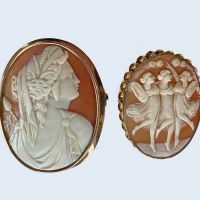
Cameo Brooches
CAMEO JEWELRY, C.1900! Two cameo brooch jewelry pieces in our collections that were passed down through two long time families (Cherry and Whalen) in this area before being placed with us. We're guessing that they both date to about 1900. The one on the left (profile of woman's head from the Cherry family) is 1 7/8" tall and the one right (three muses/graces from the Whalen family) is 1 1/2" tall. We're looking to add more 19th century and early 20th century jewelry pieces from this area to our collections. If anyone has any leads, please let us know. Thanks.
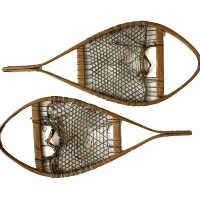
Capt. Samuel Watts | Wooden Snowshoes, c. 1810 | Roque Bluffs, Maine
A pair of handmade wooden snowshoes made over 200 years ago by Capt. Samuel Watts of Roque Bluffs, Maine for his son, Stephen Watts. They date to about 1810. Capt. Watts was born in Boston in 1745 and he died in 1816. His son was born in Jonesboro, Maine in 1803 and died in Roque Bluffs in 1876. The snowshoes are about 38 1/2” in length and 16” in width at their widest point. The hardwood used in making the frame of the snowshoes is mostly likely ash and the webbing between the frame is made from rawhide most likely from deer. Capt. Watts was a veteran of the American Revolutionary War, having taken part in the capture of the British schooner, HMS Margaretta, in nearby Machias Bay on June 11 and 12, 1775. Capt. Watts’ son in turn passed the snowshoes on to his son who wrote the following handwritten note about the snowshoes in the early 20th century: “Roque Bluffs, Maine, June 17th, 1925: These snowshoe raquetts [raquettes] were made by the Samuel Watts who took part in the taking of the Margaretta at Machias for his son Stephen J. Watts and by him given to me John N. Watts his grandson over 50 years ago and I now pass them on to my son Samuel Watts who is named for the same Samuel Watts.” A separate handwritten note by Capt. Watts’ grandson goes on to say: “These Snowshoes are over 100 years old. Presented to Samuel J. Watts by his Father, John N. Watts.” The snowshoes remained in the Watts family for nearly another 100 years and were still in Roque Bluffs when a descendant of the Watts family there decided to sell the family property and move away. The snowshoes were then acquired by the Tides Institute to keep them in the region. Photo Caption: a pair of handmade wooden snowshoes made over 200 years ago by Capt. Samuel Watts of Roque Bluffs, Maine for his son. They date to about 1810.
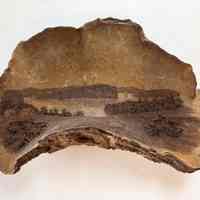
Carved Passamaquoddy Bay Conk Fungi | Arthur E Harris, Crawfords, 1890
Harris, Dated 1890 Carved Passamaquoddy Bay Conk Fungi Arthur E Harris, Crawfords, 1890 10" high, 14 1/2" wide, 5" deep. Losses, soiling. Gift of Larry Lafoe, 2024
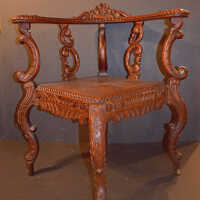
Carved Wooden Corner Arm Chair | Calais, Maine
Circa: 1880 Old Accession Number: 2275 Description: Carved Wooden Corner Arm Chair. From Calais, Maine. c. 1880. Perhaps used in a photographer's studio.
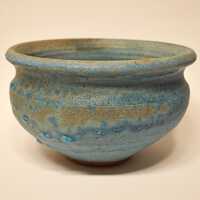
Ceramic Bowl | Donald Sutherland | Eastport, Maine
Artist: Donald Sutherland Classification: Ceramics Old Accession Number: 1543
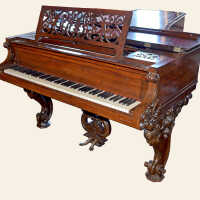
Chickering Grand Piano, 1868 | Norwood House | Eastport, Maine
A grand piano made by the Chickering and Sons piano company of Boston, Massachusetts in 1868. The piano serial number is: 32980. For many years, the piano was owned by Benjamin Whelpley, a pianist and composer of piano music, who was born in Eastport, Maine in 1864 and who had a long career in Boston. Whelpley maintained the family home, an impressive historic greek revival house, in Eastport where the piano long resided. Dennis Hooper, of Saint John, New Brunswick, recently related some of the story of Whelpley and the Chickering piano as Hooper used to spend weekends during the summer months in the Whelpley house in Eastport while Whelpley was still alive. According the Hooper, Benjamin Whelpley lived at the house when he was not performing elsewhere. The Chickering grand piano was given to Whelpley by the Chickering Piano company. The piano is hand carved and made of rosewood and copper strung. Benjamin Whelpley took the piano everywhere where he was performing. When he was at Eastport, Whelpley would give concerts at the house on Sundays and many people, including President Franklin Roosevelt and Eleanor Roosevelt when they were at their summer cottage on nearby Campobello Island, New Brunswick, would come to hear the concerts. Whelpley died in 1946 and the piano remained in the house until 2007 when new owners of the house donated it to the Tides Institute. The piano remains in relative good shape and the Tides Institute hopes to have it restored and played again. Photo Caption: Grand piano made by the Chickering and Sons piano company of Boston, Massachusetts in 1868. For many years, the piano was owned by Benjamin Whelpley, a pianist and composer of piano music, who was born in Eastport, Maine in 1864 and who had a long career in Boston. Classification: Musical instruments Circa: 1868 Old Accession Number: 3009 Description: 1869 Chickering Grand Piano, Boston, Massachusetts. From Norwood House, 15 Key Street, Eastport. Gift of Christopher and Janet Palumbo, 15 Key Street, Eastport, Maine in 2007. Piano originally belonged to composer, Benjamin Whelpley, who once owned the Norwood House, 15 Key Street, Eastport, Maine. Piano serial number is: 32980. The piano was built in about 1868. Age dated using this website: http://www.total-piano-care.com/chickering-and-sons.html.
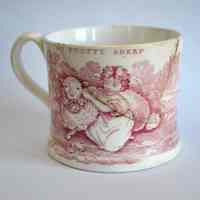
Child's Cup | c.1820
An early 19th century transfer mug that was pieced back together from a two pieces.The mug dates to about 1820. One side of the mug reads “A Pretty Sheep” while the other side reads “The Young Sportsman.” The larger part of most of the mug was unearthed in 2018 during the excavation of a six foot deep 19th century household “dump” in this region that was filled with thousands upon thousands of beautiful, but broken early 19th century ceramic and glass shards. The “dump” was on the site of a large house built in 1824 and torn down in the early 1960s. The house underwent considerable renovation in the mid-19th century. During this renovation, the existing house pantry full of ceramic and glass ware was likely cleared out and thrown in the “dump.” Some ceramic and glass shards came into the institute’s collections during this initial excavation, but much was also taken out of the region to Portland, Maine and to North Dakota. The institute sought the return of what was removed from the area. All that went to the Portland area is now back in the institute’s collections. Nearly all (including this piece), with the exception of two pieces, that went to North Dakota is now back in the institute’s collections. In 2020, another excavation of the same household “dump” was undertaken and several hundred more ceramic and glass shards were found, some of which perfectly matched shards unearthed two years before, including one piece that completed this mug. About 100 ceramic and glass pieces have been put back together, either entirely or nearly entirely.
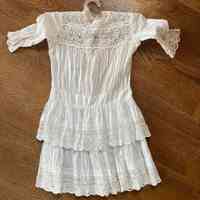
Child's Dress | From Grady House, 1 Adams Street, Eastport, Maine
Gift of Elaine and John Miranda, 2025
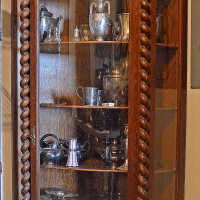
China Cabinet | Elm Cottage | Eastport, Maine
Classification: Furniture Circa: 1880 Old Accession Number: 3014 Description: Cabinet came from Joyce Emery Kinney, Eastport, Maine. From Emery family Elm Cottage, Elm Street, Eastport, Maine.
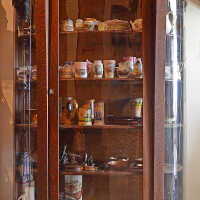
China Cabinet | Maine
Old Accession Number: 3012 Description: Gift of Ann French.
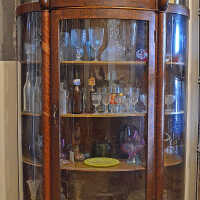
China Cabinet | Naomi (Rutherford) Spencer | Eastport, Maine
Classification: Furniture Circa: 1885 Old Accession Number: 3013 Description: China Cabinet. From Naomi (Rutherford) Spencer house, Eastport, Maine.
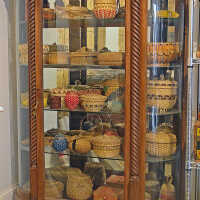
China Cabinet, c.1890 | Kilby House | Eastport, Maine
Old Accession Number: 3015 Description: China Cabinet. Has Paine Furniture Company (Boston, Massachusetts) label on back of cabinet. Gift of John Pike Grady, Eastport, Maine. From the Herbert and Harriet Kilby house 122 Water Street, Eastport, Maine.
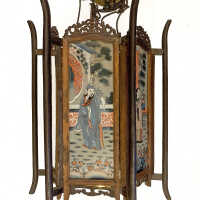
Chinese Hanging Lantern, 19th Century | Wells-Shober Cottage | Campobello, New Brunswick
Classification: Furniture Old Accession Number: 2203 Description: Originally from Wells-Shober Cottage, Campobello, New Brunswick. From the Emery family Elm Cottage, Elm Street, Eastport, Maine. Gift of Joyce Emery Kinney, Eastport, Maine. Her father had once purchased the Wells-Shober Cottage including contents. Joyce tells of her father and brother bringing a truckload of furniture from the Cottage over to Eastport. From Sunrise County Architecture (2nd revised and enlarged edition) 1996, p.119 WELLS-SHOBER COTTAGE Willard T. Sears, of Boston, designed the Wells-Shober Cottage for American lawyer Samuel Wells, once president of the Campobello Company. This building was finished in 1884, at about the same time as the building of the three Campobello hotels for which Sears drew the plans. All four buildings were Queen Anne Revival designs. With a steep hip roof, dotted with gables and dormers, this two-and-a-half story cottage was built with railings, both inside and on the facade. The roof was a bell-cast design with two chimneys. Walls of this wooden frame building are protected by clapboards, first painted brown (with white trim), but since painted all white by the Park Commission. When the living room, with fireplace, was given an addition encircling that room, the outside veranda had to be rebuilt as well. Besides dining room and kitchen, on the first floor, there are not only four second floor bathrooms but two railed verandas, while three bedrooms, each with a bath, occupy the third floor. The Park Commission remodeled the Well-:Shober Cottage for use as a guest house. This cottage is across the street (Route 774 from Lubec to Welshpool, N.B.) from the Hubbard Cottage, which is seven years younger. The Wells family sold their cottage to Mary Norris Cochrane in 1912, and her daughter Edith Shober (Mrs. Rex) inherited it in 1918. The Park Commission acquired the Wells-Shober Cottage in 1965, and it was the first cottage to be redecorated and used for Commission meetings. NHSD, JCB
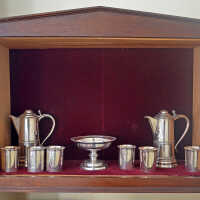
Church Communion Service | Central Congregational Church | Eastport, Maine
Classification: Silver Old Accession Number: 3003 Description: Church communion service. From 1828 Seaman's Church building. 26 Middle Street, Eastport, Maine that was gifted to the Tides Institute & Museum of Art in 2016.
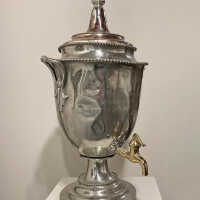
Coffee Urn | Rose Standish Steamship | c.1880
A late 19th century silver plate coffee urn that is engraved with the name “Rose Standish” on its front. The coffee urn was made for the steamship, Rose Standish, that made regularly scheduled trips in this region in the late 19th century between Calais and Eastport in Maine and St. Andrews in New Brunswick. The coffee urn stands 22 inches high and 11 inches wide. It is entirely made of silver plate with the exception of a brass spigot. There are no identifying maker’s marks on the coffee urn so it is unknown who may have made it. The Rose Standish was built in Williamsburg, New York by Lawrence and Foulks in 1863. The steamship was 154 long, 27 feet wide and 392 tons. In 1887 the steamship was sold to the Frontier Steamship Company of Calais. Thirteen years later, in 1900, the Rose Standish caught fire and sank while docked along the Calais, Maine waterfront. Nearly a century later, in the mid to late 1990s, two brothers from Calais, Darren and David Townsend, got permission from the City of Calais to explore the wreck of the Rose Standish that still lay submerged in the waters edge of the St. Croix River. Darren had a lobster boat for the salvage operation and he did the diving to the underwater Rose Standish wreck and found the still intact, though damaged, coffee urn. Several years later, Darren sold the coffee urn to a local Calais antique dealer, Kerry Pinnette. Pinnette had the coffee urn cleaned, polished and repaired by Macel Doucet of Brass ’n Things of Saint John, New Brunswick. Pinnette soon sold the restored coffee urn to another local Calais area antique dealer, Brian Smith, who contacted the Tides Institute and sold the coffee urn to the institute in 2006. Rescued from the wreck of the steamship, Rose Standish, that burned and sank in 1900 along the Calais, Maine waterfront. The Rose Standish was built in 1863. Silver-plate. 22 inches high, 11 inches wide. Reply to Facebook post in group, Old Pictures of Eastport, Maine, June 27, 2022 of photograph of steamship, Rose Standish, docked at Eastport, Maine waterfront in 1890 from Brian Smith: "Great photo, thankyou for sharing, history of the "ROSE STANDISH ",was built in Williamsburg, New York, by Lawrence &foulks in 1863,she was sold to frontier steamboat company in 1887,she was 154 feet long over all ,her beam was 27 feet, she weighed in at 392 gross tons .the ROSE STANDISH, sailed the st.cr st.croix river between Maine and New Brunswick ,from Calais to Eastport and over to st.andrews, New Brunswick and making stops to other small communities in between. She was destroyed by fire while docked at the Calais pier in 1900.,some artifacts have been recovered, one in particular, the original coffee urn that was used by the crew and passengers, is in the tides institute and museum of art,I had purchased it from Calais antiques owner, Kerry pinett [Pinnette] over a decade ago, he had purchased it from a local Calais resident and collector of marine artifacts of the local area, I decided to sell it to the tides institute and museum of art, to make sure that it forever stayed where it belonged and its history preserved for future generations of our citizens of downeast Maine and beyond, glad that an important part of our corner of downeast Maines history has gone full circle, and an historic artifact of the ROSE STANDISH is back again, to tell its memories of a time long ago in the annuals of downeast Maine." Telephone conversations with Brian Smith, July 10 and 11, 2022: Two brothers, David Townsend and Darren Townsend, of Calais, Maine were the people who recovered the coffee urn from the submerged wreck of the Rose Standish in the waters next to the Calais waterfront. This would have been in the mid to late 1990s. Darren had a lobster boat and they got permission from the City of Calais to do the salvage operation. Darren did the diving. Darren then sold the coffee urn to antique dealer, Kerry Pinnette, of Calais, Maine. Kerry had the coffee urn restored by Brass 'n Things of Saint John, New Brunswick as he knew Marcel Doucet the owner and he was having a number of things restored by Brass 'n Things at this time. Kerry only owned the coffee urn for 3-4 months and he then sold it to me (Brian Smith). Kerry must have bought the coffee urn in about 2005 as I (Brian Smith) sold the urn to the Tides Institute in 2006 after owning it for a couple months. David Townsend now works for the Calais High School as a custodian. Darren has moved to Florida. Coffee Urn was restored by Brass 'n Things of Saint John, New Brunswick: "Established in 1976, Brass "N" Things has been proudly providing antique restoration services through the Atlantic region. Locally owned and operated, we are skilled in all facets of our trade. We off our expertise for all antique lighting and repair. Door hardware, fireplace accessories. Full restoration to all Church accessories. Tabernacles, Collection Plates, Candlesticks, Chalices, etc. Dedicated to every detail in the restoration and conservation of find metalware, antiques, and collectibles. We will make your artifacts new again. We strive for outstanding customer satisfaction. We buy scrap Gold & Silver, Old Coins. Antiques bought & Sold!"
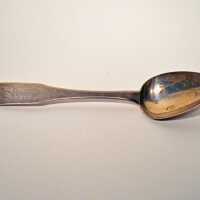
Coin Silver Spoon | Stephen Boardman | C.1815 | Eastport, Maine
Artist: Stephen Boardman Classification: Silver Circa: 1815 Old Accession Number: 1550 Description: Coin silver spoon by Stephen Boardman. c.1815. Boardman was working at Eastport, Maine at this time. Gift of Joyce Emery Kinney of Eastport, Maine. Stephen Boardman Born: 24 May 1782, Islesboro ME Marriage: Elizabeth Farrow in 1811 in Islesboro ME Died: 30 Jun 1855, Hope ME General notes: Silversmith Events in his life were: He worked c 1810 as a silversmith in Eastport ME with a shop opposite Market Wharf. He specialized in making flatware goods. 3
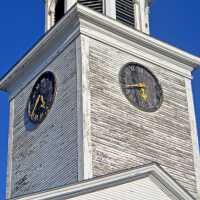
Congregational Church Clock | George Holbrook | 1836 | Eastport, Maine
Artist: George Holbrook Classification: Architectural elements Circa: 1836 Old Accession Number: 2277 Description: Clock on the steeple of the Congregational "Seaman's", 26 Middle Street, Eastport, Maine. Church and clock are owned by the Tides Institute & Museum of Art. Clock was made by George Holbrook. From: http://homepages.sover.net/~donnl/mainemakers.html HOLBROOK, Georgexxxix Eastport 1767-1846 xxxix. Smith in 24, Pg. 473, names Holbrook as the maker of the tower clock in the Eastport Congregational Church. No place, no date. Drepperd in 8, Pg. 236, lists a George H. Holbrook as in Brookfield and Medway, MA (1800's). Palmer in 18, Pg. 213, lists a Major George Holbrook in Wrentham, MA. He is therein recorded as a bell founder and maker of clocks placed in various meeting houses. He therefore could be a maker of either gallery or tower clocks, but there is no specific mention of tower clocks by him. Frederick Shelley and Carroll Morse (pers. coms.) affirm that Major George Holbrook was indeed the maker of this clock. 23. SMITH, Charles W.. Jr., A History Of Clockmaking In Maine From 1750 to 1900: BULLETIN of the National Association of Watch and Clock Collectors, Inc., Vol. XV, No. 9, Whole Number 163, April 1973: 514 Poplar Street, Columbia, PA. 17512 24. SMITH, Dr. Charles W., THE TOWER CLOCKS OF MAINE: A Report by Chapter 89: BULLETIN of the National Association of Watch and Clock Collectors, Inc., Vol. XX, Whole Number 196, October 1978: 514 Poplar Street, Columbia, PA 17512
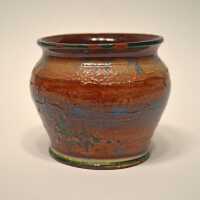
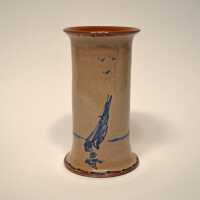
Cottage Craft CPC Pottery | St. Andrews, New Brunswick
Old Accession Number: 1565
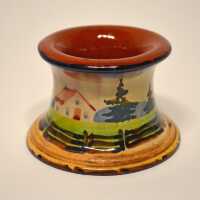
Cottage Craft CPC Pottery | St. Andrews, New Brunswick
Old Accession Number: 1564
Cottage Craft CPC Pottery | St. Andrews, New Brunswick
Old Accession Number: 1558
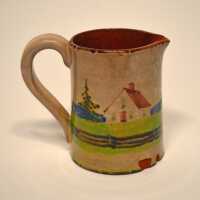
Cottage Craft CPC Pottery | St. Andrews, New Brunswick
A pottery pitcher that was created as part of the Charlotte County Cottage Craft industry initiative founded in St. Andrews, New Brunswick by Grace Helen Mowat in 1913. It dates to the 1920s. Mowat was born in St. Andrews in 1875, studied art in London (Richmond School of Art and Music )and New York City (Cooper Union) and then briefly taught art in both New England and Nova Scotia. She then returned to St. Andrews to help care for her aging parents and their farm at Beech Hill. Then and there she came up with the idea of establishing a cottage craft industry the would help give employment and income to the rural women of Charlotte County, New Brunswick. Cottage Craft initially focused on yarns naturally dyed in colors reflective of Charlotte County landscape and seascape. The yarns were then sold directly as yarn or woven into products for sale such as sweaters and cardigans as well as colorful bags and figurative dolls. With the success of the yarn and weaving industry part of Cottage Craft, in the early 1920s Mowat next attempted to expand the industry by including linen and pottery. Neither proved to have longer term success after several shorter term attempts. The pottery that was produced using local clays and ranged from small vases and candle holders to small pitchers and plates, again, decorated in colors and scenes reflective of Charlotte County. With the coming of the second World War, Mowat’s oversight of Cottage Craft began to end and successors were found to continue the industry. Mowat died at her Beech Hill farm at the age of 90 in 1964. Photo caption: Cottage Craft pottery pitcher decorated with a cottage, field fence, tree and background of blue sea. The pitcher dates to the 1920s. Old Accession Number: 1526
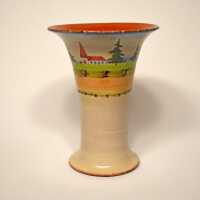
Cottage Craft CPC Pottery | St. Andrews, New Brunswick
Old Accession Number: 1525
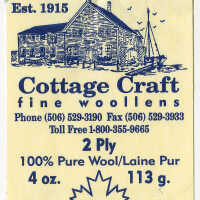
Cottage Craft Label | St. Andrews, New Brunswick
Old Accession Number: 1181
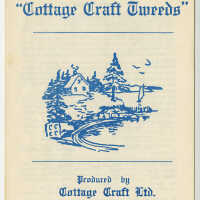
Cottage Craft Tweeds Booklet | St. Andrews, New Brunswick
Old Accession Number: 1798
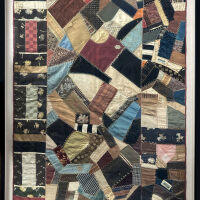
Crazy Quilt | Emma Augusta Bucknam Wadsworth | Eastport, Maine | 1895
CRAZY QUILT, 1895! Crazy quilt in our collections that was made by Emma Augusta Bucknam Wadsworth of Eastport, Maine in 1895. The quilt itself is 44” wide by 56” high. Emma, who was born in Eastport in 1845, made the quilt when she was 50 years old for her niece, Marion Sabine Paine (married name), and she signed and dated the quilt in thread “Aunt Emma 1895.” Emma passed away six years later in 1901 at age 56. The quilt then came down through several generations of the Wadsworth family. Marion gave the quilt to her daughter, Emily Paine Fried (married name) who in turn gave it to her daughter Louise Wadsworth Fried Peck (married name). Louise gave the quilt to John L. Raye of Connecticut who is also a direct descendent and great grandson of Emma Augusta Bucknam Wadsworth. John and his wife, Frances Trzcinski, donated the quilt to the Tides Institute in the spring of 2022 so that the quilt could come “home” to Eastport where it began. We are very grateful to them. Quilt made by Emma Augusta Bucknam Wadsworth, Eastport, Maine. Given to Marion Payne, daughter of Major George Sabine and Addy Wadsworth Sabine (Clark). Identified by Louise Wadsworth Peck. Framed Dimensions: 49 3/4" wide x 61 1/2" high. Quilt dimensions: 44" wide x 56" high. A quilt made by my Great Grandmother, Emma Augusta Bucknam Wadsworth and generously given by the Peck family of Cambridge! Emma Augusta Bucknam Wadsworth BIRTH 3 Feb 1845 Eastport, Washington County, Maine, USA DEATH 15 Feb 1901 (aged 56) Eastport, Washington County, Maine, USA BURIAL Hillside Cemetery Eastport, Washington County, Maine, USA Emma Augusta Bucknam married Henry H. Wadsworth to become Emma Augusta Bucknam Wadsworth quilt dates to 1895 and signature (in thread) in the quilt: "Aunt Emma 1895" Emma's sister in law was Adelaide Wadsworth Sabine, she was married to George Sabine (killed during the Civil War at Petersburg) quilt was made for and given to Adelaide and George's daughter, Marion (Emma's niece and hence the "Aunt Emma 1895" woven in thread in the quilt Marion passed the quilt on to her daughter _______________ Marion's daughter in turn passed the quilt onto to her daughter, Louise Peck (Marion's granddaughter) of Cambridge, Massachusetts (Louise Peck now has Civil War diaries of George Sabine). Louse Peck gave quilt to John Raye one to one and half years ago. John Raye and his wife, Frances Trzcinski, donated the quilt to the Tides Institute & Museum of Art in the spring of 2022. From John L. Raye by email, August 29, 2022: Emma Augusta Bucknam Married Henry Howard Wadsworth both of Eastport. Emma was the maker of the quilt. It was made for her niece Marion Sabine daughter of George Sabine and Frances Adelaide Wadsworth Sabine, (both from Eastport) Henry Howard Wadsworth's beloved sister. Marion Sabine Paine's ( married name ) daughter Emily Paine Fried (married name) inherited the quilt which was given to her daughter Louise Wadsworth Fried Peck (married name) who gave the quilt to John L. Raye also a descendent of Emma Augusta Bucknam Wadsworth. John gave the quilt to the Tides Institute and Museum of Art. The quilt was signed "from Aunt Emma 1895". This quilt has found it's way home through direct decent.
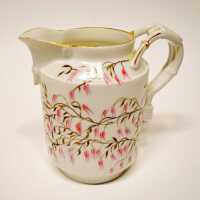
Creamer | Hand painted china | M.J. Thompson | 1887 | Cherryfield, Maine
Artist: M.J. Thompson Circa: 1887 Old Accession Number: 1523 Description: Signed M.J. Thompson, 1887. Mark on china is CFH - GDM which is the manufacturer of the pre-painted set. CFH - GDM is Haviland Limoges from 1881-1890 France.
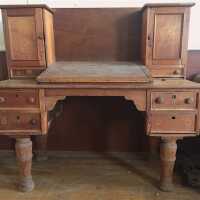
Desk on Frame, c.1840 | Eastport, Maine
Old Accession Number: 3016 Desk c.1840 from Eastport, Maine.
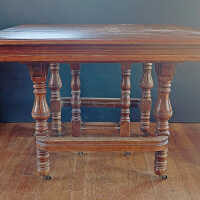
Dining Room Table, c.1890 | Kilby House | Eastport, Maine
Old Accession Number: 3005 Dining Room Table, c.1890. Gift of John Pike Grady, Eastport, Maine. From the Herbert and Harriet Kilby house 122 Water Street, Eastport, Maine. Made by Paine Furniture Company, Boston, Massachusetts.
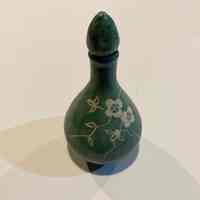
Dorothy Waide (1894-1974) | Hand Painted Vase | | Eastport, Maine
Dorothy Waide (1894-1974) Gift of Eleanor Norton, Eastport, Maine, 2023. Notes from Eleanor Norton, 2023: This piece was given to Eleanor Norton by Helen McConnell in the 1970s. Helen said it was by made by Dorothy Waide.
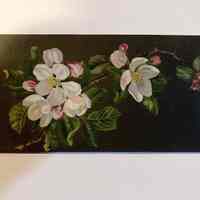
Dorothy Waide (1894-1974) | Painting on Glass | Eastport, Maine
Dorothy Waide (1894-1974) Gift of Eleanor Norton, Eastport, Maine, 2023. Notes from Eleanor Norton, 2023: This piece was given to Eleanor Norton by Helen McConnell in the 1970s. Helen said it was by made by Dorothy Waide.
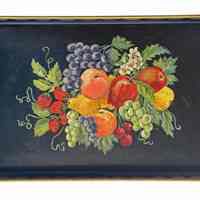
Dorothy Waide (1894-1974) | Tole Painted Tray | Eastport, Maine | c.1940
Dimensions: 17 7/8" wide by 11 7/8" high.
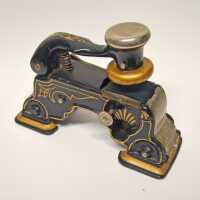
Eastern Steamship Company Ticket Stamp | Eastport, Maine
Old Accession Number: 1576 Description: Leavitt's Insurance Ticket Agency, Eastport, Maine
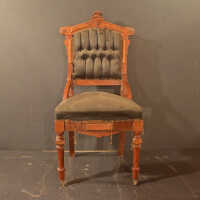
Eastlake Chair #1, c.1880 | Grady House | Eastport, Maine
Old Accession Number: 2291 Eastlake chair. Gift of Gregory Noyes, 122 Water Street, Eastport, Maine. From Grady house, 1 Adams Street, Eastport, Maine.
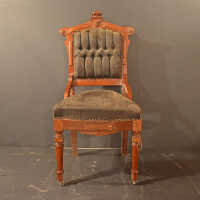
Eastlake Chair #2, c.1880 | Grady House | Eastport, Maine
Old Accession Number: 2292 Eastlake chair. Gift of Gregory Noyes, 122 Water Street, Eastport, Maine. From Grady house, 1 Adams Street, Eastport, Maine.
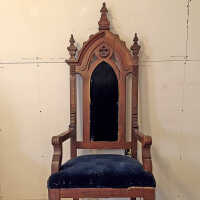
Eastlake Chair, c.1860 | Washington Street Baptist Church | Eastport, Maine
Old Accession Number: 2259 Eastlake chair. c.1860. From Washington Street Baptist Church, 36 Washington Street, Eastport, Maine.
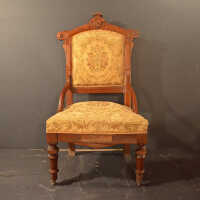
Eastlake Chair, c.1880 | Grady House | Eastport, Maine
Accession Number: 2286 Eastlake chair. Gift of Gregory Noyes, 122 Water Street, Eastport, Maine. From Grady house, 1 Adams Street, Eastport, Maine.
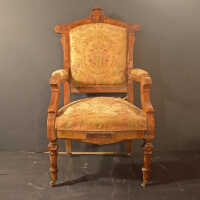
Eastlake Chair, c.1880 | Grady House | Eastport, Maine
Old Accession Number: 2283 Eastlake chair. From Grady house, 1 Adams Street, Eastport, Maine. Gift of Gregory Noyes of 122 Water Street, Eastport, Maine.
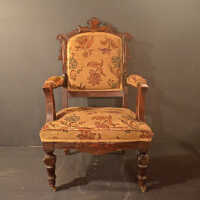
Eastlake Living Room Chair c.1880 | Flagg Family | Eastport, Maine
Old Accession Number: 2293 Eastlake living room chair, c. 1880. Furniture had come down through the Flagg Family of Eastport, Maine.
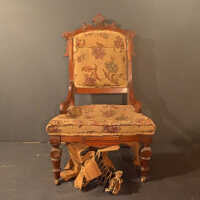
Eastlake Living Room Chair, c.1880 | Flagg Family | Eastport, Maine
Old Accession Number: 2294 Eastlake living room chair, c. 1880. Furniture had come down through the Flagg Family of Eastport, Maine.
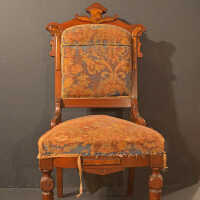
Eastlake Living Room Chair, c.1880 | Flagg Family | Eastport, Maine
Old Accession Number: 2224 Eastlake living room chair, c. 1880. Furniture had come down through the Flagg Family of Eastport, Maine.
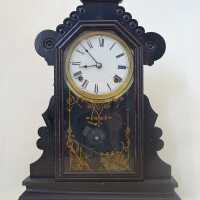
Eastlake Shelf Clock, c.1880s | Calais, Maine
Old Accession Number: 2255 Eastlake shelf clock, c. 1880s. From Calais, Maine.
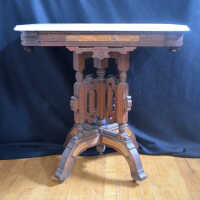
Eastlake Side Table | Central Congregational Church | Eastport, Maine
Old Accession Number: 3002 Eastlake Side Table, c.1880. From 1828 Seaman's Church building. 26 Middle Street, Eastport, Maine that was gifted to the Tides Institute & Museum of Art in 2016.
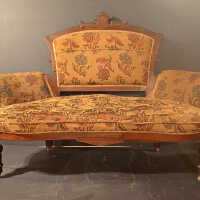
Eastlake Sofa, c.1880 | Flagg Family | Eastport, Maine
Old Accession Number: 2284 Eastlake living room sofa, c. 1880. Furniture had come down through the Flagg Family of Eastport, Maine.
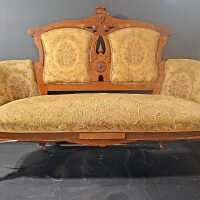
Eastlake Sofa, c.1880 | Grady House | Eastport, Maine
Old Accession Number: 2282 Eastlake sofa. From Grady house, 1 Adams Street, Eastport, Maine. Gift of Gregory Noyes of 122 Water Streeet, Eastport, Maine.
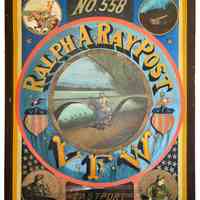
Edgar W. Omheis | Ralph A. Ray V.F.W Post 558 | Eastport, Maine | 1932
Created by by Edgar W. Ohmeis, September 5, 1932. Dimensions: 92" high x 71" wide. Originally mounted inside the V.F.W. Hall in Eastport, Maine located at the corner of Middle and Key Streets.
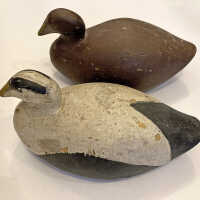
Eider Duck Decoys | Lubec, Maine | c.1930s
Two wooden male and female eider duck decoys that likely date to the 1930s. They belonged to Alger W. Pike (1899-1980) of Lubec, Maine who was an avid hunter, fisherman, and gardener as well as amateur ornithologist. He was an owner with his brothers and others of the Holmes Sardine Company and the Trident Packing Company. He also worked in New York City and Washington, D.C. The decoys are about 15 1/2 inches long and about 8 inches high. There are no maker’s marks on the decoys though one has the number 22 in red and the other has Alger Pike written on it in pencil. They were acquired by the Tides Institute from Decoys Unlimited auctions of Barnstable, Massachusetts. Alger Pike owned property along the shore in South Lubec that was located on the path of a north south fly over for migrating birds. To attract the birds, Alger had a fresh water pond created, that became known as Pike’s Pond, on the property by damming a stream that entered the sea there. The dam was created by driving boards into the ground and filling both sides with earth. He had wild rice planted in the pond to attract even more birds as the wild rice provided feed for the birds. Wild rice would not grow in salt water, but would grow in the fresh water of Pike's Puddle. In recent years, a culvert that ran under the road at Pike's Puddle was replaced and in the process modified Pike’s Puddle so that it did not hold fresh water any more. Salt water now flows into the Puddle at high tide.
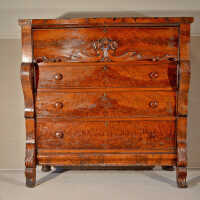
Empire Chest of Drawers, c.1840 | John Moore | St. Stephen, New Brunswick
Classification: Furniture Old Accession Number: 2243 Description: Empire Chest of Drawers. Made by John Moore, cabinetmaker, St. Stephen, New Brunswick.
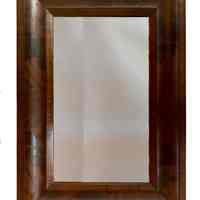
Empire Mahogany Ogee Mirror | Captain William Shackford | Eastport, Maine
Dimensions: 22 7/8" wide by 32 3/4" high.
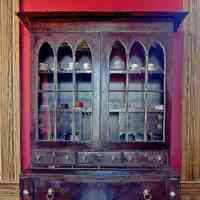
Empire Secretary Desk, c.1840 | Eaton House | Calais, Maine
Old Accession Number: 3010 Empire Secretary Desk, c.1840. Desk came from the George Eaton House, 307 Main Street, Calais, Maine.
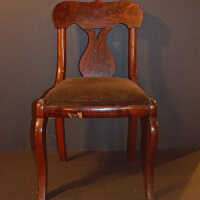
Empire Side Chair, c.1830 | North Church | Eastport, Maine
Old Accession Number: 2231 From Free Will North Baptist Church, 82 High Street, Eastport, Maine.\ Chair was in Free Will North Baptist Church building when it was gifted to the Tides Institute & Museum of Art in 2014.
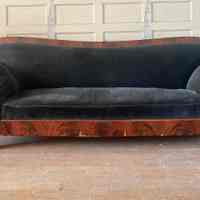
Empire Sofa, c.1830 | North Church | Eastport, Maine
Old Accession Number: 2230 From Free Will North Baptist Church, 82 High Street, Eastport, Maine. Sofa was in Free Will North Baptist Church building when it was gifted to the Tides Institute & Museum of Art in 2014.
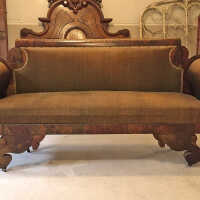
Empire Sofa, c.1840 | Calais House
Classification: Furniture Old Accession Number 2274 Description: Empire Sofa. From Calais, Maine house. Gift of Alice Seelye, Key Street, Eastport, Maine.
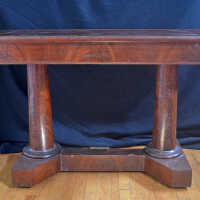
Empire Table, c.1840 | Central Congregational Church | Eastport, Maine
Classification: Furniture Old Accession Number: 2300 Description: Empire Table. From 1828 Seaman's Church building. 26 Middle Street, Eastport, Maine that was gifted to the Tides Institute & Museum of Art in 2016.
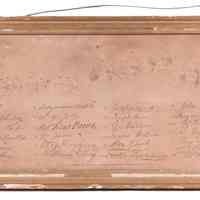
Engraving | Line Portraits of all 48 Signers of the Declaration of Independence as They Appeared on that Day, along with Their Signatures
Long unsigned engraving with line portraits of all 48 signers of the Declaration of Independence as they appeared on that day, along with their signatures, unmarked other than the line at bottom which reads "The above names, except those marked with a star; are imitations of the several signatures to the original act". Old note on back reads "Daniel Kilby, Eastport, 1823". Found in Maine. In 9" x 33" gold molded frame, under glass, toned, and stained. Acquired at Thomaston Place Auction, Thomaston, Maine, 2024/ The Daniel Kilby house stands at 15 Boynton Street, Eastport, Maine and was built in 1820.
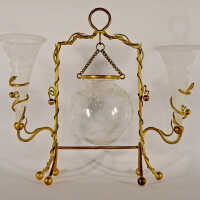
Epergne, c.1890 | Wells-Shober Cottage | Campobello, New Brunswick
A late 19th century century table piece called an epergne. It comes from the Wells-Shober Cottage on Campobello Island, New Brunswick. The Cottage is now part of the Roosevelt Campobello International Park. Merriam Webster Dictionary defines an epergne as: “an often ornate tiered centerpiece consisting typically of a frame of wrought metal (such as silver or gold) bearing dishes, vases, or candle holders or a combination of these.” In this example from the Wells-Shober Cottage, the epergne consists of a brass frame structure with a wonderful round open top etched glass bowl in the center and then two delicate etched glass vases on either side. The epergne was donated to the Tides Institute by a donor whose father was in the real estate business and once handled the sale of the Wells-Shober Cottage in the mid-20th century. Many of the original furnishings of the Cottage were still there at the time and he was able to bring many of them to his family’s home in Eastport including the epergne. The Wells-Shober Cottage was built in 1884 for Samuel Wells, a Boston lawyer and president of the Campobello Company that developed many of the hotels and surrounding land for summer cottages on Campobello at the same time. In 1912, the Cottage was purchased by the Shober family of Philadelphia. From Sunrise County Architecture (2nd revised and enlarged edition) 1996, p.119 WELLS-SHOBER COTTAGE Willard T. Sears, of Boston, designed the Wells-Shober Cottage for American lawyer Samuel Wells, once president of the Campobello Company. This building was finished in 1884, at about the same time as the building of the three Campobello hotels for which Sears drew the plans. All four buildings were Queen Anne Revival designs. With a steep hip roof, dotted with gables and dormers, this two-and-a-half story cottage was built with railings, both inside and on the facade. The roof was a bell-cast design with two chimneys. Walls of this wooden frame building are protected by clapboards, first painted brown (with white trim), but since painted all white by the Park Commission. When the living room, with fireplace, was given an addition encircling that room, the outside veranda had to be rebuilt as well. Besides dining room and kitchen, on the first floor, there are not only four second floor bathrooms but two railed verandas, while three bedrooms, each with a bath, occupy the third floor. The Park Commission remodeled the Well-:Shober Cottage for use as a guest house. This cottage is across the street (Route 774 from Lubec to Welshpool, N.B.) from the Hubbard Cottage, which is seven years younger. The Wells family sold their cottage to Mary Norris Cochrane in 1912, and her daughter Edith Shober (Mrs. Rex) inherited it in 1918. The Park Commission acquired the Wells-Shober Cottage in 1965, and it was the first cottage to be redecorated and used for Commission meetings. NHSD, JCB Classification: Furniture Old Accession Number: 2202
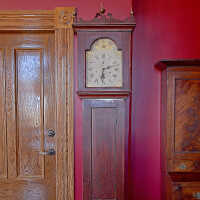
Federal Case Clock | Elm Cottage | C.1825 | Eastport, Maine
Circa: 1825 Old Accession Number: 3007 Silas Hoadley, Plymouth, Connecticut. Federal Long Case Clock. From Joyce Emery Kinney, Eastport, Maine. From the Emery family Elm Cottage, Elm Street, Eastport, Maine. Gift from Joyce Emery Kinney, Eastport, Maine.
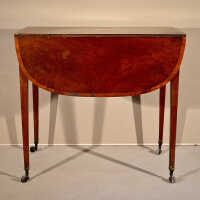
Federal Hepplewhite Pembroke Table, c.1820 | Eastport, Maine
Furniture Old Accession Number: 2220 Federal Hepplewhite Pembroke Table. From Kelle Erikson of Eastport, Maine. She and her husband had got the table from a house on Adams Street in Eastport, Maine.
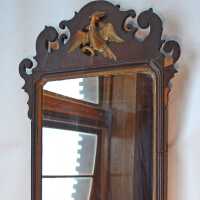
Federal Mirror | C.1780 | Calais, Maine
Classification: Furniture Circa: 1780 Old Accession Number: 3023 From Calais, Maine house.
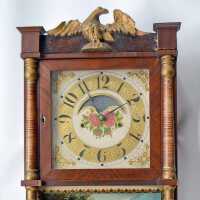
Federal Period Clock, c.1830s | Elm Cottage | Eastport, Maine | Eight day clock. Barns, Bartholomew & Company, Bristol, Connecticut,
Old Accession Number: 3020 Federal period clock, c. 1830s. Eight day clock. Barns, Bartholomew & Company, Bristol, Connecticut, 1836-37. Barnes, Bartholomew & Co. 8-day shelf clock, 1833-1836 Gift from estate of Walter Emery, Sea Girt, New Jersey, 2018. Letter from Walter Emery: 605 Philadelphia Blvd. Sea Girt, N.J. 08750 December 3, 1998 Mr. Christopher Bailey c/o Bristol Clock Museum Bristol, Conn. 06810 Dear Mr. Bailey; At your request of my friend Stephen Petro, who visited your museum recently, I have enclosed pictures and brief comment on the clock that has been in my family for many years. As you can see from the pictures, it is an eight-day clock. However, it is not operated by springs. The weight on the extreme right of the picture with the door open is very heavy. The label to the left of the pendulum, states that it was repaired in Calais Maine October 5, 1942. The label above the pendulum, partly obscuring the words Brass Clocks, indicates that it was sold by S. Adams, Calais/Milltown, Maine. (The first label showed that it was repaired by George Adams.) We have used this clock, which kept very good time, but erratic striking of the hours, up until recently when it quit. We have been hesitant about having someone repair it, but hope to find a qualified repairman in our area. Thank you for your interest in this clock. We would appreciate any comments that you might have. Sincerely, Walter L. Emery
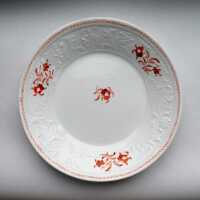
Federal Plate | c 1810 | Eastport, Maine
Circa: 1810 Old Accession Number: 3021 From Eastport, Maine house.
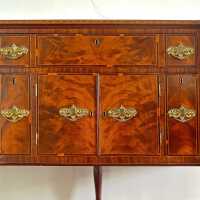
Federal Sideboard | Anna Whalen House | Eastport, Maine | c.1810
Gift from estate of Frances Whalen Strout, 2020. From Anna Whalen House, 7 Key Street, Eastport, Maine. An early 19th century mahogany sideboard that came down through one family in this region for over 200 years. It measures 74 inches long, 25 1/2 inches wide and 41 inches high. It was first owned by Seward Bucknam (1783-1868) and his wife Irene McLellan (1796-1865). Seward was born in Falmouth, Maine and then moved to Eastport, Maine at a young age. He became a well established merchant with stores and wharves on the south end of Eastport. Ellen Irene Bucknam (1826-1900) was their only child and daughter. She married Joseph Mason Livermore (1824-1872) and they eventually inherited the sideboard. They had eight children, among them Anna Bucknam Livermore (1859-1933). Anna’s first marriage to Albert Pike was short lived as he died shortly after they were married. She then married Lincoln Hamlin Newcomb (1860-1923), a lawyer. Anna inherited the sideboard from her parents. When Anna and her second husband died, the sideboard went to Anna’s younger sister, Sarah Preble Livermore Whalen Hayes (1867-1961), who married Leverett Mitchell Whalen (1850-1912) and then George Hume Hayes (1851-1935) after Leverett died. When the sideboard came to Sarah, it would have been in the large 7 Key Street house in Eastport that had been in the Whalen family for generations. It stayed in this house after Sarah’s death as the house and sideboard were inherited by Sarah’s daughter, Anna K. Whalen (1894-1986) who continued to live in the house until her death. Anna had no children and when she died, the house, sideboard and other household furnishings were inherited by Anna’s niece, Frances Whalen Strout (1933-2020). Frances sold the house and moved the sideboard and most of the household furnishings to her ranch style home with attached garage in Brewer, Maine. She converted her garage into a 19th century parlor room filled with the furnishings from her aunt’s Eastport house including the sideboard. Frances had no children and when she died the sideboard along with many with many other of the family furnishing were placed with the Tides Institute in 2020. A note found in the sideboard written by Frances reads: “Originally had black knobs. Henry Newcomb put on new brass pulls.” Federal Sideboard, c.1810. Gift from estate of Frances Whalen Strout, 2020. From Anna Whalen House, 7 Key Street, Eastport, Maine. Anna Whalen was the aunt of Frances Whalen Strout. Sideboard was first owned by Seward Bucknam of Eastport, Maine. One note from Frances Whalen Strout reads: "Seward Bucknam, born June 7, 1783, owned this sideboard." Another note from Frances Whalen Strout reads: "The Livermore sideboard - once was Aunt Nan's - at her death went to Sara P. Whalen Hayes. Originally had black knobs. Henry Newcomb put on new brass pulls." Email from Margaret Whalen, July 6, 2022: "I think I figured the history of that sideboard out. Here goes: Joseph Mason Livermore (1824-1872) married Ellen Irene Bucknam (1826-1900); the sideboard must have come to them from Ellen’s family. (Joseph and Ellen were my great-great-grandparents. It was she who must have made the crazy quilts, based on Grandpa’s letter to me.) They had eight (8!) children, among them Anna Bucknam Livermore (1859-1933). She was known in the family as Aunt Nan; her first marriage was to Albert Pike, who died pretty young. She then married Lincoln Hamlin Newcomb (1860-1923), a lawyer who was known as Linc. When they died, the sideboard went to Anna/Nan’s younger sister, Sarah Preble Livermore Whalen Hayes (1867-1961), who married Leverett Mitchell Whalen (1850-1912) and then George Hume Hayes after Leverett died. When the sideboard came to Sarah, it would have been in the 7 Key Street house, where it stayed under Anna K. Whalen’s stewardship until she died in 1986. From there it went to Dimpy’s house, where it stayed until it was given to the Tides Institute in 2020." Seward Bucknam, born in Falmouth, July 7, 1783, died Feb. 14, 1868, aged 84. His wife Anna died Nov. 22, aged 38. His wife Irene, died Oct. 19, 1865, aged 69. Ellen Irene Bucknam (1826-1900) was the daughter of Seward Bucknam (1783-1868) and Irene McLellan (1796-1865)
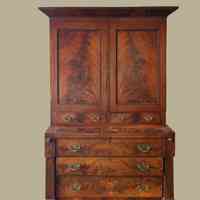
Federal/Empire Secretary Desk, c.1820 | Elm Cottage | Eastport, Maine
Old Accession Number: 3008 Federal/Empire Secretary Desk, c.1820. From the Emery family home, Elm Cottage, Elm Street, Eastport, Maine. Obituary for Joyce Emery Kinney (Emery) September 20, 1924 — October 4, 2016 Eastport – Joyce Emery Kinney, born September 20, 1924, the daughter of Roscoe C. and Vera (Leonard) Emery died October 4, 2016. Mrs. Kinney was predeceased by her husband Grover Bradford Kinney of Eastport and Auburn. Mrs. Kinney is survived by her brother, Walter Emery and his wife Violet of Sea Girt, NJ; nephew Scott Emery, M.D., and his first wife, Carla Hellekson, M.D., and their children, Olivia and Teal Emery of Seattle, WA. Joyce Kinney graduated from Shead Memorial High School, class of 1941, W.S. Normal School in Machias, class of 1945, the U. of Maine at Orono, in 1948 where she also received her Master’s in Education in 1955. Mrs. Kinney taught school most of her life: Vanceboro, 1945-47 and Thomaston, CT, 1948-50. In September 1950 Mrs. Kinney began teaching for the American Dependent Schools in Japan; first at Tagajo, then as a traveling teacher for the Island of Shikoku; in 1952 at Eta Jima and in 1953 at the U.S. Navy Dependent School at Yokosuka. After returning to the States, Mrs. Kinney taught at Lincoln, Kittery and Farmington. She returned to Eastport in 1959 and worked as a secretary in her father’s real estate and insurance business. In 1960 she founded the Border Historical Society; the first meeting was held in Elm Cottage, the family home, and she served many times as president of that organization. In 1969 Mrs. Kinney began teaching grades 1-4 Remedial Reading in Eastport. She developed Pernicious Anemia in 1973 and increasing weakness made early retirement necessary. One of the original members of the Saint Croix Garden Club, Mrs. Kinney was vice president the first two years of the club’s existence, and the third year served as president. Mrs. Kinney’s interest in local history led her to research the maritime history of eastern Washington County, and to publish the historical reference “Vessels of Way Down East” in 1989. Over a period of years Mrs. Kinney was guest speaker at the school classrooms, Retired Teachers and at Historical Society meetings. Her brief historical articles have been published in the Down East Coastal Press and the Quoddy Tides. Mrs. Kinney spent several of her later years researching the maritime history of western Washington County, using old newspaper files of the Eastport Sentinel, The Calais Advertiser and The Machias Union. Her manuscript of this extensive work remains unfinished. Mrs. Kinney was a member of the Machiasport Historical Society, the V.F.W. Auxiliary and the Eastport Nursing Home Auxiliary. A funeral service will begin at 3:00 p.m., Friday, October 7th at Blakey Memorial United Methodist Church, High St., Eastport. Burial will follow at Hillside Cemetery, Eastport. Arrangements by Mays Funeral Home, Calais & Eastport.
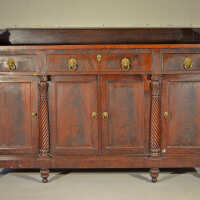
Federal/Empire Side Board, c.1830 | Wells-Shober Cottage | Campobello, New Brunswick
Old Accession Number: 2201 Originally from Wells-Shober Cottage, Campobello, New Brunswick. Acquired from Joyce Emery Kinney of Eastport, Maine. Side board came from the Emery family Elm Cottage, 2 Elm Street, Eastport, Maine. Joyce's father, Roscoe Emery who was involved with real estate as well as the Eastport Sentinel newspaper, had once purchased the Wells-Shober Cottage and its contents including this side board. Joyce tells of her father and brother bringing a truckload of furniture from the Cottage over to Eastport. From Sunrise County Architecture (2nd revised and enlarged edition) 1996, p.119 WELLS-SHOBER COTTAGE Willard T. Sears, of Boston, designed the Wells-Shober Cottage for American lawyer Samuel Wells, once president of the Campobello Company. This building was finished in 1884, at about the same time as the building of the three Campobello hotels for which Sears drew the plans. All four buildings were Queen Anne Revival designs. With a steep hip roof, dotted with gables and dormers, this two-and-a-half story cottage was built with railings, both inside and on the facade. The roof was a bell-cast design with two chimneys. Walls of this wooden frame building are protected by clapboards, first painted brown (with white trim), but since painted all white by the Park Commission. When the living room, with fireplace, was given an addition encircling that room, the outside veranda had to be rebuilt as well. Besides dining room and kitchen, on the first floor, there are not only four second floor bathrooms but two railed verandas, while three bedrooms, each with a bath, occupy the third floor. The Park Commission remodeled the Well-:Shober Cottage for use as a guest house. This cottage is across the street (Route 774 from Lubec to Welshpool, N.B.) from the Hubbard Cottage, which is seven years younger. The Wells family sold their cottage to Mary Norris Cochrane in 1912, and her daughter Edith Shober (Mrs. Rex) inherited it in 1918. The Park Commission acquired the Wells-Shober Cottage in 1965, and it was the first cottage to be redecorated and used for Commission meetings. NHSD, JCB
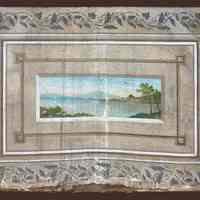
Fireplace Screen | Grady House, 1 Adams Street, Eastport, Maine | c.1870
Fireplace Screen. Painted canvas landscape scene with decorative stenciled scrollwork border mounted on wood frame. 50 inches wide and 35 inches high. Date: c.1870. From Grady house, 1 Adams Street, Eastport, Maine. Gift of Ross Y. Furman, 2022. Part of the Ross Y. Furman Advance Collection.
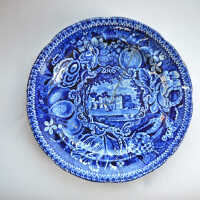
Flow Blue Plate | R. Hall's, Select Views, Warleigh House, Somersetshire, England | Stone China | c.1825
An early 19th century flow blue English stone china dish that was pieced back together from a number of shards. On the back of the dish is stamped: R. Hall's, Select Views, Warleigh House, Somersetshire, Stone China. The 8 1/2 inch wide dish was made in England and dates to about 1825. This dish was unearthed in 2018 during the excavation of a six foot deep 19th century household “dump” in this region that was filled with thousands upon thousands of beautiful, but broken early 19th century ceramic and glass shards. The “dump” was on the site of a large house built in 1824 and torn down in the early 1960s. The house underwent considerable renovation in the mid-19th century. During this renovation, the existing house pantry full of ceramic and glass ware was likely cleared out and thrown in the “dump.” Some ceramic and glass shards came into the institute’s collections during this initial excavation, but much was also taken out of the region to Portland, Maine and to North Dakota. The institute sought the return of what was removed from the area. All that went to the Portland area is now back in the institute’s collections. Nearly all (including this piece), with the exception of two pieces, that went to North Dakota is now back in the institute’s collections. In the summer of 2020, another excavation of the same household “dump” was undertaken and several hundred more ceramic and glass shards were found, some of which perfectly matched shards unearthed two years before. About 100 ceramic and glass pieces have been put back together, either entirely or nearly entirely. ( ) From Eastport Sentinel, March 29, 1882, p.2, c.5-6: Some old Eastport Houses, — AND THEIR OCCUPANTS.— A FAMILIAR RETROSPECT. — PAPER NO. 2 In the fine modern looking residence of Edward C. Pike on the same side above Elm street it would be difficult to recognize the outgrowth of one of these old hipped roof houses, but this one was built in that style in 1824 by Charles Peavey. In my earliest memory it was the home of Levi Ingols, a prominent dry goods dealer, and held of the well known firm, Ingols, & Chace and Ingols & Eustis. They kept in the brick store on Water street under the old Commercial Coffee House, and Edward H. Burgin and William P. Bucknam were boys learning the business behind the counter. Afterwards the house was occupied by Edward Ilsley, at one time in the hardware business, and the first Cashier of the Frontier Bank. Mr. & Mrs. Ilsley are still living at an advanced age in Wisconsin, and their sons have achieved marked success as business men. I well remember when immediately after one of the weddings which I attended at the Hayden house, this house was opened as the home of George W. McLellan. He had a natural turn for politics, represented the town in the State Legislature, as he afterwards did Cambridge in the General Court of Massachusetts, was Sheriff of Washington County, Deputy Collector of the Port of Boston and finally Assistant Post Master General of the United States. Among later occupants of the house were Charles H. Hayden of the family first named in this article, who was the second Cashier fo the Frontier Bank, and John W. Bass a merchant of large business when ship building was at its height in Eastern Maine. QUODDY
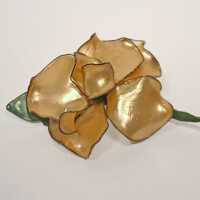
Flower [Pearl Essence] | Eastport, Maine
Old Accession Number: 1541 Gift of Joyce Emery Kinney, Eastport, Maine.
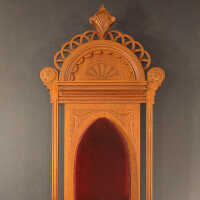
Fraternal Lodge Chair, 1904 | Odd Fellows Hall | Pembroke, Maine
Classification: Furniture Circa: 1904 Old Accession Number: 2244 Description: Oak Fraternal Lodge Chair. Made by the Karpen Furniture, Chicago, Illinois. From Odd Fellows Hall, Leighton Point Road, Pembroke, Maine. Gift of Anna Albani, Boston, Massachusetts.
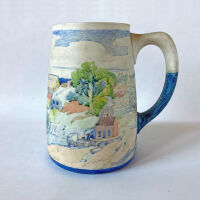
George Pearse Ennis Hand Painted Mug | Salmagundi Club, New York, New York | 1920
Gift of Ross Y. Furman, 2022. Part of the Ross Y. Furman Advance Collection. Hand painted ceramic mug by artist, George Pearse Ennis, with shore scene of Eastport, Maine. Mug was auctioned off for the benefit the Salmagundi Club of New York City in 1920. Signed and dated by the artist on bottom of mug along with Salmagundi Club name. 6 inches tall by 4 1/4 inches in diameter at base. https://salmagundi.org/mug-collection/: LIBRARY MUG FUND COLLECTION Beginning in 1899, Club member and head of the library William Henry Shelton (1840-1932) commissioned blank ceramic mugs to be painted by members and auctioned off to support the library fund (later called the library “Mug Fund.”) Fellow artist member Charles Volkmar who ran a ceramic factory produced the mugs for the Salmagundi. Over the years, some of the mugs have been bought back by members and donated to the club to preserve their important history. The Club currently owns approximately 80 examples. Mugs were produced between 1899 and 1924, auctioning 24 per year. There are possibly 600 mugs that exist. The library owns research binder prepared by Bob Muller documenting every sale of the mugs by year as well as the official ‘Mug book’ which documented the sales by the library committee.
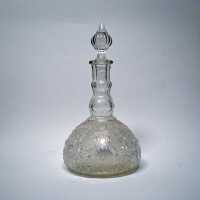
Glass Decanter |
Old Accession Number: 1573
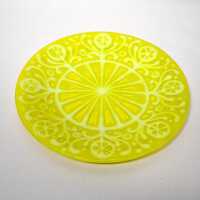
Glass Dish | Higgins Glass | Riverside, Illinois
Artist: Higgins Glass Works Old Accession Number: 1544
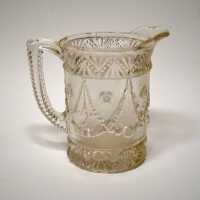
Glass Pitcher | Portland Glass Company | Portland, Maine
Artist: Portland Glass Company Old Accession Number: 1540
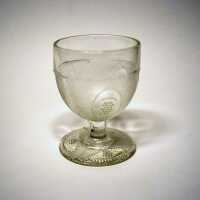
Glass |
Old Accession Number: 1569
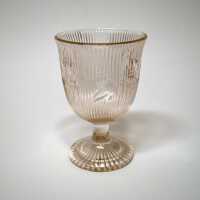
Glass |
Old Accession Number: 1569 (duplicate number)
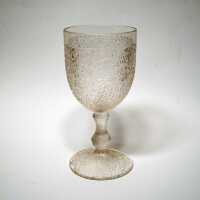
Goblet. [Glass] |
Old Accession Number: 1546
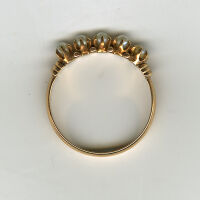
Gold Ring with Five Pearls | Rebecca "Bertie" Loring | Eastport, Maine
Rebecca "Bertie" Loring (1855-1898), FIVE 19TH CENTURY FRIENDSHIP RINGS! ONE KNOWN, WHERE ARE THE OTHER FOUR? We recently had a mid-19th century "friendship" ring (see posted photo) come into our collections. The ring has five pearls that we’re told represent the friendship of five women from Eastport, Maine. We’re told that there were five such rings as each of the five women friends had an identical ring with five pearls. The ring now in our collections was owned by Roberta "Bertie" Loring who was born in Eastport in 1855 and died relatively young in 1898. She was the daughter of Eastport photographer, Davis Loring, and married his successor photographer, Charles Brown. Does anyone know anything about the other four friendship rings?
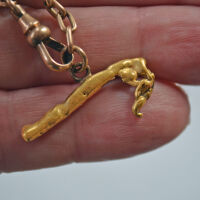
Gold Sample, Lubec, Maine, 1898
REAL GOLD OR FOOL'S GOLD? 1898! Nugget of "gold" (attached to the end of a bracelet chain) that was recently donated to our collections. The donor told us that the nugget had been given to her grandfather in 1898 by the developers of the fraudulent project at Mill Creek in North Lubec, Maine in 1897-1898 that advertised that it could obtain gold from sea water there. The grandfather was told by the developers not to invest in the project. Others did invest and lost a lot of money. We haven't yet been able to determine if the nugget is real gold or not.
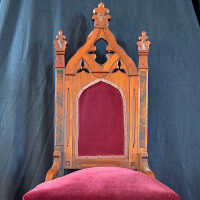
Gothic Chair #1, c.1870 | Central Congregational Church | Eastport, Maine
Classification: Furniture Old Accession Number: 2295 Description: Gothic Chair. Part of a set of five Gothic chairs trom 1828 Seaman's Church building. 26 Middle Street, Eastport, Maine that was gifted to the Tides Institute & Museum of Art in 2016.
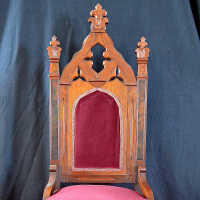
Gothic Chair #2, c.1870 | Central Congregational Church | Eastport, Maine
Classification: Furniture Old Accession Number: 2296 Description: Gothic Chair. Part of a set of five Gothic chairs trom 1828 Seaman's Church building. 26 Middle Street, Eastport, Maine that was gifted to the Tides Institute & Museum of Art in 2016.
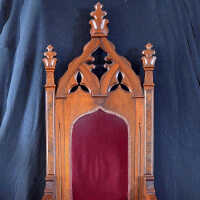
Gothic Chair #3, c.1870 | Central Congregational Church | Eastport, Maine
Classification: Furniture Old Accession Number: 2297 Description: Gothic Chair. Part of a set of five Gothic chairs trom 1828 Seaman's Church building. 26 Middle Street, Eastport, Maine that was gifted to the Tides Institute & Museum of Art in 2016.
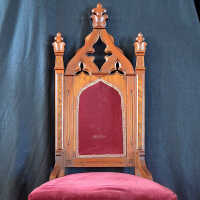
Gothic Chair #4, c.1870 | Central Congregational Church | Eastport, Maine
Classification: Furniture Old Accession Number: 2298 Description: Gothic Chair. Part of a set of five Gothic chairs trom 1828 Seaman's Church building. 26 Middle Street, Eastport, Maine that was gifted to the Tides Institute & Museum of Art in 2016.
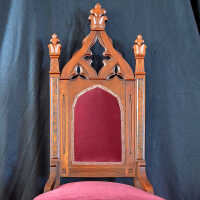
Gothic Chair #5, c.1870 | Central Congregational Church | Eastport, Maine
Classification: Furniture Old Accession Number: 2299 Description: Gothic Chair. Part of a set of five Gothic chairs trom 1828 Seaman's Church building. 26 Middle Street, Eastport, Maine that was gifted to the Tides Institute & Museum of Art in 2016.
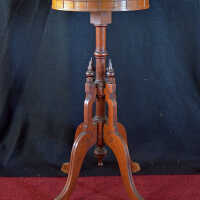
Gothic Side Table, c.1870 | Central Congregational Church | Eastport, Maine
Classification: Furniture Old Accession Number: 3301 Description: Gothic Side Table. From 1828 Seaman's Church building. 26 Middle Street, Eastport, Maine that was gifted to the Tides Institute & Museum of Art in 2016.
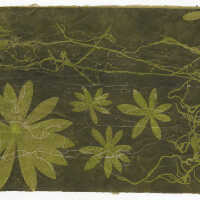
Hand Made Paper | Megan Singleton
Artist: Megan Singleton Circa: 2014 Old Accession Number: 1339 Hand made paper by artist, Megan Singleton. Megan Singleton was an artist in residence in the Tides Institute & Museum of Art's StudioWorks Artist-in-Residence Program in 2014. Gift of the artist, 2024.
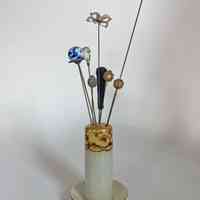
Hat Pins and Holder
Gift of Eleanor Norton, Eastport, Maine, 2025. From Eleanor Norton, Eastport, Maine text message, June 23, 2025: "The hat pin holder also came from the MacLeans in Eastport. Aunt Effie MacLean, who moved to New Brunswick, sent it back with us on one of our visits to her in St. John."
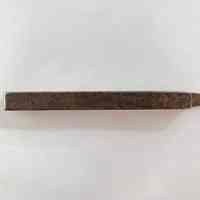
Header Tool | Used in the Packing of Sardine Cans | c.1890
Metal header tool used in the packing of sardine cans, c.1890. Length: 5 3/8". Given to Hugh French by Harry Raye, May 26, 1981.
Hotel Lobby Desk, c.1900 | Hotel East | Eastport, Maine
Old Accession Number: 2216 Hotel East Desk, c.1900. From the Hotel East, Water Street, Eastport, Maine.
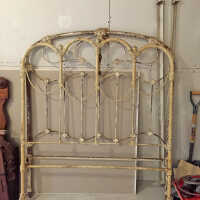
Iron Bed, c.1880 | Calais House
Classification: Furniture Old Accession Number: 2264 Description: Iron bed. c.1880. From Calais, Maine house.
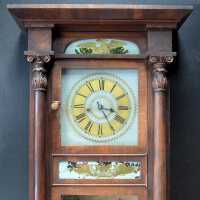
Ithaca Clock, c.1880 | Eastport, Maine
Classification: Furniture Old Accession Number: 2188 Description: Gift from estate of Winifred and Rowland French estate, Eastport, Maine. Clock originally belonged to Winifred’s mother, D. Lucille Brown.
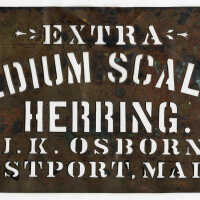
J. H. Osborn Extra Medium Scaled Herring | Metal Stencil | Eastport, Maine
Old Accession Number: 1553
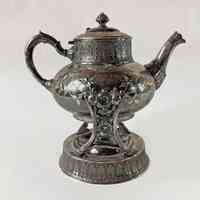
James W. Tufts Silver Plate Quadruple Tea Pot With Cradle
Gift of Eleanor Norton, Eastport, Maine 2025. From the MacLean Family of Eastport, Maine.
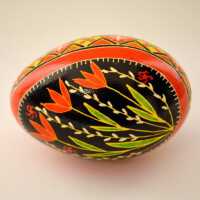
Jennifer Multhopp | Pysanky Goose Egg | Lubec, Maine
Old Accession Number: 1563 Description: Pysanky Goose Egg by Jennifer Multhopp Jennifer Multhopp, a resident of Lubec, has been creating Pysanky for many years. She learned the intricate folk art from a friend who brought the skill from her native Ukraine. The designs are formed as lines are drawn on the surface of the egg with a special tool (kistka) that holds melted beeswax. When the egg is dipped into successive dye baths, light to dark, the areas covered with wax resist the dye, thereby forming the design. When the egg is completed, all of the wax is removed to reveal the finished pattern. Some frequently used symbols include deer which signify prosperity, wheat representing a bountiful harvest, and waves circling an egg to suggest eternity. Various shades of red, the color of joy, are frequently used in the designs. Pysanky are traditionally made and exchanged with friends and family as expressions of friendship, love, and good luck. Goose eggs measure approx: 3.25" tall by 2.25" mid-width. Hand-made in Lubec, Maine.
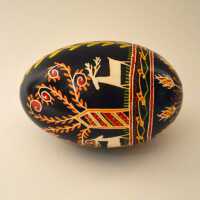
Jennifer Multhopp | Pysanky Goose Egg | Lubec, Maine
Old Accession Number: 1545 Description: Pysanky Goose Egg by Jennifer Multhopp Jennifer Multhopp, a resident of Lubec, has been creating Pysanky for many years. She learned the intricate folk art from a friend who brought the skill from her native Ukraine. The designs are formed as lines are drawn on the surface of the egg with a special tool (kistka) that holds melted beeswax. When the egg is dipped into successive dye baths, light to dark, the areas covered with wax resist the dye, thereby forming the design. When the egg is completed, all of the wax is removed to reveal the finished pattern. Some frequently used symbols include deer which signify prosperity, wheat representing a bountiful harvest, and waves circling an egg to suggest eternity. Various shades of red, the color of joy, are frequently used in the designs. Pysanky are traditionally made and exchanged with friends and family as expressions of friendship, love, and good luck. Goose eggs measure approx: 3.25" tall by 2.25" mid-width. Hand-made in Lubec, Maine.
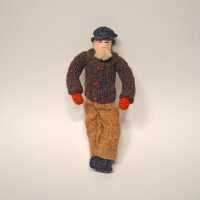
John Passa Doll [Man] | Cottage Craft | St. Andrews, New Brunswick
Old Accession Number: 1571 From Our Canada, September / October, 2004: Remember when these dolls, owned by Elizabeth Symon of Shawnigan Lake, B.C., appeared in our March-April issue? Elizabeth was unsure of their origin and asked for help. Margaret Harriot of St. Andrews, N.B., was happy to oblige: "The dolls originate from here in St. Andrew's and were made for the Charlotte County Cottage Craft, a cottage-industry retailer dealing in hand-woven wool and knitting. They are named John Passa and Marie Quoddy and were handcrafted by two ladies—the bodies were made by Mary Bryant, and she and her friend Phoebe Lowrey knitted the outfits. The faces were painted by Kent Ross, one of the owners of Cottage Craft (Cottage Craft was founded by Grace Helen Mowat and later bought by two brothers, Bill and Kent Ross). The dolls were made exclusively for Cottage Craft until the two ladies died. "I know these dolls because my husband worked for the company and bought me the last two ever made. "I really treasure them." Show off your crafts! Send your stories and photos to "Crafty Canadians" (details on page 65).
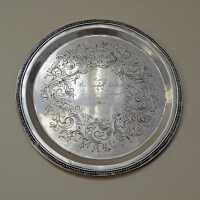
Jones, Ball & Poor, Boston | Coin Silver Presentation Dish | 1852
Creator: Jones, Ball & Company Classification: Object/Artifact Circa: 1852 Older Accession Number: 2279 Description: Coin Silver Presentation Dish. Made by Jones, Ball & Company of Boston. 1852. Inscribed: "Presented to, Rev. Kendall Brooks Jr., by the Cadets of Temperance, Eastport, Me. Sep. 3d, 1852." Pure silver coin.
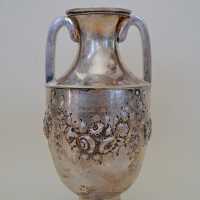
Jones, Ball & Poor, Boston | Coin Silver Presentation Vase | 1852
One of a pair of coin silver presentation pieces created and sold by the renown Boston retail jeweler firm of Jones, Ball & Poor in 1852. Jones, Ball & Poor were part of a long line of retail jeweler firms in Boston that eventually evolved into the firm of Shreve, Crump and Low that still exists today. The partnership firm of Jones, Ball & Poor existed from 1846 to 1852. The two presentation pieces consist of a 7 1/2” tall vase, with a detail shown in the accompanying photograph, and a 7” in diameter plate, each inscribed with the words ”Presented to Rev. Kendall Brooks Jr., by the Cadets of Temperance, Eastport, Me. Sep. 3d, 1852.” The presentation was made as Brooks was about to depart as minister of the Washington Street Baptist Church in Eastport, Maine where he had served from 1845 to 1852. He was a graduate of Brown University and Newton Theological Institute. After leaving Eastport, he became a professor of mathematics and natural philosophy at what is now Colby College and still later he was president of Kalamazoo College in Michigan for nearly 20 years. The Cadets of Temperance was an order founded in 1846, the year after Brooks arrived in Eastport, for young boys to promote their abstinence from alcohol. Presumably Brooks started the local branch of the order at Eastport. The inscribed vase was the first piece acquired by the Tides Institute in 2006 through a listing on Ebay by an antique silver dealer in New York City. Several years later, in 2013, the second piece, the inscribed plate, was secured through an auction house in Boston. Now the two pieces are joined together once again in the town where they were originally presented over 150 years earlier. Creator: Jones, Ball & Poor of Boston Classification: Object/Artifact Circa: 1852 Older Accession Number: 1424 Description: Presented to, Rev. Kendall Brooks Jr., by the Cadets of Temperance, Eastport, Me. Sep. 3d, 1852. Jones, Ball & Poor of Boston. Pure coin. TIMA purchase from Lauren Stanley, New York City, 2006.
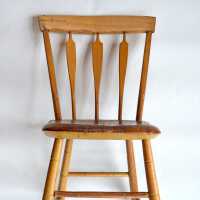
Joseph Very (1793-1831) | Thumb Arrow Back Chair, c.1822 | Eastport, Maine
A hand made wooden thumb back / arrow back chair that was made in Eastport, Maine by chair maker, Joseph Very. It dates to about 1822. Written in stencil on the underside of the chair seat are the words: “Warranted, Eastport by J. Very.” Little is known about Very. He evidently was born in Salem, Massachusetts in about 1793 and moved to Eastport some time in the early 19th century. He began making wooden chairs shortly after this and quickly became involved in a chair making war with a competing business person selling chairs in Eastport. An advertisement by Very in the Eastport Sentinel of April 13, 1822 reads: “Great Cry and Little Wool. The Subscriber observing a puffing advertisement in the last Eastport Sentinel, ‘City Chairs’ is induced to inform the public that he has taken a shop in this place … where he now carries on the Chair Making Business in its various branches. Although he cannot, with propriety, give his work the title of ‘city chairs’ (which a certain chair vender calculates a great recommendation) yet he will give them a more substantial title, that of WARRANTED CHAIRS, a name which he thinks the ‘city chairs’ are not entitled to, and will suit purchasers far better in the end.” Two years later, in 1824, Very was still advertising his Warranted Chairs along with his intentions of going into the painting business which he claimed he had 16 years of experience in. The chair was purchased by the Tides Institute from an individual in Eastport in 2018 just before the chair was to go up for auction. Very died in Eastport in 1831 at the age of 38. Photo Caption: Hand made wooden thumb back / arrow back chair that was made in Eastport, Maine by chair maker, Joseph Very. It dates to about 1822. Old Accession Number: 3019 Chair made in Eastport, Maine, c.1825. Name of maker and Eastport is on bottom of seat reads: Warranted by J.[Joseph] Very, Eastport. Advertisement from Eastport Sentinel, March 27, 1824, p. 3: House, Ship & Sign Painting. The Subscriber informs the Public, that he intends carrying on the PAINTING BUSINESS in the above branches the ensuing season, and having had sixteen years experience in the business, feels confident of getting ample satisfaction to this employers. Constantly on hand at his Shop in Boyenton-street, (one door east of Capt. Swett's Hotel) a dozen warranted CHAIRS (not city made) which will be sold low for cash or exchanged for the going currency of the place (i.e.) Pollock Fish, Herring, Oil or Lumber. Employment solicited by the public's Humble Servant, JOSEPH VERY. Eastport, March 27 ________ Eastport Sentinel, March 2, 1831: Deaths: In Eastport, 24 Feb 1831, Maj. Joseph VERY, 38y, f/o Salem, MA
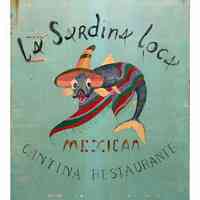
La Sardina Loca Sign | Eastport, Maine | c.1990
La Sardina Loca Mexican Restaurant Sign. Restaurant was located on the first floor of the Masonic Hall block in downtown Eastport, Maine. Sign was painted by Martha "Marty" Howbert and likely dates to 1990. La Sardine Loca ran from June 15, 1990 to September, 2006. Sign measures approximately 30" wide by 38" high. Gift to the Tides Institute in 2026 by the estate of Chuck and Val Maggiani who ran and operated the restaurant.
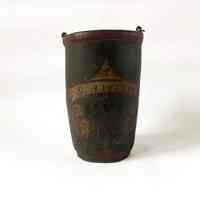
Leather Fire Buck | Eastport Fire Company, Eastport, Maine, 1822
Stephen H. Appleby BIRTH 1812 Halifax, Halifax County, Nova Scotia, Canada DEATH 14 Nov 1856 (aged 43–44) Eastport, Washington County, Maine, USA BURIAL Hillside Cemetery Eastport, Washington County, Maine, USA PLOT East, Sect. C Lot #40 From Eastport Sentinel, February 26, 1890: An Old-time Eastport Institution. Whoever remembers Eastport away back half a century or more, will recall a favorite article of hall decoration which greeted the visitor on opening the front doors of many of the principal houses in town. These were leathern buckets hanging in pairs, bearing upon them besides the name of the owner, that of the Always Ready, Eastport, or Franklin Fire Club, showing to which of these protective organizations the head of the house belonged. The oldest of these clubs was the “Always Ready.” I remember to have seen a pair of buckets marked John N. Peavey 1811. Captain Peavey must have been an original member and this the date of the organization. At that time just after the setting off of Lubec, the town took the first steps for efficient protection against fire. In 1811 J.N. Peavey, Wm. Hills, Eben Steele, Wm. Coney, E.T. Bucknam, Oliver Shead and J.L. B. Green were chosen firewards, and for several years afterwards such as the only form of municipal organization for that purpose. The insignia of a foreword’s office was a tall red staff with a gilt top. At an alarm of fire the official seized his staff and rushed out, using it to assert his authority, sometimes pushing or driving unready individuals into line to pass water. The rest of the year it stood peacefully in the front entry. The one I remember was used up on the back of one of those ingenious cows then allowed to run at large, the terror of housekeepers, as with their horns they could open the best contrived gate fastening, and this one was making havoc among the rose bushes under the front yard elms. The fire clubs were voluntary organizations, social as well as protective. Their outfit consisted of a pair of leathern buckets marked with the name of the owner as well as his club, two stout canvass bags for removing goods, and a bed key. The old fashioned bedstead, held together by screws and crossed by a course network of cords, required a peculiar shaped key to take it apart, and in the regular spring and fall house cleanings it was found very convenient to borrow this key out of the fire bucket in the front entry. It was thus apt to get mislaid, and the club committees in their regular round of inspection of apparatus, were likely to find a deficiency of bed keys. Not the least attractive feature of the club life was the annual dinner at one of the hotels. It is regretted that no documents relating to the early history fo the Always Ready Club have been preserved. It was probably quiescent during the time of the British occupation, and took on new life when the town woke up after the departure of the foreign troops. The purchase of the engines Exertion and Franklin was a step forward, but the social features of the fire clubs insured their continuance. They were formed on a pattern common in cities and large towns in other parts of the country, were limited in membership, and additions could only be made to fill vacancies by death, removal from town or other cause, so they grew to be somewhat exclusive, and the new clubs were formed to meet a natural demand. By the favor of our townsman, Mr. B. L. Chadbourne, I have been enabled to examine the later records of the Always Ready Club, which have been preserved among the papers of his father, the late I.R. Chadbourne Esq., for many years a prominent member of the organization. The earliest accessible list of members is dated in 1824 as follows: J.D. Weston, Aaron Hayden, Jona. Bartlett, John Burgin, John Swett, Solomon RIce, Benjamin King, Sam’l B. Wadsworth, Alpheus Pine, Leonard Pierce, Jacob Penniman, Daniel Kilby John Woodman, I.R. Chadbourne, Samuel Wheeler, Seward Bucknam, Wooster Tuttle, Warren Hathaway, John L. Storer, John Norton, James Kimball, Anthony Brooks, Benjamin Bucknam, Ezra Whitney, The other clubs were of later formation, probably after the surrender of the island, and from the following documents found in the same collection of papers we get the names. Members of the Franklin Fire Society in Eastport, July 2, 1822: Henry T. Emery, Thomas Rogers, George Hobbs, Wm. M. Brooks, Isaac Hobbs, Jonathan Buck, Frederick Hobbs, Nath’l F. Deerinng, Joseph Burton, Ezekiel Foster, Charles Peavey, Micajah Hawkes, Rich’d M. Bartlett, Chas. H. Hathaway, Jonnas Gleason, Sam’l Rice, John Shaw, Spencer Tinkham, Edward Illsley, William Eustis, Joseph C. Noyes, Elijah D. Green, Benjamin Folsom, Joshua Veazy, Darius Pierce, Neal D. Shaw, Wm. Shackford, Timothy Pillsbury. Annexed you have a list of the members of the Franklin Fire Society furnished by your request: Your ob’t Servt. Nath’l F. Deering, Sec J.D. Weston, Esq., Sec’y Always Ready Fire Club, Eastport. List of members of the Eastport Fire Club July 2, 1822: Jerry Burgin, William Delesdernier, Daniel Garland, Darius Olmstead, Edward Williams, Ethiel Olmstead, Benj. Smith, N.P. Page, Thomas Green, E. Richardson, N.F. Fosdick, Levi Ingols, Stephen Boardman, Gilman Lamprey, Samuel Stevens, O.S. Livermore, John Burgin, Jr. Caleb Chase, Owen Hinkley, The company is not yet full, twenty five is the number. Your ob’t Servt. Levi Ingols, Sec. The Sect’y of the Always Ready Fire Club. The Always Ready Club seems to have been limited to twenty four members. In 1824 Ezra Whitney withdrew and Levi Ingols was chosen in his place. It was three years before another vacancy occurred and in 1827 Wm. J. Read, Mr. Chadbourne’s law partner, was elected on the resignation fo James Kimball. In 1829 John Patterson, Abel Stevens and Jesse Gleason became members; Joseph C. Noyes, Isaac Hobbs and Jonathan Buck in 1831; James W. Ripley, Lorenzo Sbeine and Charles Brooks in 1832; and Ezekiel Foster in 1833. In 1834 Ebenezer Steele and Alpheus Pine were made honorary members, and Sullivan S. Rawson, Francis M. Sabine and L.G. Mickels chosen to fill vacancies; Wm. Mabee and Charles Peavey joined in 1835, John L. Bowman in 1837, Leonard Shaw in 1838 and Robert Huston, John Shackford and Samuel A. Morse in 1839. Judge Burgin appears to have been regularly chosen moderator, as was J. Weston Secretary and Treasurer, until his decease, when Joseph C. Noyes became his successor. A Committee of three was also regularly chosen, whose duty it was to go from house to house and examine the condition of the member’s equipments. I remember to have seen some of these gentlemen on their rounds. A number of these reports are among the papers preserved. In one made by Mr. Sabine he styles himself a warden of the club. A report made by Mr. Gleason is given below. The name of the offending committeeman is not divulged. “As one of the committee I have attended to the duty assigned them and get leave to submit the following report: Jona. D. Weston. deficient one bucket Abel Stevens, “ bed key L. Sabine, “ bed key Gen. Ripley, “ bags and key buckets not lettered. And would further report one of your committee is out of town, who has been every efficient of his duty, made the first quarter’s examination in my absence. The other member of your committee who is entirely at leisure, nothing to occupy his time or mind, was called upon but utterly refused to do any part of the duty. I therefore must report him as having treated the club with disrespect. Jesse Gleason, Com. A.R.F.C.” Eastport, 6th Jan. 1834. The letter of another who must have been one of the founders fo the club, giving the excuse for non attendance at the annual dinner, is worthy of a place in this sketch: “Brethen, I hope you will not take it amiss to receive my assessment. I think by your creed I have no right for an abatement. I do not grudge your dinner but hope you will take it with a good will, although I am detained at home by the effects of calomel. Seward Bucknam, Testday, 4th Jan. 1825. P.S. I think this is the first time that I was ever absent on an anniversary when on the island. S.B.” These annual dinners were evidently favorite occasions of festivity, and the officers of the garrison at Fort Sullivan were usually invited to be present. John Swettt and Alpheus pine were early members, and at first the dinners were served at the hotels of one or the other. Later at other public houses kept by Wm. Hume, John S. Sloan, Thomas rogers, L.G. Mickel, Charles Brooks and Wm. Mabee. At first the assessment for dinner was $1.00 afterwards $1.25 and $1.50. There was also another assessment of 12 1/2 cts., probably for incidentals. The club evidently held other property for in 1824 it was voted “to give the ladders and fire apparatus to the town of Eastport, the town to pay any outstanding bill put them in order.” Apparently this vote was not carried into effect for the next year it was voted, ‘that John Norton be a committee to ascertain that the present fire ladders are in good order, annd if not, to procure six good ladders annd place them in proper stations.” In January 1832 it was “voted that each member provide himself with a pair of creepers;” probably some recent slippery experience had shown the. Necessity of such provision. About that time the store and goods of J. W. Jones, sutler at fort Sullivan, were destroyed by fire. By and by the intern in the organization began to die out, other and more efficient means for putting out fires had been supplied, the growth of the temperance movement had weakened the attractions of the annual dinners, and about 1842 the organization seems to have been abandoned. Of the members of the Always Ready Fire Club it is not known that any survive. William M. Brooks of Roxbury, Massachusetts, whose name appears in the list of members of the Franklin Fire Club in 1822, is still living in his ninety-seventh year. Perhaps somewhere may be preserved samples of the old leathern buckets which, as was said at the beginning, was a favorite hall ornament in Eastport houses two generations ago. Quoddy. [William Henry Kilby]
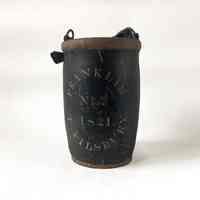
Leather Fire Buck | Franklin No. 2 Fire Company, Eastport, Maine, 1821 | T. Pilsbury
From Eastport Sentinel, February 26, 1890: An Old-time Eastport Institution. Whoever remembers Eastport away back half a century or more, will recall a favorite article of hall decoration which greeted the visitor on opening the front doors of many of the principal houses in town. These were leathern buckets hanging in pairs, bearing upon them besides the name of the owner, that of the Always Ready, Eastport, or Franklin Fire Club, showing to which of these protective organizations the head of the house belonged. The oldest of these clubs was the “Always Ready.” I remember to have seen a pair of buckets marked John N. Peavey 1811. Captain Peavey must have been an original member and this the date of the organization. At that time just after the setting off of Lubec, the town took the first steps for efficient protection against fire. In 1811 J.N. Peavey, Wm. Hills, Eben Steele, Wm. Coney, E.T. Bucknam, Oliver Shead and J.L. B. Green were chosen firewards, and for several years afterwards such as the only form of municipal organization for that purpose. The insignia of a foreword’s office was a tall red staff with a gilt top. At an alarm of fire the official seized his staff and rushed out, using it to assert his authority, sometimes pushing or driving unready individuals into line to pass water. The rest of the year it stood peacefully in the front entry. The one I remember was used up on the back of one of those ingenious cows then allowed to run at large, the terror of housekeepers, as with their horns they could open the best contrived gate fastening, and this one was making havoc among the rose bushes under the front yard elms. The fire clubs were voluntary organizations, social as well as protective. Their outfit consisted of a pair of leathern buckets marked with the name of the owner as well as his club, two stout canvass bags for removing goods, and a bed key. The old fashioned bedstead, held together by screws and crossed by a course network of cords, required a peculiar shaped key to take it apart, and in the regular spring and fall house cleanings it was found very convenient to borrow this key out of the fire bucket in the front entry. It was thus apt to get mislaid, and the club committees in their regular round of inspection of apparatus, were likely to find a deficiency of bed keys. Not the least attractive feature of the club life was the annual dinner at one of the hotels. It is regretted that no documents relating to the early history fo the Always Ready Club have been preserved. It was probably quiescent during the time of the British occupation, and took on new life when the town woke up after the departure of the foreign troops. The purchase of the engines Exertion and Franklin was a step forward, but the social features of the fire clubs insured their continuance. They were formed on a pattern common in cities and large towns in other parts of the country, were limited in membership, and additions could only be made to fill vacancies by death, removal from town or other cause, so they grew to be somewhat exclusive, and the new clubs were formed to meet a natural demand. By the favor of our townsman, Mr. B. L. Chadbourne, I have been enabled to examine the later records of the Always Ready Club, which have been preserved among the papers of his father, the late I.R. Chadbourne Esq., for many years a prominent member of the organization. The earliest accessible list of members is dated in 1824 as follows: J.D. Weston, Aaron Hayden, Jona. Bartlett, John Burgin, John Swett, Solomon RIce, Benjamin King, Sam’l B. Wadsworth, Alpheus Pine, Leonard Pierce, Jacob Penniman, Daniel Kilby John Woodman, I.R. Chadbourne, Samuel Wheeler, Seward Bucknam, Wooster Tuttle, Warren Hathaway, John L. Storer, John Norton, James Kimball, Anthony Brooks, Benjamin Bucknam, Ezra Whitney, The other clubs were of later formation, probably after the surrender of the island, and from the following documents found in the same collection of papers we get the names. Members of the Franklin Fire Society in Eastport, July 2, 1822: Henry T. Emery, Thomas Rogers, George Hobbs, Wm. M. Brooks, Isaac Hobbs, Jonathan Buck, Frederick Hobbs, Nath’l F. Deerinng, Joseph Burton, Ezekiel Foster, Charles Peavey, Micajah Hawkes, Rich’d M. Bartlett, Chas. H. Hathaway, Jonnas Gleason, Sam’l Rice, John Shaw, Spencer Tinkham, Edward Illsley, William Eustis, Joseph C. Noyes, Elijah D. Green, Benjamin Folsom, Joshua Veazy, Darius Pierce, Neal D. Shaw, Wm. Shackford, Timothy Pillsbury. Annexed you have a list of the members of the Franklin Fire Society furnished by your request: Your ob’t Servt. Nath’l F. Deering, Sec J.D. Weston, Esq., Sec’y Always Ready Fire Club, Eastport. List of members of the Eastport Fire Club July 2, 1822: Jerry Burgin, William Delesdernier, Daniel Garland, Darius Olmstead, Edward Williams, Ethiel Olmstead, Benj. Smith, N.P. Page, Thomas Green, E. Richardson, N.F. Fosdick, Levi Ingols, Stephen Boardman, Gilman Lamprey, Samuel Stevens, O.S. Livermore, John Burgin, Jr. Caleb Chase, Owen Hinkley, The company is not yet full, twenty five is the number. Your ob’t Servt. Levi Ingols, Sec. The Sect’y of the Always Ready Fire Club. The Always Ready Club seems to have been limited to twenty four members. In 1824 Ezra Whitney withdrew and Levi Ingols was chosen in his place. It was three years before another vacancy occurred and in 1827 Wm. J. Read, Mr. Chadbourne’s law partner, was elected on the resignation fo James Kimball. In 1829 John Patterson, Abel Stevens and Jesse Gleason became members; Joseph C. Noyes, Isaac Hobbs and Jonathan Buck in 1831; James W. Ripley, Lorenzo Sbeine and Charles Brooks in 1832; and Ezekiel Foster in 1833. In 1834 Ebenezer Steele and Alpheus Pine were made honorary members, and Sullivan S. Rawson, Francis M. Sabine and L.G. Mickels chosen to fill vacancies; Wm. Mabee and Charles Peavey joined in 1835, John L. Bowman in 1837, Leonard Shaw in 1838 and Robert Huston, John Shackford and Samuel A. Morse in 1839. Judge Burgin appears to have been regularly chosen moderator, as was J. Weston Secretary and Treasurer, until his decease, when Joseph C. Noyes became his successor. A Committee of three was also regularly chosen, whose duty it was to go from house to house and examine the condition of the member’s equipments. I remember to have seen some of these gentlemen on their rounds. A number of these reports are among the papers preserved. In one made by Mr. Sabine he styles himself a warden of the club. A report made by Mr. Gleason is given below. The name of the offending committeeman is not divulged. “As one of the committee I have attended to the duty assigned them and get leave to submit the following report: Jona. D. Weston. deficient one bucket Abel Stevens, “ bed key L. Sabine, “ bed key Gen. Ripley, “ bags and key buckets not lettered. And would further report one of your committee is out of town, who has been every efficient of his duty, made the first quarter’s examination in my absence. The other member of your committee who is entirely at leisure, nothing to occupy his time or mind, was called upon but utterly refused to do any part of the duty. I therefore must report him as having treated the club with disrespect. Jesse Gleason, Com. A.R.F.C.” Eastport, 6th Jan. 1834. The letter of another who must have been one of the founders fo the club, giving the excuse for non attendance at the annual dinner, is worthy of a place in this sketch: “Brethen, I hope you will not take it amiss to receive my assessment. I think by your creed I have no right for an abatement. I do not grudge your dinner but hope you will take it with a good will, although I am detained at home by the effects of calomel. Seward Bucknam, Testday, 4th Jan. 1825. P.S. I think this is the first time that I was ever absent on an anniversary when on the island. S.B.” These annual dinners were evidently favorite occasions of festivity, and the officers of the garrison at Fort Sullivan were usually invited to be present. John Swettt and Alpheus pine were early members, and at first the dinners were served at the hotels of one or the other. Later at other public houses kept by Wm. Hume, John S. Sloan, Thomas rogers, L.G. Mickel, Charles Brooks and Wm. Mabee. At first the assessment for dinner was $1.00 afterwards $1.25 and $1.50. There was also another assessment of 12 1/2 cts., probably for incidentals. The club evidently held other property for in 1824 it was voted “to give the ladders and fire apparatus to the town of Eastport, the town to pay any outstanding bill put them in order.” Apparently this vote was not carried into effect for the next year it was voted, ‘that John Norton be a committee to ascertain that the present fire ladders are in good order, annd if not, to procure six good ladders annd place them in proper stations.” In January 1832 it was “voted that each member provide himself with a pair of creepers;” probably some recent slippery experience had shown the. Necessity of such provision. About that time the store and goods of J. W. Jones, sutler at fort Sullivan, were destroyed by fire. By and by the intern in the organization began to die out, other and more efficient means for putting out fires had been supplied, the growth of the temperance movement had weakened the attractions of the annual dinners, and about 1842 the organization seems to have been abandoned. Of the members of the Always Ready Fire Club it is not known that any survive. William M. Brooks of Roxbury, Massachusetts, whose name appears in the list of members of the Franklin Fire Club in 1822, is still living in his ninety-seventh year. Perhaps somewhere may be preserved samples of the old leathern buckets which, as was said at the beginning, was a favorite hall ornament in Eastport houses two generations ago. Quoddy. [William Henry Kilby]
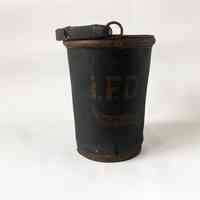
Leather Fire Buck | Independent Fire Department, Eastport, Maine, c.1840
From Eastport Sentinel, February 26, 1890: An Old-time Eastport Institution. Whoever remembers Eastport away back half a century or more, will recall a favorite article of hall decoration which greeted the visitor on opening the front doors of many of the principal houses in town. These were leathern buckets hanging in pairs, bearing upon them besides the name of the owner, that of the Always Ready, Eastport, or Franklin Fire Club, showing to which of these protective organizations the head of the house belonged. The oldest of these clubs was the “Always Ready.” I remember to have seen a pair of buckets marked John N. Peavey 1811. Captain Peavey must have been an original member and this the date of the organization. At that time just after the setting off of Lubec, the town took the first steps for efficient protection against fire. In 1811 J.N. Peavey, Wm. Hills, Eben Steele, Wm. Coney, E.T. Bucknam, Oliver Shead and J.L. B. Green were chosen firewards, and for several years afterwards such as the only form of municipal organization for that purpose. The insignia of a foreword’s office was a tall red staff with a gilt top. At an alarm of fire the official seized his staff and rushed out, using it to assert his authority, sometimes pushing or driving unready individuals into line to pass water. The rest of the year it stood peacefully in the front entry. The one I remember was used up on the back of one of those ingenious cows then allowed to run at large, the terror of housekeepers, as with their horns they could open the best contrived gate fastening, and this one was making havoc among the rose bushes under the front yard elms. The fire clubs were voluntary organizations, social as well as protective. Their outfit consisted of a pair of leathern buckets marked with the name of the owner as well as his club, two stout canvass bags for removing goods, and a bed key. The old fashioned bedstead, held together by screws and crossed by a course network of cords, required a peculiar shaped key to take it apart, and in the regular spring and fall house cleanings it was found very convenient to borrow this key out of the fire bucket in the front entry. It was thus apt to get mislaid, and the club committees in their regular round of inspection of apparatus, were likely to find a deficiency of bed keys. Not the least attractive feature of the club life was the annual dinner at one of the hotels. It is regretted that no documents relating to the early history fo the Always Ready Club have been preserved. It was probably quiescent during the time of the British occupation, and took on new life when the town woke up after the departure of the foreign troops. The purchase of the engines Exertion and Franklin was a step forward, but the social features of the fire clubs insured their continuance. They were formed on a pattern common in cities and large towns in other parts of the country, were limited in membership, and additions could only be made to fill vacancies by death, removal from town or other cause, so they grew to be somewhat exclusive, and the new clubs were formed to meet a natural demand. By the favor of our townsman, Mr. B. L. Chadbourne, I have been enabled to examine the later records of the Always Ready Club, which have been preserved among the papers of his father, the late I.R. Chadbourne Esq., for many years a prominent member of the organization. The earliest accessible list of members is dated in 1824 as follows: J.D. Weston, Aaron Hayden, Jona. Bartlett, John Burgin, John Swett, Solomon RIce, Benjamin King, Sam’l B. Wadsworth, Alpheus Pine, Leonard Pierce, Jacob Penniman, Daniel Kilby John Woodman, I.R. Chadbourne, Samuel Wheeler, Seward Bucknam, Wooster Tuttle, Warren Hathaway, John L. Storer, John Norton, James Kimball, Anthony Brooks, Benjamin Bucknam, Ezra Whitney, The other clubs were of later formation, probably after the surrender of the island, and from the following documents found in the same collection of papers we get the names. Members of the Franklin Fire Society in Eastport, July 2, 1822: Henry T. Emery, Thomas Rogers, George Hobbs, Wm. M. Brooks, Isaac Hobbs, Jonathan Buck, Frederick Hobbs, Nath’l F. Deerinng, Joseph Burton, Ezekiel Foster, Charles Peavey, Micajah Hawkes, Rich’d M. Bartlett, Chas. H. Hathaway, Jonnas Gleason, Sam’l Rice, John Shaw, Spencer Tinkham, Edward Illsley, William Eustis, Joseph C. Noyes, Elijah D. Green, Benjamin Folsom, Joshua Veazy, Darius Pierce, Neal D. Shaw, Wm. Shackford, Timothy Pillsbury. Annexed you have a list of the members of the Franklin Fire Society furnished by your request: Your ob’t Servt. Nath’l F. Deering, Sec J.D. Weston, Esq., Sec’y Always Ready Fire Club, Eastport. List of members of the Eastport Fire Club July 2, 1822: Jerry Burgin, William Delesdernier, Daniel Garland, Darius Olmstead, Edward Williams, Ethiel Olmstead, Benj. Smith, N.P. Page, Thomas Green, E. Richardson, N.F. Fosdick, Levi Ingols, Stephen Boardman, Gilman Lamprey, Samuel Stevens, O.S. Livermore, John Burgin, Jr. Caleb Chase, Owen Hinkley, The company is not yet full, twenty five is the number. Your ob’t Servt. Levi Ingols, Sec. The Sect’y of the Always Ready Fire Club. The Always Ready Club seems to have been limited to twenty four members. In 1824 Ezra Whitney withdrew and Levi Ingols was chosen in his place. It was three years before another vacancy occurred and in 1827 Wm. J. Read, Mr. Chadbourne’s law partner, was elected on the resignation fo James Kimball. In 1829 John Patterson, Abel Stevens and Jesse Gleason became members; Joseph C. Noyes, Isaac Hobbs and Jonathan Buck in 1831; James W. Ripley, Lorenzo Sbeine and Charles Brooks in 1832; and Ezekiel Foster in 1833. In 1834 Ebenezer Steele and Alpheus Pine were made honorary members, and Sullivan S. Rawson, Francis M. Sabine and L.G. Mickels chosen to fill vacancies; Wm. Mabee and Charles Peavey joined in 1835, John L. Bowman in 1837, Leonard Shaw in 1838 and Robert Huston, John Shackford and Samuel A. Morse in 1839. Judge Burgin appears to have been regularly chosen moderator, as was J. Weston Secretary and Treasurer, until his decease, when Joseph C. Noyes became his successor. A Committee of three was also regularly chosen, whose duty it was to go from house to house and examine the condition of the member’s equipments. I remember to have seen some of these gentlemen on their rounds. A number of these reports are among the papers preserved. In one made by Mr. Sabine he styles himself a warden of the club. A report made by Mr. Gleason is given below. The name of the offending committeeman is not divulged. “As one of the committee I have attended to the duty assigned them and get leave to submit the following report: Jona. D. Weston. deficient one bucket Abel Stevens, “ bed key L. Sabine, “ bed key Gen. Ripley, “ bags and key buckets not lettered. And would further report one of your committee is out of town, who has been every efficient of his duty, made the first quarter’s examination in my absence. The other member of your committee who is entirely at leisure, nothing to occupy his time or mind, was called upon but utterly refused to do any part of the duty. I therefore must report him as having treated the club with disrespect. Jesse Gleason, Com. A.R.F.C.” Eastport, 6th Jan. 1834. The letter of another who must have been one of the founders fo the club, giving the excuse for non attendance at the annual dinner, is worthy of a place in this sketch: “Brethen, I hope you will not take it amiss to receive my assessment. I think by your creed I have no right for an abatement. I do not grudge your dinner but hope you will take it with a good will, although I am detained at home by the effects of calomel. Seward Bucknam, Testday, 4th Jan. 1825. P.S. I think this is the first time that I was ever absent on an anniversary when on the island. S.B.” These annual dinners were evidently favorite occasions of festivity, and the officers of the garrison at Fort Sullivan were usually invited to be present. John Swettt and Alpheus pine were early members, and at first the dinners were served at the hotels of one or the other. Later at other public houses kept by Wm. Hume, John S. Sloan, Thomas rogers, L.G. Mickel, Charles Brooks and Wm. Mabee. At first the assessment for dinner was $1.00 afterwards $1.25 and $1.50. There was also another assessment of 12 1/2 cts., probably for incidentals. The club evidently held other property for in 1824 it was voted “to give the ladders and fire apparatus to the town of Eastport, the town to pay any outstanding bill put them in order.” Apparently this vote was not carried into effect for the next year it was voted, ‘that John Norton be a committee to ascertain that the present fire ladders are in good order, annd if not, to procure six good ladders annd place them in proper stations.” In January 1832 it was “voted that each member provide himself with a pair of creepers;” probably some recent slippery experience had shown the. Necessity of such provision. About that time the store and goods of J. W. Jones, sutler at fort Sullivan, were destroyed by fire. By and by the intern in the organization began to die out, other and more efficient means for putting out fires had been supplied, the growth of the temperance movement had weakened the attractions of the annual dinners, and about 1842 the organization seems to have been abandoned. Of the members of the Always Ready Fire Club it is not known that any survive. William M. Brooks of Roxbury, Massachusetts, whose name appears in the list of members of the Franklin Fire Club in 1822, is still living in his ninety-seventh year. Perhaps somewhere may be preserved samples of the old leathern buckets which, as was said at the beginning, was a favorite hall ornament in Eastport houses two generations ago. Quoddy. [William Henry Kilby]
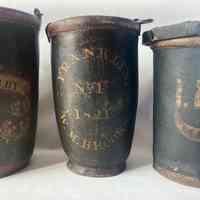
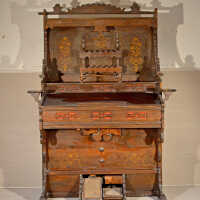
Leighton Parlor Organ, c.1885 | Pembroke, Maine
Classification: Musical instruments Old Accession Number: 2212 Circa: 1885 Description: Gift of Paul and Elizabeth Bush, Eastport, Maine.
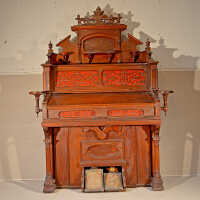
Leighton Parlor Organ, c.1885 | Pembroke, Maine
A late 19th century parlor (also known as a cabinet) organ made by William Leighton of Pembroke, Maine. Essentially a reed organ, this parlor organ has pedal-operated bellows and is mounted in a case. This parlor organ stands 76 inches tall, 46 inches wide and 23 inches deep. It is one of three different parlor organs made by Leighton and his brother, Raymond, in the collections of the Tides Institute. Two were made by William, one by Raymond. All three date to the early 1880s. Together the two brothers produced about 600 parlor organs in a five year span between 1800 to 1885. The Institute has a small sales catalogue titled “Wm. E. Leighton & Co. Cabinet Organs” in its collections that dates to 1881. The catalogue was designed and printed by J.A. Sears, printer, of Calais, Maine. The catalogue notes this particular parlor organ as Case No. 3 which came in several styles that are outlined in the catalogue. The institute acquired this organ through Ebay from a seller in California. It cost far more to have the organ shipped east to the institute’s headquarters than it cost to purchase the organ. The other two Leighton parlor organs in the institute’s collections were donated to the institute by private individuals. Before starting the organ business, William Leighton served in the American Civil War, first with the 28th Maine Infantry Company E and later with the 1st Battalion Maine Infantry Company A. He was extremely active in the founding and leadership of the Pembroke, Maine Civil War GAR. (Grand Army of the Republic) veterans organization (Isaac Campbell Post, No.1). The institute was given a large number of artifacts related to this GAR post in early 2020 and William Leighton’s name is found on many of the artifacts. In addition to parlor organs, William Leighton also made violins and the institute has four of his violins in its collections. Classification: Musical instruments Circa: 1885 Old Accession Number: 2211 Description: Purchased on Ebay from Lyle Wheeler of California in 2004.
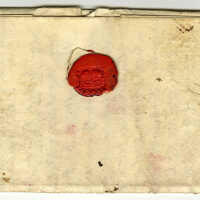
Letter to Thomas Turner, St. Andrews, New Brunswick, British North America | 1839 | View of Back Side
Classification: Books and manuscripts Circa: 1839 Old Accession Number: 1618
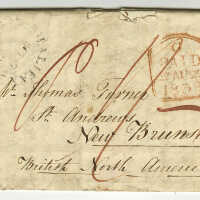
Letter to Thomas Turner, St. Andrews, New Brunswick, British North America | 1839 | View of Front Side
Classification: Books and manuscripts Circa: 1839 Old Accession Number: 1619
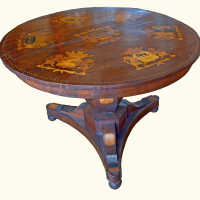
Lincoln Table | Lincoln House | Dennysville, Maine
A round wooden table with a series of coat of arms inlaid on its top. The top of the table is about 43 inches in diameter and the table stands about 29 inches tall. The table long resided in the historic Lincoln house in Dennysville, Maine, and likely dates to the early 19th century, but the actual date and origin of the table are still to be determined. The Lincoln house was built beginning in 1787 for Theodore Lincoln, son of American Revolutionary War general Benjamin Lincoln, who led a group of Massachusetts proprietors that had been granted thousands of acres in the area. Local lore claims that the table was one of four such tables presented by French general Lafayette to American general Washington’s top four generals including Benjamin Lincoln. In 1968, a photograph of the table was sent to a curator at the Metropolitan Museum of Art in New York City to see what they might suggest about the table’s history. They thought the table belonged to the style of the period around 1840, but that the inlaid coat of arms on the top of the table might have been added much later, perhaps around 1900. They had no information about any presentation of such tables by Lafayette to Washington’s generals and they could not identify the coat of arms on the table other than to say they were not associated with Lafayette. The table was purchased in about 1950 at auction from the last Lincoln family descendant to live in the Lincoln house by an individual who lived in nearby Eastport, Maine. This individual, in turn, gave it to their nephew who lived in New Jersey and there the table resided for nearly 50 years. The nephew promised the table to the Tides Institute upon his death and when he died in 2018 the table returned to the area and became part of the collections of the Tides Institute. Photo caption: Round wooden table with a series of coat of arms inlaid on its top. The table long resided in the historic Lincoln house in Dennysville, Maine, and likely dates to the early 19th century, but the actual date and origin of the table are still to be determined. Gift from estate of Walter Emery, Sea Girt, New Jersey, 2018. https://www.findagrave.com/memorial/22268818/william-morang-emery William Morang Emery BIRTH 28 Nov 1878 DEATH 30 Aug 1964 (aged 85) BURIAL Hillside Cemetery Eastport, Washington County, Maine, USA From: https://www.findagrave.com/memorial/135266620/anna-maxwell-lincoln Anna Maxwell Brown Lincoln BIRTH Jun 1857 Scotland DEATH 19 Mar 1951 (aged 93) Calais, Washington County, Maine, USA BURIAL Dennysville Cemetery Dennysville, Washington County, Maine, USA Show Map MEMORIAL ID 135266620 · View Source
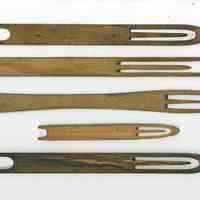
Lobster Bait Bag Knitting Needles | c.1900 | Machiasport, Maine
BAIT BAG KNITTING NEEDLES, C.1900! Five wooden net knitting needles that recently came into our collections. They were once used throughout this region to make lobster trap bait bags and date to the late 19th to early 20th century. The longest is 14 1/4" and the shortest is 7 1/2". They come from Machiasport, Maine. Once commonplace, they are rarely seen today.
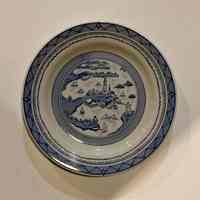
MFA Highlights: American Decorative Arts & Sculpture
Museum of Fine Arts, Boston
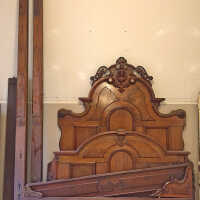
Mahogany Bed, c.1840s | Milliken House | Eastport, Maine
Classification: Furniture Circa: 1840 Old Accession Number 2251 Description: American Renaissance Bed, c. 1840s. Bed is part of a bedroom suite of furniture that is original to the Milliken House. Bed is supposed to have been made in New Orleans for the original owner and builder, Benjamin Milliken, of Milliken House at the time the house was built in 1846.(M)
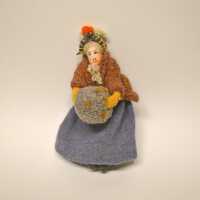
Marie Quoddy — Cottage Craft Doll [Woman] | St. Andrews, New Brunswick
Old Accession Number: 1574 From Our Canada, September / October, 2004: Remember when these dolls, owned by Elizabeth Symon of Shawnigan Lake, B.C., appeared in our March-April issue? Elizabeth was unsure of their origin and asked for help. Margaret Harriot of St. Andrews, N.B., was happy to oblige: "The dolls originate from here in St. Andrew's and were made for the Charlotte County Cottage Craft, a cottage-industry retailer dealing in hand-woven wool and knitting. They are named John Passa and Marie Quoddy and were handcrafted by two ladies—the bodies were made by Mary Bryant, and she and her friend Phoebe Lowrey knitted the outfits. The faces were painted by Kent Ross, one of the owners of Cottage Craft (Cottage Craft was founded by Grace Helen Mowat and later bought by two brothers, Bill and Kent Ross). The dolls were made exclusively for Cottage Craft until the two ladies died. "I know these dolls because my husband worked for the company and bought me the last two ever made. "I really treasure them." Show off your crafts! Send your stories and photos to "Crafty Canadians" (details on page 65).
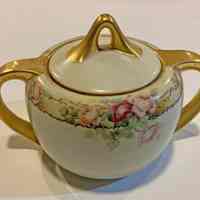
Martha "Mattie" Waide (1857-1929) | Hand Painted China Covered Sugar Bowl | Eastport, Maine
Martha "Mattie" Waide (1857-1929) Gift of Eleanor Norton, Eastport, Maine, 2023. Note from Eleanor Norton, 2023: Elsie and Hilda Leland lived at the Milliken House on Washington Street in Eastport, Maine. Eleanor and Omar Norton got married in 1961. Omar Norton bought this piece and several other Mattie Waide pieces over the years from Harry Vose who used to have yard sales in front of his house on Third Street in Eastport, Maine, not far from where Eleanor and Omar Norton lived. Harry Vose was related to Elsie and Hilda Leland and he got the Mattie Waide pieces from them.
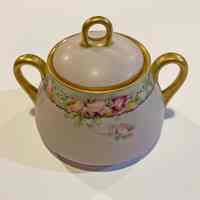
Martha "Mattie" Waide (1857-1929) | Hand Painted China Covered Sugar Bowl | Eastport, Maine
Martha "Mattie" Waide (1857-1929) Gift of Eleanor Norton, Eastport, Maine, 2023. Notes from Eleanor Norton, 2023: This piece was given to Eleanor Norton by her Aunt Mattie Turner Irving (she was a sister to Eleanor's grandfather) in the 1960s/1970s. Mattie Turner Irving lived on Chapel Street in Eastport, Maine.
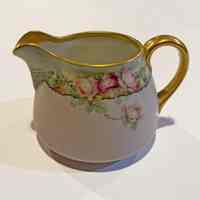
Martha "Mattie" Waide (1857-1929) | Hand Painted China Creamer | Eastport, Maine
Martha "Mattie" Waide (1857-1929) Gift of Eleanor Norton, Eastport, Maine, 2023. Notes from Eleanor Norton, 2023: This piece was given to Eleanor Norton by her Aunt Mattie Turner Irving (she was a sister to Eleanor's grandfather) in the 1960s/1970s. Mattie Turner Irving lived on Chapel Street in Eastport, Maine.
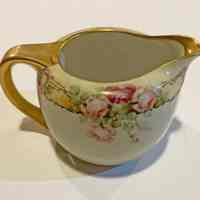
Martha "Mattie" Waide (1857-1929) | Hand Painted China Creamer | Eastport, Maine
Martha "Mattie" Waide (1857-1929) Gift of Eleanor Norton, Eastport, Maine, 2023. Notes from Eleanor Norton, 2023: Elsie and Hilda Leland lived at the Milliken House on Washington Street in Eastport, Maine. Eleanor and Omar Norton got married in 1961. Omar Norton bought this piece and several other Mattie Waide pieces over the years from Harry Vose who used to have yard sales in front of his house on Third Street in Eastport, Maine, not far from where Eleanor and Omar Norton lived. Harry Vose was related to Elsie and Hilda Leland and he got the Mattie Waide pieces from them.
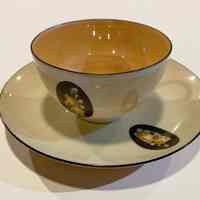
Martha "Mattie" Waide (1857-1929) | Hand Painted China Cup and Saucer | Eastport, Maine
Martha "Mattie" Waide (1857-1929) Gift of Eleanor Norton, Eastport, Maine, 2023. Notes from Eleanor Norton, 2023: Elsie and Hilda Leland lived at the Milliken House on Washington Street in Eastport, Maine. Eleanor and Omar Norton got married in 1961. Omar Norton bought this piece and several other Mattie Waide pieces over the years from Harry Vose who used to have yard sales in front of his house on Third Street in Eastport, Maine, not far from where Eleanor and Omar Norton lived. Harry Vose was related to Elsie and Hilda Leland and he got the Mattie Waide pieces from them.
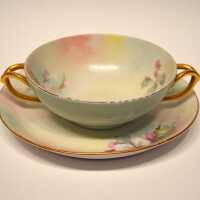
Martha "Mattie" Waide (1857-1929) | Hand Painted China Cup and Saucer | Eastport, Maine
Artist: Mattie Waide Old Accession Number: 1538 Martha "Mattie" Waide (1857-1929) Gift of Rebecca Hobart, Dennysville, Maine.
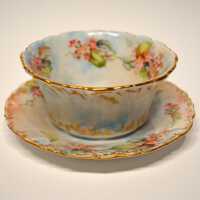
Martha "Mattie" Waide (1857-1929) | Hand Painted China Cup and Saucer | Eastport, Maine
Artist: Mattie Waide Old Accession Number: 1530 Martha "Mattie" Waide (1857-1929) Gift of Rebecca Hobart, Dennysville, Maine.
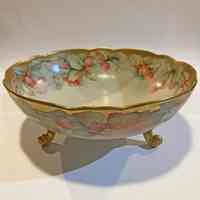
Martha "Mattie" Waide (1857-1929) | Hand Painted China Dish with Feet | Eastport, Maine
Martha "Mattie" Waide (1857-1929) Gift of Eleanor Norton, Eastport, Maine, 2023. Notes from Eleanor Norton, 2023: Elsie and Hilda Leland lived at the Milliken House on Washington Street in Eastport, Maine. Eleanor and Omar Norton got married in 1961. Omar Norton bought this piece and several other Mattie Waide pieces over the years from Harry Vose who used to have yard sales in front of his house on Third Street in Eastport, Maine, not far from where Eleanor and Omar Norton lived. Harry Vose was related to Elsie and Hilda Leland and he got the Mattie Waide pieces from them.
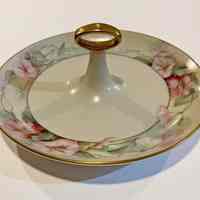
Martha "Mattie" Waide (1857-1929) | Hand Painted China Dish with Handle | Eastport, Maine
Martha "Mattie" Waide (1857-1929) Gift of Eleanor Norton, Eastport, Maine, 2023. Notes from Eleanor Norton, 2023: Elsie and Hilda Leland lived at the Milliken House on Washington Street in Eastport, Maine. Eleanor and Omar Norton got married in 1961. Omar Norton bought this piece and several other Mattie Waide pieces over the years from Harry Vose who used to have yard sales in front of his house on Third Street in Eastport, Maine, not far from where Eleanor and Omar Norton lived. Harry Vose was related to Elsie and Hilda Leland and he got the Mattie Waide pieces from them.
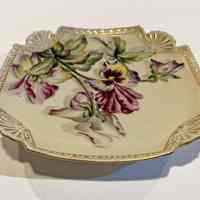
Martha "Mattie" Waide (1857-1929) | Hand Painted China Dish | Eastport, Maine
Martha "Mattie" Waide (1857-1929) Gift of Eleanor Norton, Eastport, Maine, 2023. Notes from Eleanor Norton, 2023: Omar Norton's aunt Stella Reynolds (she was the sister of Omar's mother) grew up at Birch Point in Perry, Maine. This piece was given to Eleanor and Omar Norton by Stella Reynolds in the 1960s/1970s.
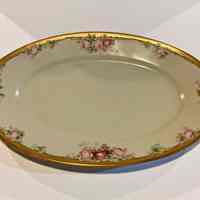
Martha "Mattie" Waide (1857-1929) | Hand Painted China Dish | Eastport, Maine
Martha "Mattie" Waide (1857-1929) Gift of Eleanor Norton, Eastport, Maine, 2023. Notes from Eleanor Norton, 2023: Elsie and Hilda Leland lived at the Milliken House on Washington Street in Eastport, Maine. Eleanor and Omar Norton got married in 1961. Omar Norton bought this piece and several other Mattie Waide pieces over the years from Harry Vose who used to have yard sales in front of his house on Third Street in Eastport, Maine, not far from where Eleanor and Omar Norton lived. Harry Vose was related to Elsie and Hilda Leland and he got the Mattie Waide pieces from them.
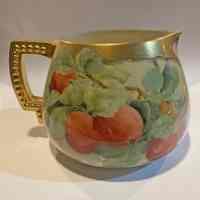
Martha "Mattie" Waide (1857-1929) | Hand Painted China Pitcher | Eastport, Maine
Martha "Mattie" Waide (1857-1929) Gift of Eleanor Norton, Eastport, Maine, 2023. Notes from Eleanor Norton, 2023: Elsie and Hilda Leland lived at the Milliken House on Washington Street in Eastport, Maine. Eleanor and Omar Norton got married in 1961. Omar Norton bought this piece and several other Mattie Waide pieces over the years from Harry Vose who used to have yard sales in front of his house on Third Street in Eastport, Maine, not far from where Eleanor and Omar Norton lived. Harry Vose was related to Elsie and Hilda Leland and he got the Mattie Waide pieces from them.
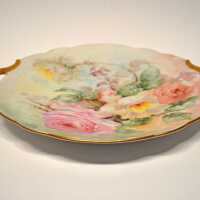
Martha "Mattie" Waide (1857-1929) | Hand Painted China Plate | Eastport, Maine
Artist: Mattie Waide Old Accession Number: 1527 Martha "Mattie" Waide (1857-1929)
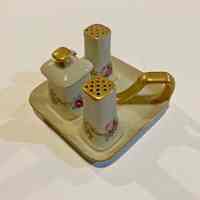
Martha "Mattie" Waide (1857-1929) | Hand Painted China Spice Tray | Eastport, Maine
Martha "Mattie" Waide (1857-1929) Gift of Eleanor Norton, Eastport, Maine, 2023. Notes from Eleanor Norton, 2023: This piece was given to Eleanor Norton by Helen McConnell in the 1970s.
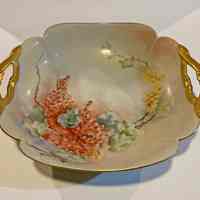
Martha "Mattie" Waide (1857-1929) | Hand Painted China Two Handle Dish | Eastport, Maine
Martha "Mattie" Waide (1857-1929) Gift of Eleanor Norton, Eastport, Maine, 2023. Notes from Eleanor Norton, 2023: Elsie and Hilda Leland lived at the Milliken House on Washington Street in Eastport, Maine. Eleanor and Omar Norton got married in 1961. Omar Norton bought this piece and several other Mattie Waide pieces over the years from Harry Vose who used to have yard sales in front of his house on Third Street in Eastport, Maine, not far from where Eleanor and Omar Norton lived. Harry Vose was related to Elsie and Hilda Leland and he got the Mattie Waide pieces from them.
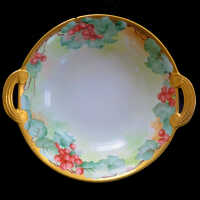
Martha "Mattie" Waide (1857-1929) | Hand Painted China Two Handle Small Bowl | Eastport, Maine
Artist: Mattie Waide Classification: Ceramics Old Accession Number: 1628 Description: Martha Clark Loring Waide (1857-1929)
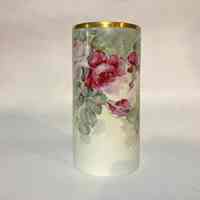
Martha "Mattie" Waide (1857-1929) | Hand Painted China Vase | Eastport, Maine
Martha "Mattie" Waide (1857-1929)
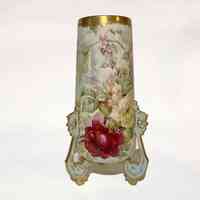
Martha "Mattie" Waide (1857-1929) | Hand Painted China Vase | Eastport, Maine
Martha "Mattie" Waide (1857-1929) Gift of Eleanor Norton, Eastport, Maine.
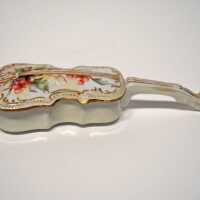
Martha "Mattie" Waide (1857-1929) | Hand Painted China Violin Style Covered Box | Eastport, Maine
Artist: Mattie Waide Old Accession Number: 1529 Martha "Mattie" Waide (1857-1929) Gift of Doris Grady Newquist, Eastport, Maine and Silver Springs, Maryland.
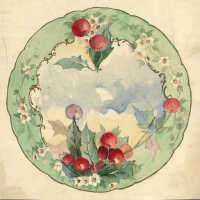
Martha "Mattie" Waide (1857-1929) | Loose Leaf Bound Book of Watercolors and Drawings for Hand Painted China, c. 1900 | Eastport, Maine
From a loose leaf bound book of watercolors and drawings for hand painted china, c.1900. Book came from the house Martha "Mattie" Waide who lived in at 17 Boynton Street, Eastport, Mainie. Mattie Waide was a prolific painter of porcelain china. Some of the watercolors are signed "Sidney Callowhill" of Boston. It is possible that Mattie Waide studied with Callowhill. Gift of Ken Schiano and Paula Beall
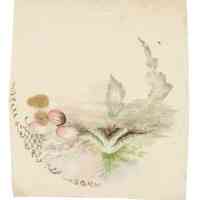
Martha "Mattie" Waide (1857-1929) | Watercolor for Hand Painted China Covered Sardine Box with Tray | Eastport, Maine
Gift of Ken Schiano and Paula Beall
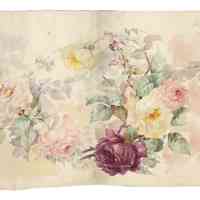
Martha "Mattie" Waide (1857-1929) | Watercolor for Hand Painted China Vase | Eastport, Maine
Gift of Ken Schiano and Paula Beall
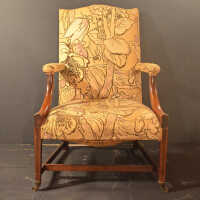
Martha Washington Chair, c.1820 | Lyman House | Perry, Maine
Old Accession Number: 2285 Martha Washington Chair. From Betty Lyman house, Perry, Maine.
Micmac & Maliseet Decorative Traditions | Edited with an Introduction by Gaby Pelletier | New Brunswick Museum, 1977
A catalogue featuring a selection of Maliseet and Micmac (Mi'kmaq) decorative arts from the collections of the New Brunswick Museum Saint John, New Brunswick
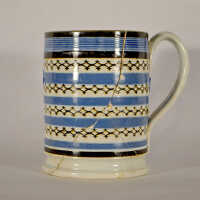
Mochaware Mug | c.1820
An early 19th century mochaware mug that was pieced back together from a number of shards.The mug dates to about 1820. This mug was unearthed in 2018 during the excavation of a six foot deep 19th century household “dump” in this region that was filled with thousands upon thousands of beautiful, but broken early 19th century ceramic and glass shards. The “dump” was on the site of a large house built in 1824 and torn down in the early 1960s. The house underwent considerable renovation in the mid-19th century. During this renovation, the existing house pantry full of ceramic and glass ware was likely cleared out and thrown in the “dump.” Some ceramic and glass shards came into the institute’s collections during this initial excavation, but much was also taken out of the region to Portland, Maine and to North Dakota. The institute sought the return of what was removed from the area. All that went to the Portland area is now back in the institute’s collections. Nearly all (including this piece), with the exception of two pieces, that went to North Dakota is now back in the institute’s collections. In 2020, another excavation of the same household “dump” was undertaken and several hundred more ceramic and glass shards were found, some of which perfectly matched shards unearthed two years before. About 100 ceramic and glass pieces have been put back together, either entirely or nearly entirely. Photo caption: An early 19th century mochaware mug that was pieced back together from a number of shards.The mug dates to about 1820. ( ) From Eastport Sentinel, March 29, 1882, p.2, c.5-6: Some old Eastport Houses, — AND THEIR OCCUPANTS.— A FAMILIAR RETROSPECT. — PAPER NO. 2 In the fine modern looking residence of Edward C. Pike on the same side above Elm street it would be difficult to recognize the outgrowth of one of these old hipped roof houses, but this one was built in that style in 1824 by Charles Peavey. In my earliest memory it wis the home of Levi Ingols, a prominent dry goods dealer, and held of the well known firm, Ingols, & Chace and Ingols & Eustis. They kept in the brick store on Water street under the old Commercial Coffee House, and Edward H. Burgin and William P. Bucknam were boys learning the business behind the counter. Afterwards the house was occupied by Edward Ilsley, at one time in the hardware business, and the first Cashier of the Frontier Bank. Mr. & Mrs. Ilsley are still living at an advanced age in Wisconsin, and their sons have achieved marked success as business men. I well remember when immediately after one of the weddings which I attended at the Hayden house, this house was opened as the home of George W. McLellan. He had a natural turn for politics, represented the town in the State Legislature, as he afterwards did Cambridge in the General Court of Massachusetts, was Sheriff of Washington County, Deputy Collector of the Port of Boston and finally Assistant Post Master General of the United States. Among later occupants of the house were Charles H. Hayden of the family first named in this article, who was the second Cashier fo the Frontier Bank, and John W. Bass a merchant of large business when ship building was at its height in Eastern Maine. QUODDY
Mochaware | C.1830 | Eastport, Maine
Circa: 1830 Old Accession Number: 2270 ( ) From Eastport Sentinel, March 29, 1882, p.2, c.5-6: Some old Eastport Houses, — AND THEIR OCCUPANTS.— A FAMILIAR RETROSPECT. — PAPER NO. 2 In the fine modern looking residence of Edward C. Pike on the same side above Elm street it would be difficult to recognize the outgrowth of one of these old hipped roof houses, but this one was built in that style in 1824 by Charles Peavey. In my earliest memory it wis the home of Levi Ingols, a prominent dry goods dealer, and held of the well known firm, Ingols, & Chace and Ingols & Eustis. They kept in the brick store on Water street under the old Commercial Coffee House, and Edward H. Burgin and William P. Bucknam were boys learning the business behind the counter. Afterwards the house was occupied by Edward Ilsley, at one time in the hardware business, and the first Cashier of the Frontier Bank. Mr. & Mrs. Ilsley are still living at an advanced age in Wisconsin, and their sons have achieved marked success as business men. I well remember when immediately after one of the weddings which I attended at the Hayden house, this house was opened as the home of George W. McLellan. He had a natural turn for politics, represented the town in the State Legislature, as he afterwards did Cambridge in the General Court of Massachusetts, was Sheriff of Washington County, Deputy Collector of the Port of Boston and finally Assistant Post Master General of the United States. Among later occupants of the house were Charles H. Hayden of the family first named in this article, who was the second Cashier fo the Frontier Bank, and John W. Bass a merchant of large business when ship building was at its height in Eastern Maine. QUODDY
Model of Acme Moving Picture Theatre, Eastport, Maine
Model of Acme Moving Picture Theatre, Eastport, Maine. Dimensions: 27 3/4 inches wide, 26 /2 inches tall and 19 1/4 inches deep. Small sign at mid-height on the front right side of the model reads "Wilbor A. Shea." The Acme Theatre was built in 1908 and burned to the ground in 1941.
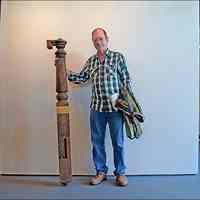
Newell Post, c.1855 | American Civil War U.S. Navy steam screw frigate, U.S.S. Wabash
Classification: Furniture Old Accession Number 2249 Description: Newell Post from Civil War ship, Wabash. The newell post came from the Civil War ship, Wabash, that was burned at Broad Cove, Eastport, Maine on June 26, 1913. Gift of Wayne Wilcox, Eastport, Maine. • From Eastport Sentinel, June 11, 1913, p.2: Battle ship Wabash to be Burned on Coney’s Beach. Following the fate of the old-time warships Vermont and Minnesota that were towed here from the Charlestown navy yard several years ago and burned to recover the copper and other metal contained in their oaken hulls, a sister ship of the Minnesota has now been brought here. The old wooden battleship, the U.S.S. Wabash, one of the few remaining specimens of the type of frigate that made America supreme on the seas, was towed out of Boston harbor last Thursday bound for Eastport. She arrived here Sunday forenoon in tow of the Lehigh Valley tug Perth Amboy and was grounded at extreme high water on Coney’s beach, Broad Cove, to be burned for her junk. The great rise and fall of the tide at this place, leaving the hulk high and dry on the beach during a part of each day, prompts the owners to bring these old craft way down here and incurring the expense of tonnage for some three hundred miles. The Wabash’s only passengers on her final voyage were “Indian Charlie,” steward on the vessel when it was a training ship, and Charlie’s dog Swea. The Wabash went out of commission at the Charlestown navy yard April 20, 1912, after having served as receiving ship there for 36 years. She was succeeded by the scout cruiser Salem.
Oak Office Desk, c.1890 | Eastport Sentinel Newspaper Office | Eastport, Maine
Classification: Furniture Old Accession Number: 2240 Description: Oak desk. From Eastport Sentinel Newpaper Office, Water Street, Eastport, Maine. Desk was used by Joyce's father, Roscoe Emery, at his newspaper office located on Water Street in Eastport, Maine. Gift of Joyce Emery Kinney, Eastport, Maine.
Oak Office Desk, c.1890 | Law Offices of Oscar Whalen | Eastport, Maine
Classification: Furniture Old Accession Number: 2241 Description: From Oscar Whalen Law Office, Key Street, Eastport, Maine. Gift of Karen Spinney Theriault, Eastport, Maine.
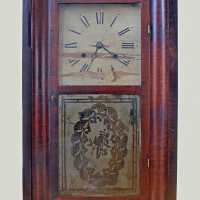
Ogee Clock, c.1840s | H.Hunt & Company | St. Stephen, New Brunswick
Classification: Furniture Circa: 1840 Old Accession Number: 2256 Description: Ogee clock. Made in St. Stephen, New Brunswick by H. Hunt & Company. c.1840s.
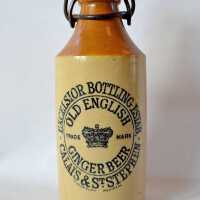
Old English Ginger Beer | Excelsior Bottling Establishment | Calais, Maine and St. Stephen, New Brunswick
A late 19th century stoneware bottle for the Old English brand of ginger beer produced by the Excelsior Bottling Establishment of the neighboring border communities of Calais, Maine and St. Stephen, New Brunswick located on opposite sides of the St. Croix River. The bottle stands about seven inches tall and two and a half inches wide and likely dates to the 1880s. Excelsior was run by two Irish Canadians, F.H. Tyrill and W. J. Cummings. Ginger beer was popular during the 19th and the early 20th centuries. It is not truly a beer as beer involves the fermentation of a grain while ginger beer involves the fermentation of ginger and added sugar. Today's ginger beers are not alcoholic, but 19th century ginger beers were, particularly moreso before the mid-19th century. After brewing, ginger beer was poured into stoneware bottles that were wired and corked shut to maintain carbonation. Stoneware bottles were used instead of glass bottles as ginger beer was usually cloudy and unattractive in appearance. Before 1880, the stoneware bottles were plain, but beginning in the 1880s the bottles became sleeker with colorful shoulder slips and transfer printed designs. This bottle was made by Munderloh & Company of Montreal, Quebec. The bottle was part of a lot of six stoneware ginger beer bottles (the other five were Old Homestead ginger beer also of Calais and St. Stephen) acquired at Ebay auction. Photo caption: Stoneware bottle for the Old English brand of ginger beer produced by the Excelsior Bottling Establishment of Calais, Maine and St. Stephen, New Brunswick. Bottle dates to the 1880s.
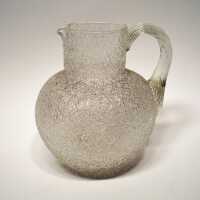
Overshot Glass Pitcher, c. 1870
Old Accession Number: 1547
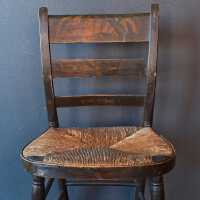
Painted Chair, c.1830 | Eastport, Maine
Old Accession Number: 3017 Painted Chair, c.1830. From Eastport, Maine.
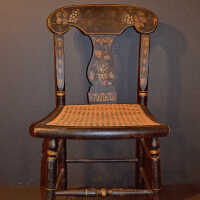
Painted Side Chair, c.1840 | Calais, Maine
Classification: Furniture Circa: 1840 Old Accession Number 2257 Description: Painted side chair. From Calais, Maine house. c. 1840-50.
Paper Book Mark, Ganong Chocolates | St. Stephen, New Brunswick
Old Accession Number: 1625 Ganong Chocolates, St. Stephen, New Brunswick.
Paper Weight | Jon Sawyer | St. Andrews, New Brunswick
Old Accession Number: 1559
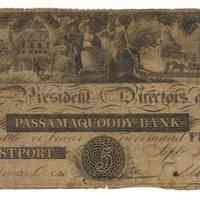
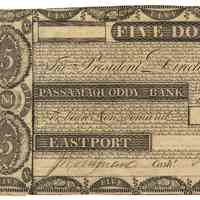
Passamaquoddy Bank | Five Dollars | Eastport, Maine | 1824
Commonwealth of Massachusetts 1819 Chap. 0066. An Act to incorporate the President, Directors and Company of the Bank of Passamaquoddy. Sec. 1. Be it enacted by the Senate and House of Representatives, in General Court assembled, and by the authority of the same. That Theodore Lincoln, Lemuel Trescot, Jabez Mowry, Seward Bucknam, Ichahod R. Chadbourne, Moses Fuller, Jonathan D. Weston, Samuel Wheeler, Worster Tuttle, Leonard Pierce, Jonathan Bartlett, Horatio G. Balch, and Samuel Tuttle, their associates, successors and assigns, shall be, and hereby are created a corporation, by the name of the President, Directors and Company of the Bank of Passamaquoddy; and shall so continue, from the first day of August next, until the first Monday of October, which will be in the year of our Lord one thousand eight hundred and thirty one ; and the said corporation shall always be subject to the rules, restrictions, limitations, taxes, and provisions, and be entitled to the same rights, privileges and immunities, which are contained in an act, entitled * An act to incorporate the President, Directors and Company of the State Bank," except in so far as the same are modified or altered by this act, as fully and effectually as if the several sections of said act were herein specially recited and enacted : Provided, however, the amount of bills issued from said bank, at any time, shall not exceed fifty per centum beyond the amount of their capital stock, actually paid in. Sec. 2. Be it further enacted, That the capital stock of said corporation, shall consist of the sum of one hundred thousand dollars, in gold and silver, to be, besides such part as this Commonwealth may subscribe, in manner hereinafter mentioned, divided into shares of one hundred dollars each, which shall be paid in four equal instalments ; the first, on or before the fifteenth day of August next; the second, on or before the fifteeuth day of November next; the third, on or before the fifteenth day of June, eighteen hun-fdred and twenty ; and the fourth, on or before the fifteenth day of August, eighteen hundred and twenty ; or at such earlier time as the stockholders, at any meeting thereof, may order. And no stockholder shall be allowed to borrow at said bank, until he shall have paid in his full proportion of the whole of said capital stock, of one hundred thousand dollars ; and that no dividend shall be declared, on the capital stock of said bank, until the whole of said capital stock shall have been paid in, conformably to the provisions of this act: And the stockholders, at their first meeting, shall, by a majority of votes, determine the mode of transferring and disposing of said stock, and the profits thereof; which being entered in the books of said corporation, shall be binding on the stockholders, their successors and assigns, until they shall otherwise, determine : And the said corporation are hereby made capable inlaw, to have, hold, purchase, receive, possess, enjoy, and retain, to them, their successors and assigns, lauds, rents, tenements, and hereditaments, to the amount of ten thousand dollars, and no more, at one time ; with power to bargain, sell, dispose and convey the same by deed, under the seal of said corporation, and signed by the President, or two of the Directors, and to loan and negociate their monies and effects, by discounting on banking principles, on such security as they shall think adviseable : Provided, however, that nothing herein contained, shall restrain or prevent said corporation from taking and holding real estate, in mortgage or on execution, to any amount, as security for, or in payment of any debts due to the said corporation : And provided, further, that no monies shall be loaned, or discounts made, nor shall any bills, or promissory notes, be issued from said bank, until the capital subscribed, and actually paid in, and existing in gold and silver, in their vaults, shall amount to fifty thousand dollars. Sec. 3. Be it further enacted, 'I hat the said bank shall be established, kept, and transact their business, at Eastport; and five of the Directors thereof, at least, shall be inhabitants of Lubec, Skc. 4. Be it further enacted. That no more than three fourths of the Directors elected, who shall be in office, at the time of an annual election, exclusive of the President, shall he elected for the next succeeding year; and no Director shall hold his office more than three years out of four, in succession, except the Di-1 rector that is President, at the time of an annual election, who may be reelected. Sec. 5. Be it further enacted, That whenever the Legislature shall require it, the said corporation shall loan to the Commonwealth, any sum of money which shall be required, not exceeding ten per centum of the capital stock, actually paid in, at. any one time, reimbursable by five annual instalments, or any shorter period, at the election of the Commonwealth, with the annual payment of interest, at a rate, not exceeding five per centum per annum: Provided, however, that the Commonwealth shall never stand indebted to the corporation, without their consent, for a larger sum than twenty per centum of their capital actually paid in. Sec. 6. Be it further enacted, That the persons herein before named, or any three of them, are authorized to call a meeting of the members and stockholders of said corporation, as soon as may be, at Eastport, by advertising the same for one week, in the Eastport Sentinel, for the purpose of making, ordaining and establishing such by laws, ordinances, and regulations, as the said stockholders shall deem necessary, an;1 for the choice of the first Board of Directors, and such other officers as they shall see fit to choose. Sec. 7- J5e it further enacted, That the Commonwealth shall have a right, whenever the Legislature shall make provision therefor, by law, to subscribe, on account of the Commonwealth, a sum, not exceeding1 one half of the capital stock actually paid in, to be added to the capital stock of said corporation, subject to -such rules, regulations, and provisions, as to the management thereof, as shall, by the Legislature, be made aud established. Sec. 8. Be it further enacted, That whenever the Commonwealth shall subscribe to the capital stock of said corporation, in manner herein before provided for, in addition to the Directors, by law, to be chosen by the stockholders, the Legislature shall have a right, from time to time, to appoint a number of Directors! 39 to said bank, in proportion, as the sum paid from the treasury of the Commonwealth, shall bear to the whole amount of stock actually paid into said bank, if at any time hereafter, they shall see fit to exercise that right. Sec. 9- Be it further enacted, That the Cashier, before he enters upon the duties of fns office, shall give bond, with two sureties, to the satisfaction of the Board of Directors, in a sum, not less than twenty thousand dollars, with conditions for the faithful discharge of the duties of his office. Sec. 10. Be it further enacted, That the said corporation, from and after the first day of October next, shall pay, by way of tax, to the Treasurer of this Commonwealth, for the use of the same, within ten days after the first Monday of April and October, annually, the half of one per centum on the amount of stock which shall have been actually paid in. Sec. 11. .Be it further enacted, That the said corporation shall be liable to pay to any bona fide holder, the original amount of any note of said bank, counterfeited or altered in the course of its circulation, to a larger amount, notwithstanding such alteration. And that the said corporation shall not, at any place whatever, �directly or indirectly, purchase, receive, pay or exchange any bill or note of said bank, or of any other bank, incorporated within this Commonwealth, for any less sum than the nominal value expressed in such bill or note. [Approved by the Governor, June 19th, 1819.]
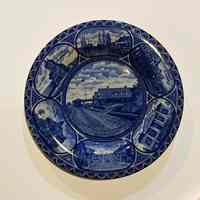
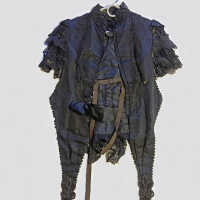
Piano Chair, c.1885 | North Church | Eastport, Maine
Classification: Furniture Old Accession Number: 2245 Description: Piano chair. From Free Will North Baptist Church, 82 High Street, Eastport, Maine. Chair was in Free Will North Baptist Church building when it was gifted to the Tides Institute & Museum of Art in 2014.
Piano Stool, c.1885 | North Church | Eastport, Maine
Classification: Furniture Old Accession Number: 2246 Description: Piano stool. From Free Will North Baptist Church, 82 High Street, Eastport, Maine. Chair was in Free Will North Baptist Church building when it was gifted to the Tides Institute & Museum of Art in 2014.
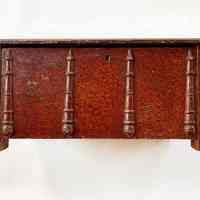
Pilgrim Box | Eastport, Maine | C.1670
Wood box called "Pilgrim Box." From house in Eastport, Maine. Box dates to about 1670.
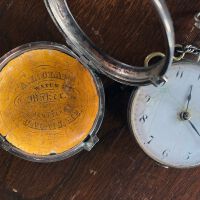
Pocket Watch | A.L. Clapp | Watch Maker and Jeweler, Calais, Maine
CALAIS MADE WATCH, C.1860s! Photo of a mid-19th century watch that we recently secured in California for our collections. The watch was made by A.L. Clapp, watchmaker and jeweler, of Calais, Maine. We're guessing the watch dates to the 1860s. http://stcroixhistorical.com/?p=1125: Calais Jewelers Over The Years Posted on December 7, 2016 by schsuser We note with regret the closing of Kendall’s Jewelers even if, as hoped, it proves to be only temporary. If the business does not reopen it is yet another setback to the valiant efforts of the Redevelopment Committee to keep Main Street viable as a shopping destination. It also says a good deal about the economic and social changes which the new economy has wrought on the business community. In the past a good jeweler was as essential to the community as a good doctor or lawyer and a lot more pleasant to visit. Today a local jeweler can still offer professional advice on many subjects but many shoppers prefer the convenience of the internet. In the past it was only the local jeweler who could made sure you weren’t half and hour late to an important appointment but that you didn’t get lost on the way. If Kendall’s does not reopen next year it will mark it the first time in 175 years Calais has not had a jeweler. The first jeweler in Calais was probably A. L. Clapp who set up shop in Calais in the 1840’s and, at the time of this 1870’s photo, was located in the small building on the right just beyond the white fence. The sign just to the left of the tree say A. L. Clapp Jeweler. The large brick block just beyond Clapp’s store is directly across from the old St. Croix Hotel and now houses a number of recently renovated storefronts.. The “Stoves” ad, upper right, is on the corner of what is now Karen’s Diner. The sale of jewelry, as in fashion and accessorizing, was not Clapp’s primary business. Clapp was an “oculist” and watchmaker, two very valuable skills in those days. As business became more complex and sophisticated, it became important to “be on time” and as people read more and more, and in the 1840’s this would have been by candle or whale oil lamp,severe vision problems cropped up early in life. Eye glasses and accurate watches became vital to all walks of life and it was your local jeweler who provide these necessities. Watches were hand made and lenses for eyeglasses were ground in the store by the jeweler who over the years had acquired a certain expertise in making individual. Clapp had a monopoly in Calais for many years. By 1860 however A. P. Clapp had competition in the person of L.C.Bailey who opened a jewelry, watchmaking and optician business just across the street from Clapp in the old wooden block known as the Flatiron which is now Triangle Park. After the great fire of 1870 the brick block shown above, which is also the one seen in the prior photo, was constructed and Bailey moved across the street. In 1890 L.C. Bailey’s son Otis, seen working at the counter, took over the business and operated it until the 1940’s which would make Bailey’s the jeweler of most longevity in Calais were it not for Ross Brothers who bought out A. L. Clapp in the 1870’s. Clapp had apparently replaced his old shop with this new one story building which the Ross family eventually demolished and replaced with the brick building most of us remember as Ross Brothers. Ross Brothers was in continuous operation for almost a century, nearly 20 years longer than Bailey. However it must be said that L.C.Bailey, Otis Bailey and A. L. Clapp were probably more highly skilled craftsmen in both optometry and watchmaking than Ross who, by 1914, was specialized primarily in high end jewelry, cut glass, etc. In 1914 Bailey continued to tout his skills as an optician although both stores had more similarities to the jewelry stores of today than A.L. Clapps’ business in the 1840’s. In 1901 Bailey’s Jewelers employed a young man named George Bates as a clerk. After working for Bailey for several years George opened his own store on Main Street just below the State Theatre. The business moved several times over the years. The first two photos above show the original store and its display window. The display window contains on Waterman pens which apparently came in infinite varieties and prices. During the war Bates sold such items as military watches with a luminous dial, an important and novel feature at the time and military trench mirrors, specially designed to stand the wear and tear of combat. The third photo shows the store when it had moved up the street to the other side of Fishman’s. Eventually it moved to building just to the right of Kendall’s which is now occupied by the candy store but soon closed. George has hired a clerk named Bill Rutherford who worked for him until George died in the mid 40’s. George’s son Arlo Bates had come back from the war and taken over the business but Arlo and William had very different ideas on running a jewelry business so William quit and opened Rutherford’s Jewelers which graced Main Street for many years. That’s all we can tell you about the jewelry business in Calais except to add that Milltown had a jewelry store run by A.A. Day who claimed in 1892 to be “prominent oculist” who makes a specialty of this branch of the business and promised “exceedingly low rates and finally a fellow named A.W. Carter had a jewelers next to the Andrews Hotel by the bridge for several years. He charged a mere dollar to clean your watch and for only another dollar he would replace the mainspring, a fair price as a good watch cost the equivalent of nearly a thousand dollars in today’s money.
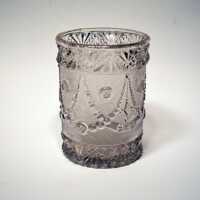
Portland Glass | Portland Glass Company | Portland, Maine
Artist: Portland Glass Company Old Accession Number: 1528
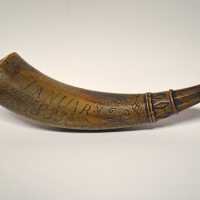
Powder Horn | 1833 | Lubec, Maine
Circa: 1833 Old Accession Number: 1549
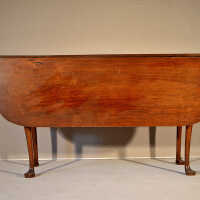
Queen Anne Drop Leaf Table, c.1830 | Calais, Maine
Classification: Furniture Old Accession Number: 2242 Description: Queen Anne Drop Leaf Table. From Calais, Maine.
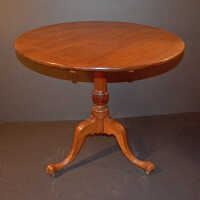
Queen Anne Large Round Tilt Top Table, c.1820 | Elm Cottage | Eastport, Maine
Classification: Furniture Old Accession Number: 2218 Description: Large Round Tilt Top Table. From Emery family Elm Cottage, Elm Street, Eastport, Maine. Gift of Joyce Emery Kinney, Eastport, Maine.
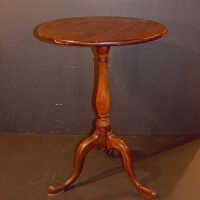
Queen Anne Small Round Tilt Top Table, c.1820 | Elm Cottage | Eastport, Maine
Classification: Furniture Old Accession Number: 2219 Description: From the Emery family Elm Cottage, Elm Street, Eastport, Maine. Gift of Joyce Emery Kinney, Eastport, Maine.
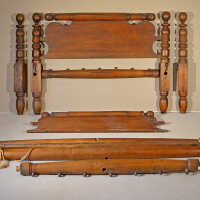
Rope Bed, c.1850 | Pembroke, Maine
Classification: Furniture Old Accession Number: 2250 Description: Rope bed. From Pembroke, Maine. Bed may have been made in Charlotte, Maine. Gift of Diane Glidden whose family was from Pembroke, Maine. Information from Diane Glidden: From: Comcast dianeglidden101@comcast.net Subject: AntiqueropebedfromPembroke Date: July 20, 2015 at 10:53 AM To: hfrench@tidesinstitute.org dear Hugh, here is the information about the bed that I brought when I was a child growing up in Pembroke in the early 50's the bed was stored in a bedroom in a deep closet. I lived with my parents and my little sister in my grandmother's house on Lincoln Ave.(now Little Falls rd.). she was Harriet Wilder Linnell and it was the house in which she grew up and then raised her own children . Her grandfather John Mincher came over from England in 1844with his wife and small son to work in the Pembroke iron works.He built the house soon after that. my grandmother passed on in 1958. The house was sold in 1965---80 acres of land, the large house, and 2 barns went for $1500 (unbelievable!). It was taken down In the mid 1970's and the entire hill was sold off for gravel. We still have land on Leighton Pt. rd. Which is where we stay when we are there. Art Carter thinks the bed may have been made in Charlotte because it looks just like one that was made in the factory there. I will send you the family story of the. Wilder sand Minchers when I learn how to use my new laptop. diane Glidden And on Leighton Pt. Rd. Which is where we stay when we are there. W Summer, 2021: Cory Critchley showed the photograph of the bed to Eileen Clark of the Charlotte (Maine) Historical Society. Eileen said the bed may have been made by the Clapp Furniture Factory that once existed in Charlotte at the corner of Smith Ridge Road and Route 214 (Ayers Junction Road).
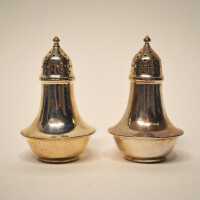
Salt and Pepper Shakers. [Silver] | [No Artist Defined]
Old Accession Number: 1542 Description:
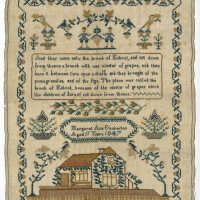
Sampler [Needle Point] | Margaret Ann Dunkerton | 1847 | Eastport, Maine
A mid-19th century hand stitched sampler that according to stitched writing on the sampler dates to 1847 and was made by 11 year old Margaret Ann Duckerton of Eastport, Maine. There appears to be some discrepancy as to Margaret Dunkerton's actual age at the time she made the sampler or the date of the sampler as records indicate she was was born in 1838 in Windsor, Nova Scotia. This would put her age at nine and not 11 when she made the sampler. Soon after Margaret’s birth, her family moved to Eastport. The making of samplers was a common activity for girls during this time as a way to help teach basic needlework skills while including the alphabet, numbers, important quotations and family history. Margaret’s sampler has several of these elements in a well made and well balanced design. There is what might represent the family house and fence at the bottom of the sampler, a quotation from the King James version of the Bible (the Book of Numbers, Chapter 13, Verse 23), and above the quotation two men in period clothing with a hawk in a tree branch on either side. Three sides of the sampler are framed with a vine like scroll. Margaret went on to marry James Lawrence in 1855 and together they had six children. She lived the rest of her life in Eastport until 1935 dying at the age of 97 and is buried in Hillside Cemetery in Eastport. The sampler was handed down through later generations of the Dunkerton-Lawrence family and eventually turned up for auction in California in 2008. The Tides Institute acquired the sampler at this auction. Photo caption: Mid-19th century hand stitched sampler that according to stitched writing on the sampler dates to 1847 and was made by 11 year old Margaret Ann Duckerton of Eastport, Maine. Artist: Margaret Ann Dunkerton Medium: Needlepoint Circa: 1847 Old Accession Number: 117
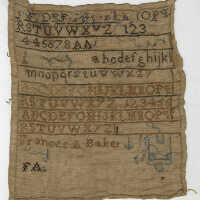
Sampler | Frances A. Baker, Eastport, Maine [1824 - 1881]
This sampler was made by a girl who became the wife of Edward Starbird Paine of Eastport. She was the grandmother of Doris Paine of Eastport, Maine. Frances Baker was born December 4, 1824. She died February 2, 1881.
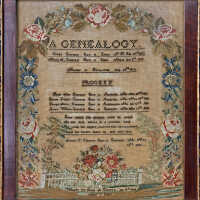
Sarah Ann Cheney | Sampler | 1846
A large (24” x 20 1/2”) mid-19th century needlework sampler by Sarah Ann Cheney of Eastport, Maine that she did when she was 11 years old. The sampler dates to 1846. The sampler is silk on Penelope weave linen and features cross and straight stitches. It is in remarkable condition for its age. Within the sampler, Sarah included information about her parents and their children, even adding her baby brother below the verse years after she had finished the piece. The sampler was part of an exhibition of early to mid-19th century federal period Maine needlework samplers held at the Saco Museum in Maine in 2013. The curator of the exhibition, Leslie Rounds, wrote in the accompanying exhibition catalogue: “Sarah Cheney's sampler is the ‘newest’ of all the samplers in the exhibition and shows many signs of the new styles of needlework that were emerging at the time. However, it also continues to demonstrate stylistic elements that clearly tie it to the earlier works in the exhibition, with its lavish rose border and family register format that appears to be a near-copy of many Portland samplers. She was mimicking the Berlin work that was quickly becoming the needle arts rage of the era. Sarah was the eldest of the five children of George Cheney and his wife, Mary. On the 1850s census, George was listed as a “trader” and the family was residing in Eastport. On July 20, 1858, Sarah married George Kilborn in Boston, Massachusetts. The Kilborns seem to have lived in Boston for the rest of their lives.” The Tides Institute acquired this sampler earlier in 2022 from a dealer in Connecticut that specialized in antique needlework samplers.
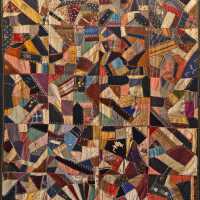
Sarah Preble Livermore (1867-1961) | Crazy Quilt | Eastport, Maine | c.1890s
Gift from estate of Frances Whalen Strout, 2020. From Anna Whalen House, 7 Key Street, Eastport, Maine. A late 19th century “crazy quilt” from this region that came into our collections in 2020.. It dates to the 1890s and had come down through the Livermore and Whalen families of Eastport, Maine before it was donated to us by descendants of the family. The quilt measures 63” high and 51” inches wide and includes a piece that has a large cursive “L” with the numbers 84 and 94 on either side of the letter as well as a piece that is a ribbon for the 13th reunion of the 1st Maine Cavalry of the American Civil War. Crazy quilts hit their heyday in the 1880s to early 1890s, putting this quilt in the middle of the craze. They were usually dated, as were needle point samplers, with the dates of their completion so this quilt may have been a 10 year project, begun in 1884 and finished in 1894. The quilt most likely was made by Sarah Preble Livermore who was born in 1867 and would have been 17 when she started the quilt. The large cursive “L’ stands for Livermore and Sarah’s last name would have still been Livermore until 1892 when she married Leveret Whalen and took the Whalen last name. In addition, Sarah’s mother, Ellen Bucknam Livermore, wrote poems to Sarah about gifts she was giving her, including sewing needles. Sarah clearly took an interest in the crafts of the time as she also did some china painting as well. As for the 1st Maine Cavalry ribbon, one of Sarah’s uncles was Brevet Brigadier General Charles H. Smith, who had married Mary Livermore, and was an honored veteran of the American Civil War, having been awarded the Medal of Honor for his heroism. He entered the Civil War as a captain in the 1st Maine Cavalry regiment and later took command of the regiment. Sarah Preble Livermore Whalen Hayes (1867-1961) married Leverett Mitchell Whalen (1850-1912) in 1892 and then George Hume Hayes (1851-1935) after Leverett died. At the time the quilt was made, Sarah would have been living in the large 7 Key Street house in Eastport that had been in the Whalen family for generations. It stayed in this house after Sarah’s death as the house and quilt were inherited by Sarah’s daughter, Anna K. Whalen (1894-1986) who continued to live in the house until her death. Anna had no children and when she died, the house, quilt and other household furnishings were inherited by Anna’s niece, Frances Whalen Strout (1933-2020). Frances sold the house and moved the quilt and most of the household furnishings to her ranch style home with attached garage in Brewer, Maine. She converted her garage into a 19th century parlor room filled with the furnishings from her aunt’s Eastport house including the quilt. Frances had no children and when she died the quilt along with many with many other of the family furnishing were placed with the Tides Institute in 2020.
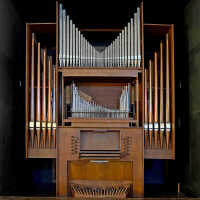
Schlicker Organ Company, Buffalo, New York | Chamber Organ | 1961
A modern chamber organ that was constructed in 1961 by the Schlicker Organ Company of Buffalo, New York. It was built for noted American sculptor, Richard Lippold, of Locust Valley, New York and designed for solo and ensemble Renaissance and Baroque music. It is not a church organ, but is intended for chamber music. Hermann Schlicker was among the immigrant pioneers in the United States of the Baroque revival. He was active from the 1940’s to the 1970’s. The instrument is entirely mechanical, except for the electric blower which supplies wind. Mechanical linkage from keyboards and pedals opens valves beneath the pipes. The design is rendered in oak and mahogany, and brass and steel fittings. The pipes are copper, oak and tin. After the death of the chamber organ’s original owner in 2002, the organ was disassembled and stored in a warehouse in Brooklyn, New York. The Tides Institute learned of the organ’s existence in 2016 from someone who knew the institute’s North Church space in Eastport, Maine and its exceptional acoustics. They thought the organ and North Church space would be a perfect match. The institute was able to purchase the disassembled organ and had the pieces transported to Eastport. In spring of 2018, the organ was reassembled and installed in the North Church space. That summer, an early music concert was performed in the space with Ensemble Abendmusik based in Boston with one of the world’s leading organists, James David Christie, giving inaugural performances with the organ. Photo caption: Modern chamber organ reinstalled in the Tides Institute’s North Church space. The organ was constructed in 1961 by the Schlicker Organ Company of Buffalo, New York. Flentrop organ pipes: https://www.flentrop.nl/ukflentroporgan.html.
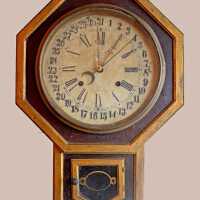
School House Clock, c.1860s | Calais, Maine
Old Accession Number: 2254 School house clock, c. 1860s. From Calais, Maine.
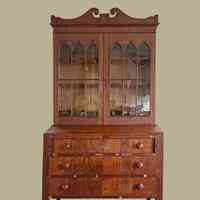
Secretary Desk | Chadbourne House, Eastport, Maine | c.1820
Gift of Ruth McInnis, 2026.
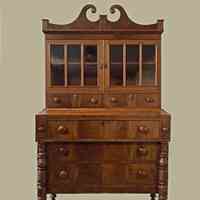
Secretary Desk | Wadsworth-Raye Family | Circa 1840 | Eastport, Maine
Gift from John Lester Raye, Canton, Connecticut, 2023 Telephone conversation with John Raye, October 19, 2023: John said the desk came from the house of his great-great-grandfather, George Ferdinand Wadsworth (November 1, 1808 - May 15, 1903), at 62 High Street in Eastport, Maine. The desk then descended to George's son, Henry Howard Wadsworth (March 1, 1833 - February 10, 1934), and to his house at 22 Key Street. The desk then descended to Henry's daughter, Mary Howard Wadsworth (July 13, 1872 - November 6, 1970), who never married and lived at 22 Key Street until she died in 1970. John's father, John Franklin Raye (September 27, 1918 - March 5, 2009), got the desk around 1960 and brought it to his home in Simsbury, Connecticut. His mother was Helen Prince (Wadsworth) Raye. John Franklin Raye had the desk restored by a well known furniture restorer in Riverton, Connecticut next to the historic Hitchcock Furniture Company. The desk then descended to his son, John Lester Raye, of Canton, Connecticut.
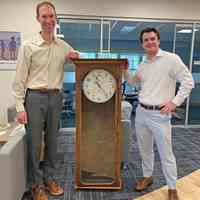
Seth Thomas Mahogany No. 4 Regulator Clock | c. 1900-1925 |
Gift from Bangor Savings Bank, Bangor, Maine, 2023. From FaceBook post for Tides Institute & Museum of Art, July 11, 2023: A CLOCK RETURNS! A tall (nearly 5 feet in length) wall clock that once graced the walls of our main building, the former Eastport Savings Bank building, in downtown Eastport, Maine has recently returned. We’re trying to find more about the history of the clock. We’re told the clock hung in the main lobby of the Eastport Savings Bank. Then after this bank was absorbed by the Bangor Savings Bank and a new branch building was built at the top of a hill on nearby Washington Street, the clock travelled there and hung in the conference room. A recent remodeling of this branch building did not allow for the clock to remain there. We made some inquiries and Bangor Savings Bank was willing to donate the clock to our collections and have the clock return to its original bank building home (now our main building). This is where it now is. We’re grateful to Bangor Savings Bank for their generosity and consideration. Now to find out more about the clock. It has a Seth Thomas clock face. But the large tall mahogany wooden case appears to have been custom built. Perhaps it was made to note an Eastport Savings Bank anniversary of some sort. We’re hoping someone may know more. Thank you. See FaceBook Comments below. The clock originally hung in the lobby of the First National Bank (later Fleet Bank) on Water Street in Eastport. Bangor Savings Bank took over Fleet Bank and moved the clock to their new Eastport Branch bank building on Washington Street in Eastport. Ann Marie Bellefleur Bonita L. Smith do you have any information on this clock? Bonita L. Smith Ann Marie Bellefleur when Bangor savings move the clock from the old fleet bank. It was cleaned and put into working condition by the clock dock at that time from Dennysville. Bonita L. Smith That would’ve been 1996 Bonita L. Smith Ann Marie Bellefleur no. I only only know that it hung for a long time across the street at Merrill trust bank. Lou Esposito was the manager at the time I began working for Bangor Savings Bank . When Bangor Savings acquired fleet. We took the clock from the old fleet bank, and put it at the Bangor Savings Bank on Washington Street. I don’t remember it ever having been at the old Bangor Savings Bank/E sport savings bank. I only remember it being on the wall at the bank across the street which would’ve been the old fleet building. Hugh French Bonita L. Smith Thank you very much. Do you recall which wall the clock hung on at the old Fleet Bank branch on Water Street? Bonita L. Smith Hugh French yes 👍 n the same side as the front door. Hugh French Bonita L. Smith Thank you ever so much! Brian Smith Very impressive! Michelle Wilson Stanhope How about asking Andy and Nancy Seeley? He was the Bangor Saving manager when I was a kid in the building that is now the Tides Institute. Reading through the comments another person who may know is Carolyn Baxter. She worked at the old Merrill Bank . Lori Williams ODonnell I grew up in Thomaston CT, there is a Facebook page of Thomaston History where people discuss the clocks, someone may have some information. My grandparents are from Deer Island, a great Aunt from DI worked at Seth Thomas Clocks during the 30’s and 40’s. James Pollowitz This is a great discovery. Alden Chandler Terrific! Ann Marie Bellefleur This is great news. I worked with this clock for 23 years but never knew where it came from Bonita L. Smith Ann Marie Bellefleur I’m surprise that you didn’t remember that we moved it from the old fleet branch in 1996 Ann Marie Bellefleur Bonita L. Smith I thought so but wasn’t sure Tedeke Muri Seth Thomas also made metronomes. I have one.
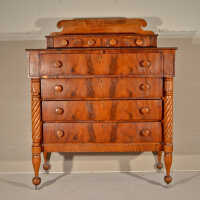
Sheraton Chest of Drawers, c.1830 | Dennison House | East Machias, Maine
Old Accession Number: 2221 From the Dennison House, East Machias, Maine.
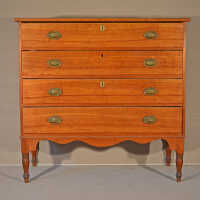
Sheraton Chest of Drawers, c.1830 | Elm Cottage | Eastport, Maine
Old Accession Number: 2236 Sheraton Chest of Drawers, c.1830. Gift from Joyce Emery Kinney, Eastport, Maine. From the Emery family Elm Cottage, 2 Elm Street, Eastport, Maine.
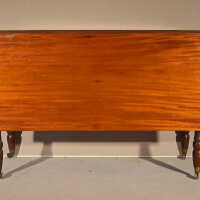
Sheraton Drop Leaf Table, c.1830 | Elm Cottage | Eastport, Maine
Classification: Furniture Old Accession Number: 2217 Description: From the Emery family Elm Cottage, Elm Street, Eastport, Maine. Gift of Joyce Emery Kinney, Eastport, Maine.
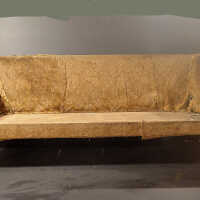
Sheraton Sofa, c.1820 | Grady House | Eastport, Maine
Old Accession Number: 2281 Sheraton Sofa, c.1820. Gift from Gregory Noyes, 122 Water Street, Eastport, Maine. From Grady House, 1 Adams Street, Eastport, Maine.
Ship Desk, c.1855 | American Civil War U.S. Navy steam screw frigate, U.S.S. Wabash
Classification: Furniture Circa: 1860 Old Accession Number: 2215 Description: From the U.S.S. Wabash. Gift of Ruth McInnis, Eastport, Maine in memory of her son, Bruce McInnis. The Civil War Ship, The Wabash, was burned at Broad Cove, Eastport, Maine on June 26, 1913.
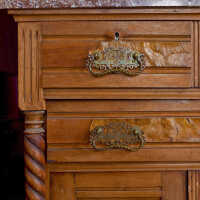
Side Board, c.1890 | Kilby House | Eastport, Maine
Old Accession Number: 3006 Side Board, c.1890. Gift of John Pike Grady, Eastport, Maine. From the Herbert and Harriet Kilby house 122 Water Street, Eastport, Maine.
Side Table With Marble Top, c.1890 | Elm Cottage | Eastport, Maine
Classification: Furniture Old Accession Number: 2239 Description: Victorian side table with marble top. From the Emery family Elm Cottage, Elm Street, Eastport, Maine. Gift of Joyce Emery Kinney, Eastport, Maine.
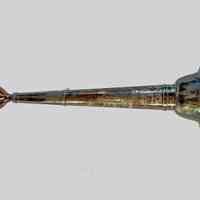
Silver Fireman's Speaking Trumpet | Frank A. Buck | 1874 | Eastport, Maine
Inscribed on Trumpet: Presented to F.A. Buck by the Members of Eureka Engine Company No. 1, Eastport, 1874 Horn is 21" long and the bell part is 6 3/4" in diameter. From The Quoddy Tides, December 11, 1970, Page 12: Mrs. Arlene Vaughn of Eastport recently presented to the Peavey Memorial Library, on behalf of the late Frank A. Buck's grandchildren, his fireman's silver trumpet. This trumpet, engraved with his name, and that of his company, was presented to Mr. Buck as fire chief by the members of Eureka Engine Company No. 1, Eastport, in 1874. The fire engine which belonged to that company was in the parade on October 15th when Eastport celebrated Maine's Sesquicentennial. The trumpet is now on display in the Reading Room of the Library. Placed on permanent loan in 2014 from the Eastport Library Association of Eastport, Maine. Loan agreement on file.
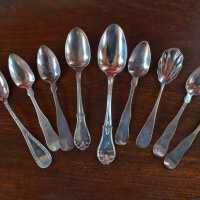
Silver Spoons | L.C. Bailey | Calais, Maine
Artist: L.C. Bailey Classification: Silver Circa: 1860 Old Accession Number: 3018 Description: Silver spoons made by L.C. Bailey of Calais, Maine, c. 1850-1870.
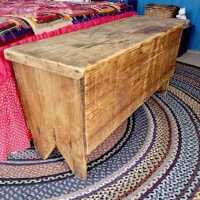
Six Board Blanket Chest, c.1710-1735 | Auclair House
Six board blanket chest. Circa 1710-1735. From Roger Segien grandmother's (Emily Auclair) house, Washington Street, Eastport, Maine.
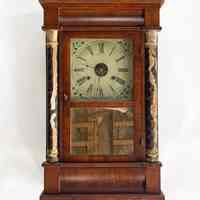
Smith Adams Clock | Calais, Maine | C.1870
From CLOCKMAKERS, WATCHMAKERS, and CASEMAKERS of the STATE of MAINE, 1700 -1925, Compiled by Donn Haven Lathrop: ADAMS, Smith Bangor, Milltown, Calais 1828-1901
Smoked Herring Sticks | McCurdy Smokehouse | Lubec, Maine
A collection of twenty-nine 20th century wooden smoked herring sticks from the McCurdy herring smoke house complex in Lubec, Maine. During the 19th and for much of the 20th centuries, there were dozens of herring smoke houses throughout the coastal border region between Maine and New Brunswick. Lubec had at least 13 herring smoke houses and Seal Cove on neighboring Grand Manan, New Brunswick had even more. The process of smoking the plentiful herring caught in the surrounding waters and bays was a centuries old process brought to North America from Europe. The half inch in diameter smoked herring sticks, some round, some square, average about 40 inches in length and are sharpened on one end. To this day they retain a pungent smell of smoked herring. The McCurdy complex operated between about 1906 and 1991 on the Lubec waterfront. It is last nearly intact early 20th-century herring smoke house complex in Maine and has been listed on the National Register of Historic Places since 1993. Others still exist in New Brunswick. Once the herring were brought to a herring smoke house operation by boat, they were soaked in a salt brine and then strung on the wooden herring sticks. Sticks full of strung herring were then brought inside nearby smoke houses and suspended in a series of vertical bays above smoldering fires on the building floor. In 1995, four years after the McCurdy herring smoke house operations closed, it was sold to Lubec Landmarks, an organization dedicated to preserving the McCurdy complex and history.
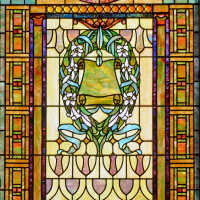
Spence, Bell & Company, Boston | Stained Glass Window, North Church, Eastport Maine | 1916-1917
One of eight large stained glass windows in the former sanctuary space of the Tides Institute & Museum of Art’s North Church building in Eastport, Maine. The North Church building was built in 1819 for the Free Will Baptist Society, organized three years before, and known as the North Baptist Church. In 1881 the building was raised upwards and a ground level vestry space added beneath. Thirty-five years later, in 1916, during the 100th anniversary of the organization of the church, the eight stained glass windows in the sanctuary space were installed including this one. The windows had been created by the Boston studio glass firm of Spence, Bell & Company. Several other much simpler stained glass windows were installed in the church balcony as well as in the 11 foot high front doors. Little is known about Spence, Bell & Company other than they were considered very good and they did work throughout the northeast. The new sanctuary windows in the North Church were memorial windows meant to honor individuals or groups by those providing the funds to cover the cost of the windows. This window reads near the bottom, “In Loving Remembrance, Alexander W. Beckett, Emma S. Beckett.” The sanctuary windows are not overly religious in appearance, but all have religious elements. Leslie Smith, a retired Episcopal priest, provided an interpretation of the elements within this stained glass window: “Many more lilies form the border of central lozenge, which is centered by a Scroll, the Word of God. The upper arc has at center an Open Bible, symbolic of Protestant emphasis on Scripture as the heart of Christian Faith, i.e. Sola Scriptura. The Bible is surmounted by a Crown, meaning the primacy of Scripture or indicating heavenly reward.” These stained glass windows were nearly lost as soon after 2000, the building became abandoned after the congregation had dwindled and the building badly deteriorated. In 2014, the building was gifted to the Tides Institute by the then successor church owners to insure the building’s preservation.
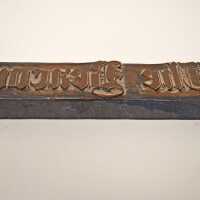
St. Andrews Beacon Newspaper Type Block | St. Andrews, New Brunswick
Old Accession Number: 1577 St. Andrews, New Brunswick
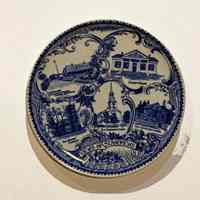
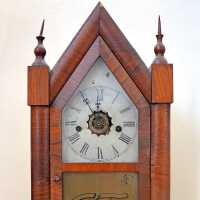
Steeple Clock, c.1870s | Wells-Shober Cottage | Campobello, New Brunswick
Classification: Furniture Circa: 1870 Accession Number: 2237 Description: Steeple Clock, c.1870s. Waterbury Clock Company, Waterbury, Connecticut. Clock is originally from the Wells-Shober Cottage, Campobello, New Brunswick. From the Emery family Elm Cottage, Elm Street, Eastport, Maine. Her father had once purchased the Wells-Shober Cottage including contents. Joyce tells of her father and brother bringing a truckload of furniture from the Cottage over to Eastport. Gift of Joyce Emery Kinney, Eastport, Maine. From Sunrise County Architecture (2nd revised and enlarged edition) 1996, p.119 WELLS-SHOBER COTTAGE Willard T. Sears, of Boston, designed the Wells-Shober Cottage for American lawyer Samuel Wells, once president of the Campobello Company. This building was finished in 1884, at about the same time as the building of the three Campobello hotels for which Sears drew the plans. All four buildings were Queen Anne Revival designs. With a steep hip roof, dotted with gables and dormers, this two-and-a-half story cottage was built with railings, both inside and on the facade. The roof was a bell-cast design with two chimneys. Walls of this wooden frame building are protected by clapboards, first painted brown (with white trim), but since painted all white by the Park Commission. When the living room, with fireplace, was given an addition encircling that room, the outside veranda had to be rebuilt as well. Besides dining room and kitchen, on the first floor, there are not only four second floor bathrooms but two railed verandas, while three bedrooms, each with a bath, occupy the third floor. The Park Commission remodeled the Well-:Shober Cottage for use as a guest house. This cottage is across the street (Route 774 from Lubec to Welshpool, N.B.) from the Hubbard Cottage, which is seven years younger. The Wells family sold their cottage to Mary Norris Cochrane in 1912, and her daughter Edith Shober (Mrs. Rex) inherited it in 1918. The Park Commission acquired the Wells-Shober Cottage in 1965, and it was the first cottage to be redecorated and used for Commission meetings. NHSD, JCB
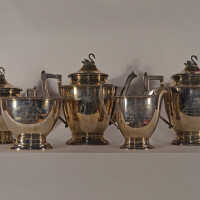
Sterling Silver Presentation Coffee Pot & Service Set | Shreve, Stanwood & Company | 1867 | Boston
A five piece coin silver tea service set dating to 1867. Each piece is inscribed: "Boston Board of Trade to Hon. Lorenzo Sabine as a testimonial for his able and faithful service as secretary for a period of ten years. 1867." The set was made by Shreve, Stanwood & Co. of Boston, one of Boston’s leading silversmiths at the time. Sabine lived in Eastport, Maine for many years in the early 19th century and then moved to Boston. He died in 1877 and is buried in Hillside Cemetery in Eastport. An historian, he is best known for one of the earliest works by an American historian on the history of the American Loyalists who moved to what is now Canada after the American Revolution. The tea service set came down through his family in Eastport. The last descendants in Eastport moved in the 1960s and put the service set up for sale. There was a local effort to raise funds to keep the set in Eastport, but the effort was unsuccessful. Nearly 50 years later, the president of the Tides Institute’s board learned that the set was up for auction in Rockland, Maine. By the time inquiries were made, the auction had already taken place. The auctioneer, though, was asked by the Tides Institute about having the winning buyer contacted. The auctioneer obliged and the buyer, a dealer, was willing to sell the set to the Tides Institute for a price: $5,000. The Tides Institute was able to raise the funds in two days and the set is now back in Eastport as part of the Tides Institute’s collections. Classification: Silver Circa: 1867 Old Accession Number: 2276 Description: Coin silver presentation coffee pot. Part of a five piece sterling silver coffee and tea service set. Inscribed: "Boston Board of Trade to Hon. Lorenzo Sabine as a testimonial for his able and faithful serves[sic] as secretary for a period of ten years. 1867." Shreve, Standwood & Co. of Boston.
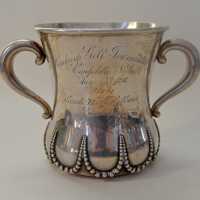
Sterling Silver Presentation Golf Tournament Trophy, Campobello Island | J. E. Caldwell & Co. | 1898 | Philadelphia
Artist: J. E. Caldwell & Co. Circa: 1898 Old Accession Number: 2278 Description: Sterling Silver Presentation Golf Tournament Trophy. Made by J.E. Caldwell & Company of Philadelphia. 1898. Inscribed: "Handicap Golf Tournament, Campobello, N.B., Aug. 15, 1898. Won by Sarah N. H. Hubbard. Presented by Mrs. Travis Cochran." Sarah Nourse Henshaw Hubbard (1869-1906) was the wife of Gorham Hubbard who had built Hubbard Cottage on Campobello Island, New Brunswick in 1892. The cottage is now part of the Roosevelt Campobello International Park. "Gorham Hubbard married in March of 1891 to Sarah Nourse Henshaw. After their marriage, they made 210 Beacon their home. Sarah (Henshaw) Hubbard’s sister, Annie Henshaw, lived with them during the 1891-1892 winter season. ... Sarah Hubbard died in September of 1906."
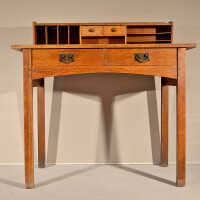
Stickley Writing Desk, c.1906-1908 | French Family | Eastport, Maine
Old Accession Number: 2187 Stickley Desk. Circa 1906-1908. Has Stickley marking. From Winifred and Rowland French estate, 16 Water Street, Eastport, Maine.(M)
Store Display Cabinet, c.1890 | Eastport, Maine
Classification: Furniture Circa: 1890 Old Accession Number: 2214 Description: From a Water Street, Eastport, Maine store.
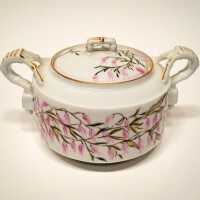
Sugar Bowl | Hand Painted China | M.J. Thompson | 1887 | Cherryfield, Maine
Artist: M.J. Thompson Circa: 1887 Old Accession Number: 1524 Description: Signed M.J. Thompson, 1887. Mark on china is CFH - GDM which is the manufacturer of the pre-painted set. CFH - GDM is Haviland Limoges from 1881-1890 France.
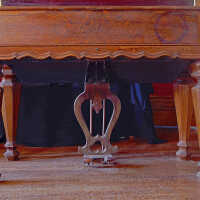
Taylor & Farley Melodeon, 1869 | Weston House | Eastport, Maine
Old Accession Number: 3011 1869 Taylor & Farley Melodeon of Worcester, Massachusetts. From Weston House Bed and Breakfast, 26 Boynton Street, Eastport, Maine. Weston House innkeepers, John and Jett Peterson, purchased the Weston House from the Ray family who had the melodeon in the house and the melodeon came to the Petersons as part of the sale of the house. A Ray family member, Amy Ray, thought that the Ray family had acquired the melodeon from George Call who lived on Shackford Street in Eastport, Maine.
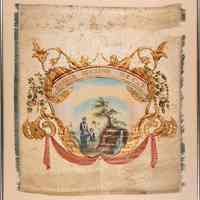
Temperance Banner | Cadets of Temperance | Eastport, Maine | 1849
Temperance banner dating to 1849. 41" x 44" hand-painted silk banner. It depicts a man and his son standing alongside a stream and waterfall. It is inscribed "Border Section, No. 1 C. of T. Presented by Ladies of Eastport, July 4, 1849." The banner is constructed of two panels stitched together with blue fringe on the sides. "C. of T." stands for Cadets of Temperance. Eastport refers to Eastport, Maine. Neal Dow was Governor of Maine where the "Maine Law" banning sale of alcoholic beverages was enacted in 1851. Condition: Two relatively small areas of loss along right side, in the blank field. Scattered spotting and wrinkling. A horizontal split crosses the two figures in mid-section. Framed to an overall size of 47" x 53".
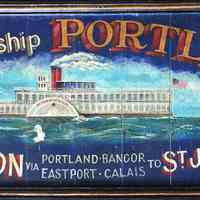
The Steamship Portland | Sign
Sign A large late 19th century painted wooden advertising sign for the Steamship Portland that made regularly scheduled runs between Boston, Massachusetts and Saint John, New Brunswick with stops in between to Portland, Bangor, Calais and Eastport, Maine. The sign measures 47 inches in length by 15 inches in width and is constructed of vertical tongue and groove wood boards with an outer edge frame wood moulding. The Steamship Portland was built in 1889 as a wooden-hulled side-wheel steamship by the New England Shipbuilding Company of Bath, Maine for the Portland Steam Packet Company of Portland. The steamship was 291 feet in length by 42 feet in breadth. It had a passenger capacity of up to 800 with a crew of 65. On November 27, 1898, the steamship was lost some 40 miles off of Boston on the Stellwagen Bank in a storm-of-the-century. All lives were lost including 63 crew members and 129 or 130 passengers. This storm become known as the Portland Gale in honor of the steamship. The steamship is often called "The Titanic of New England" due to its long-unknown location, the large loss of life, and its luxurious design. Not until over a century later, in 2002, was the wreck of the steamship located. Since then, numerous underwater explorations have been undertaken to document the well preserved steamship and the steamship is now protected as part of the Stellwegan Bank National Marine Sanctuary and is listed on the National Register of Historic Places. The Tides Institute acquired the sign at auction in Boston. There is a similar sign for the Steamship Portland in the collections of the Maine Historical Society.
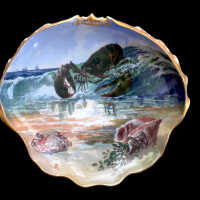
Theodore Russell Davis (1840–1894) | Seafood plate, from the Rutherford B. Hayes Presidential Service | 1880 | | View of Front Side
A Seafood Plate from the Rutherford B. Hayes Presidential Service, 1879–1880, with a design on the front that could well be a Maine coastal scene complete with lobster and crab. The plate was a gift to the Tides Institute. The plate is made of porcelain with enamels and gilding. It is part of very large and remarkable specially commissioned porcelain state dinner service set that was made for the White House by Haviland Company of New York City and Limoges of France. Originally, the First Lady and wife of President Hayes had intended to have floral patterns, drawn from plants in the White House conservatory, serve as designs on the porcelain service pieces. But a chance meeting in the conservatory between her and Theodore Davis, an illustrator and journalist for Harper’s Weekly, changed matters. Davis suggested that the First Lady use depictions of flora and fauna native to North America, thus celebrating the naturalistic bounty of the country. The First Lady agreed. She commissioned Davis as the designer and he produced 130 distinct decorations for the 562 pieces made for nine courses. Each decoration was drawn by hand, etchings were made to transfer the outlines, basic colors were applied via chromolithographic and decalcomania processes, and lastly enamel details and gilding were added by hand. Theodore Russell Davis Seafood plate, from the Rutherford B. Hayes Presidential Service, 1880 Porcelain with enamels and gilding 3 4/5 × 22 9/10 in | 9.7 × 58.2 cm Old Accession Number: 1626 Credit / Gift Of: Christopher Monkhouse Classification: Ceramics Description: Seafood Plate and Ice Cream Dish from the Rutherford B. Hayes Presidential Service, 1879–1880 Porcelain with enamels and gilding Gift of Christopher Monkhouse 2003.111; Gift of Daphne Farago 82.022 A chance meeting between the wife of President Rutherford B. Hayes and Theodore Davis, an illustrator and journalist for Harper’s Weekly, in the White House conservatory produced one of the most extraordinary dinner services. The First Lady was selecting botanical samples to be used for the decoration of the presidential service, which had already been contracted with Haviland. On the spot, Davis suggested that Mrs. Hayes use depictions of flora and fauna native to North America, thus celebrating the naturalistic bounty of the country. Mrs. Hayes was in favor of the idea and Davis became the designer of the service, producing 130 distinct decorations for the 562 pieces made for nine courses. Each decoration was drawn by hand, etchings were made to transfer the outlines, basic colors were applied via chromolithographic and decalcomania processes, and finally enamel details and gilding were added by hand.
Theodore Russell Davis | Seafood plate, from the Rutherford B. Hayes Presidential Service | 1880 | View of Back Side
Theodore Russell Davis Seafood plate, from the Rutherford B. Hayes Presidential Service, 1880. Porcelain with enamels and gilding 3 4/5 × 22 9/10 in | 9.7 × 58.2 cm Old Accession Number: 1627 Gift of Christopher Monkhouse
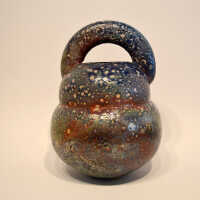
Vessel - Raku Fired Pottery with Soda Ash Glaze | Tom Smith | St. Andrews, New Brunswick
Artist: Tom Smith Classification: Ceramics Circa: 2009 Old Accession Number: 1190 St. Andrews, New Brunswick https://studioceramicscanada.com/contemporaries-q-z/tom-smith-1933-2015/ https://www.gallery78.com/artists/smith-tom ARTIST PROFILE Born and educated in the United States, (BFA, Pennsylvania State, MFA, Alfred University, New York), Tom Smith moved to Fredericton, New Brunswick in 1971 to take a position as an art instructor in the school system. He went on to teach at the University of New Brunswick in the Faculty of Education, before deciding to pursue sculptural ceramics full time. Since then he became one of Canada’s best known ceramic artists, receiving numerous awards for his work. In 1992, he received the prestigious Strathbutler Award for Excellence in New Brunswick. In 1999, Smith was elected to the Royal Canadian Academy of the Arts. Although many of his pieces were functional, it is the formal elements or sculptural concerns which dominated his work. According to Tom he was intrigued by “the existence of the object in space and the idea and nature of containment. The vessel as a three dimensional object allows and invites endless exploration in form and content”. The texture of the surfaces was also critical. “I get excited about a tear in clay as opposed to a cut . . . the mark of a broken piece of wood into the clay as opposed to a brush stroke of colour on the surface”. Colour was used primarily to enhance the form and involved sophisticated and often experimental glazes. Since 1982, he concentrated on Raku, a ceramic process developed in 14th century Japan utilizing a wood fired kiln. Many of his pieces incorporated an oriental aestheticism in conjunction with a very North American inspired use of the natural landscape. In addition to his ceramic work, Smith continued to produce an ongoing body of two dimensional work, which complemented his ceramic work in mood, tone, inspiration and aesthetic preoccupations. He participated in numerous group and solo exhibitions and his work is represented in both public and private collections around the world.
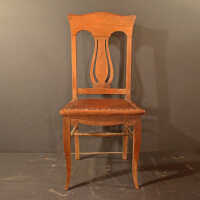
Victorian Dining Chair #1, c.1890 | Kilby House | Eastport, Maine
Classification: Furniture Old Accession Number: 2287 Description: Victorian Dining Chair #1. Gift of John Pike Grady, Eastport, Maine. From the Herbert Kilby house 122 Water Street, Eastport, Maine.
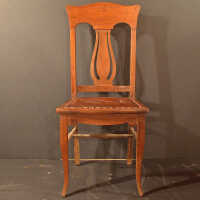
Victorian Dining Chair #2, c.1890 | Kilby House | Eastport, Maine
Classification: Furniture Old Accession Number: 2288 Description: Victorian Dining Chair #2. Gift of John Pike Grady, Eastport, Maine. From the Herbert Kilby house 122 Water Street, Eastport, Maine.
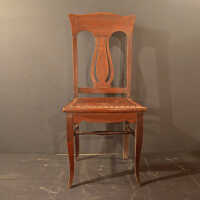
Victorian Dining Chair #3, c.1890 | Kilby House | Eastport, Maine
Classification: Furniture Old Accession Number: 2289 Description: Victorian Dining Chair #3. Gift of John Pike Grady, Eastport, Maine. From the Herbert Kilby house 122 Water Street, Eastport, Maine.
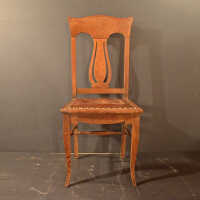
Victorian Dining Chair #4, c.1890 | Kilby House | Eastport, Maine
Classification: Furniture Old Accession Number: 2290 Description: Victorian Dining Chair #4. Gift of John Pike Grady, Eastport, Maine. From the Herbert Kilby house 122 Water Street, Eastport, Maine.
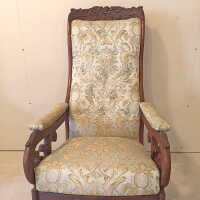
Victorian Rocking Chair, c.1870 | Eastport, Maine
Classification: Furniture Old Accession Number: 2258 Description: Victorian rocking chair. c.1870. From Eastport, Maine house.
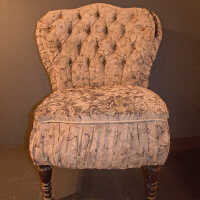
Victorian Side Chair, c.1890s | Bibber House | Eastport, Maine
Classification: Furniture Old Accession Number: 2252 Description: Upholstered Victorian Side Chair, c. 1890s. Chair came from the Milliken House, 29 Washington Street, Eastport, Maine. But Mary Williams said the chair had originally come from the Fremont Bibber House, 72 Washington Street, Eastport, Maine. Gift of Mary Williams, owner of the Milliken House Bed and Breakfast, 29 Washington Street, Eastport, Maine.
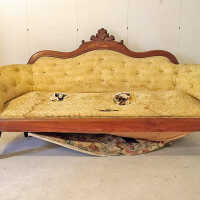
Victorian Sofa, c.1870=1890 | Milliken House | Eastport, Maine
Classification: Furniture Old Accession Number: 2263 Description: Victorian sofa, c.1870-1890. From Milliken House, 29 Washington Street, Eastport, Maine.
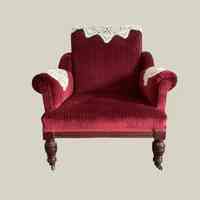
Victorian Upholstered Chair | c.1880 | Whalen House, 7 Key Street, Eastport, Maine.
Gift from estate of Frances Whalen Strout, 2020. From Anna Whalen House, 7 Key Street, Eastport, Maine.
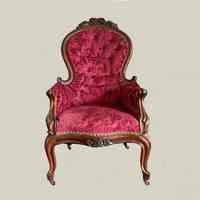
Victorian Upholstered Chair | c.1880 | Whalen House, 7 Key Street, Eastport, Maine.
Gift from estate of Frances Whalen Strout, 2020. From Anna Whalen House, 7 Key Street, Eastport, Maine
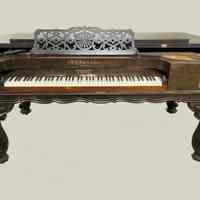
W.H. Jewett & Company, Boston, Massachusetts | Square Grand Piano | c.1880s | Hayden House, 17 Boynton Street, Eastport, Maine
From Hayden House, 17 Boynton Street, Eastport, Maine. Gift of Sydney Hungerford, Eastport, Maine.
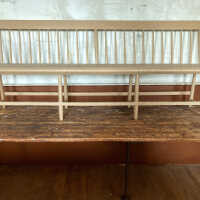
W.O. Haskell Wooden Bench | Congregational church, 26 Middle Street, Eastport, Maine | c.1840
One of thirteen wooden benches at the Central Congregational Church building, 26 Middle Street, Eastport, Maine made by W.O. Haskell, Boston, Massachusetts. Benches are 84" long by 34" high. The Haskell label is on the bottom of many of the bench seats.
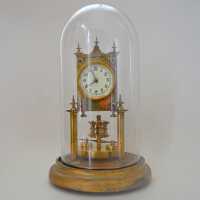
Wedding Anniversary Clock, c.1920 | Sleight Family | Eastport, Maine
Classification: Furniture Old Accession Number: 2200 Description: Gift of sisters Ann Harrison and Betsy Canney. Clock was a wedding or wedding anniversary gift to their parents, Alice Hume and William Sleight, Eastport, Maine.
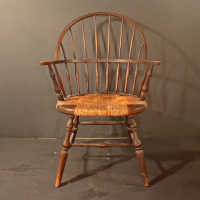
Windsor Chair #1, c.1920 | Wells-Shober Cottage | Campobello, New Brunswick
Old Accession Number: 2232 One of four Windsor chairs that originally came from the Wells-Shober Cottage, Campobello, New Brunswick. From the Emery family Elm Cottage, Elm Street, Eastport, Maine. Joyce tells of her father and brother bringing a truckload of furniture from the Cottage over to Eastport. John Melby says the chair is a reproduction. Her father had once purchased the Wells-Shober Cottage including contents. Gift of Joyce Emery Kinney, Eastport, Maine. From Sunrise County Architecture (2nd revised and enlarged edition) 1996, p.119 WELLS-SHOBER COTTAGE Willard T. Sears, of Boston, designed the Wells-Shober Cottage for American lawyer Samuel Wells, once president of the Campobello Company. This building was finished in 1884, at about the same time as the building of the three Campobello hotels for which Sears drew the plans. All four buildings were Queen Anne Revival designs. With a steep hip roof, dotted with gables and dormers, this two-and-a-half story cottage was built with railings, both inside and on the facade. The roof was a bell-cast design with two chimneys. Walls of this wooden frame building are protected by clapboards, first painted brown (with white trim), but since painted all white by the Park Commission. When the living room, with fireplace, was given an addition encircling that room, the outside veranda had to be rebuilt as well. Besides dining room and kitchen, on the first floor, there are not only four second floor bathrooms but two railed verandas, while three bedrooms, each with a bath, occupy the third floor. The Park Commission remodeled the Well-:Shober Cottage for use as a guest house. This cottage is across the street (Route 774 from Lubec to Welshpool, N.B.) from the Hubbard Cottage, which is seven years younger. The Wells family sold their cottage to Mary Norris Cochrane in 1912, and her daughter Edith Shober (Mrs. Rex) inherited it in 1918. The Park Commission acquired the Wells-Shober Cottage in 1965, and it was the first cottage to be redecorated and used for Commission meetings. NHSD, JCB
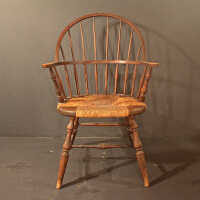
Windsor Chair #2, c.1920 | Wells-Shober Cottage | Campobello, New Brunswick
Old Accession Number: 2233 One of four Windsor chairs that originally came from the Wells-Shober Cottage, Campobello, New Brunswick. From the Emery family Elm Cottage, Elm Street, Eastport, Maine. Joyce tells of her father and brother bringing a truckload of furniture from the Cottage over to Eastport. John Melby says the chair is a reproduction. Her father had once purchased the Wells-Shober Cottage including contents. Gift of Joyce Emery Kinney, Eastport, Maine. From Sunrise County Architecture (2nd revised and enlarged edition) 1996, p.119 WELLS-SHOBER COTTAGE Willard T. Sears, of Boston, designed the Wells-Shober Cottage for American lawyer Samuel Wells, once president of the Campobello Company. This building was finished in 1884, at about the same time as the building of the three Campobello hotels for which Sears drew the plans. All four buildings were Queen Anne Revival designs. With a steep hip roof, dotted with gables and dormers, this two-and-a-half story cottage was built with railings, both inside and on the facade. The roof was a bell-cast design with two chimneys. Walls of this wooden frame building are protected by clapboards, first painted brown (with white trim), but since painted all white by the Park Commission. When the living room, with fireplace, was given an addition encircling that room, the outside veranda had to be rebuilt as well. Besides dining room and kitchen, on the first floor, there are not only four second floor bathrooms but two railed verandas, while three bedrooms, each with a bath, occupy the third floor. The Park Commission remodeled the Well-:Shober Cottage for use as a guest house. This cottage is across the street (Route 774 from Lubec to Welshpool, N.B.) from the Hubbard Cottage, which is seven years younger. The Wells family sold their cottage to Mary Norris Cochrane in 1912, and her daughter Edith Shober (Mrs. Rex) inherited it in 1918. The Park Commission acquired the Wells-Shober Cottage in 1965, and it was the first cottage to be redecorated and used for Commission meetings. NHSD, JCB
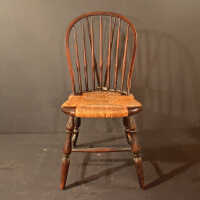
Windsor Chair #3, c.1920 | Wells-Shober Cottage | Campobello, New Brunswick
Old Accession Number: 2234 One of four Windsor chairs that originally came from the Wells-Shober Cottage, Campobello, New Brunswick. From the Emery family Elm Cottage, Elm Street, Eastport, Maine. Joyce tells of her father and brother bringing a truckload of furniture from the Cottage over to Eastport. John Melby says the chair is a reproduction. Her father had once purchased the Wells-Shober Cottage including contents. Gift of Joyce Emery Kinney, Eastport, Maine. From Sunrise County Architecture (2nd revised and enlarged edition) 1996, p.119 WELLS-SHOBER COTTAGE Willard T. Sears, of Boston, designed the Wells-Shober Cottage for American lawyer Samuel Wells, once president of the Campobello Company. This building was finished in 1884, at about the same time as the building of the three Campobello hotels for which Sears drew the plans. All four buildings were Queen Anne Revival designs. With a steep hip roof, dotted with gables and dormers, this two-and-a-half story cottage was built with railings, both inside and on the facade. The roof was a bell-cast design with two chimneys. Walls of this wooden frame building are protected by clapboards, first painted brown (with white trim), but since painted all white by the Park Commission. When the living room, with fireplace, was given an addition encircling that room, the outside veranda had to be rebuilt as well. Besides dining room and kitchen, on the first floor, there are not only four second floor bathrooms but two railed verandas, while three bedrooms, each with a bath, occupy the third floor. The Park Commission remodeled the Well-:Shober Cottage for use as a guest house. This cottage is across the street (Route 774 from Lubec to Welshpool, N.B.) from the Hubbard Cottage, which is seven years younger. The Wells family sold their cottage to Mary Norris Cochrane in 1912, and her daughter Edith Shober (Mrs. Rex) inherited it in 1918. The Park Commission acquired the Wells-Shober Cottage in 1965, and it was the first cottage to be redecorated and used for Commission meetings. NHSD, JCB
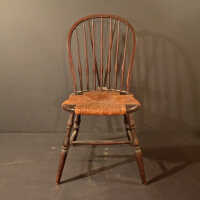
Windsor Chair #4, c.1920 | Wells-Shober Cottage | Campobello, New Brunswick
Old Accession Number: 2235 One of four Windsor chairs that originally came from the Wells-Shober Cottage, Campobello, New Brunswick. From the Emery family Elm Cottage, Elm Street, Eastport, Maine. Joyce tells of her father and brother bringing a truckload of furniture from the Cottage over to Eastport. John Melby says the chair is a reproduction. Her father had once purchased the Wells-Shober Cottage including contents. Gift of Joyce Emery Kinney, Eastport, Maine. From Sunrise County Architecture (2nd revised and enlarged edition) 1996, p.119 WELLS-SHOBER COTTAGE Willard T. Sears, of Boston, designed the Wells-Shober Cottage for American lawyer Samuel Wells, once president of the Campobello Company. This building was finished in 1884, at about the same time as the building of the three Campobello hotels for which Sears drew the plans. All four buildings were Queen Anne Revival designs. With a steep hip roof, dotted with gables and dormers, this two-and-a-half story cottage was built with railings, both inside and on the facade. The roof was a bell-cast design with two chimneys. Walls of this wooden frame building are protected by clapboards, first painted brown (with white trim), but since painted all white by the Park Commission. When the living room, with fireplace, was given an addition encircling that room, the outside veranda had to be rebuilt as well. Besides dining room and kitchen, on the first floor, there are not only four second floor bathrooms but two railed verandas, while three bedrooms, each with a bath, occupy the third floor. The Park Commission remodeled the Well-:Shober Cottage for use as a guest house. This cottage is across the street (Route 774 from Lubec to Welshpool, N.B.) from the Hubbard Cottage, which is seven years younger. The Wells family sold their cottage to Mary Norris Cochrane in 1912, and her daughter Edith Shober (Mrs. Rex) inherited it in 1918. The Park Commission acquired the Wells-Shober Cottage in 1965, and it was the first cottage to be redecorated and used for Commission meetings. NHSD, JCB
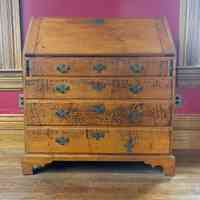
Winthrop or Chippendale Slant Front Desk | Elm Cottage | Eastport, Maine
Note discovered in one of the top small drawers of the Winthrop desk in the collections of the Tides Institute & Museum of Art after it had been donated by the estate of Walter Emery: "The Winthrop desk owned by my sister, Cornelia, came to her through my grandmother who was a Weldon and was probably much over 100 years old. The desk was maple and was in good condition when my sister received it, as the people who had it were careful of it." Note on file in collections of Tides Institute & Museum of Art. Gift from estate of Walter Emery, 2018.
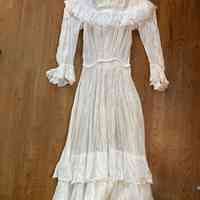
Woman's Dress | From Grady House, 1 Adams Street, Eastport, Maine
Gift of Elaine and John Miranda, 2025
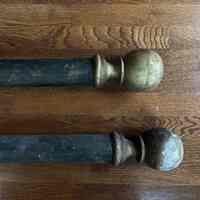
Wooden Curtain Rods | Grady House, 1 Adams Street, Eastport, Maine | c.1840
Two wooden “curtain” rods, 2 3/4 inches in diameter; one is 118” (9 feet, 10 inches) long and the other is 113” (9 feet, 5 inches). Date: 1840. From Grady house, 1 Adams Street, Eastport, Maine. Gift of Ross Y. Furman, 2022. Part of the Ross Y. Furman Advance Collection.
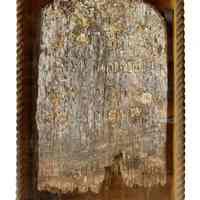
Wooden Grave Marker| Margaret Smith 1870-1910 and John H. Smith 1868-1948 | From Hillside Cemetery, Eastport, Maine
Dimensions of frame: 15 1/2" wide by 23" high. Gift from Cemetery Department, City of Eastport, Maine, 2023. From the Quoddy Tides newspaper, Eastport, Maine, October, 22, 2004: Woodworker replaces old grave markers by Susan Esposito It was a simple wooden gravemarker. Perhaps it had stood in Hillside Cemetery in Eastport for almost a century. Or maybe it had been placed there about 56 years ago. But, whatever its age, the memorial to John and Margaret Smith was falling apart. Cemetery superintendent Jim Elliott told Eastport woodcarver Jim Blankman about the Smith gravemarker, and Blankman took a look. “It was pretty much moss holding it together,” he recalls of the memorial upon which someone with a pocketknife had carved, “Margaret Smith 1870-1910” and “John H. Smith 1868-1948.” “It had rotten and fallen over.” Elliott had done some sleuthing and discovered Margaret Smith was pregnant when she had a serious fall. The baby was born the following day but died. Then Margaret died of her injuries. John Smith, after losing his wife and child, apparently never married again. A woodsworker, he died of liver cancer at age 80. The sad tale inspired Blankman to create, free-of-charge, a duplicate of the original Smith gravemarker, even using a small knife to carve the names and dates into the new one. “I put several coats of varnish on, put plexiglass on the bottom with some tar, so it should last awhile.” He placed the original Smith gravemarker in a wooden case with a plexiglass front, and it can be viewed in the Hillside Cemetery office. And directly across the street from the office can be seen the new wooden monument reminding passersby that the Smiths once lived upon this earth. Blankman has also volunteered to make Nola Carter a new wooden headstone. Elliott thought the Smiths' gravemarker was the only wooden one in Eastport but recently discovered Carter's in Bayside Cemetery near the eastern treeline. Her simple cross is being duplicated by Blankman. These are not Blankman's first gifts to occupants of Eastport cemeteries. Two years ago, for Terry Flaherty, Blankman and Greg Pugh created an eye-catching momument to mark his grave in Hillside Cemetery. “We faced it north, so the paint wouldn't fade,” notes Blankman of the black-and-gold marker with the pair of crossed drumsticks at its base. Six feet below the monument, Flaherty rests in a wooden coffin made by Blankman for his friend.
Wooden Trench Bowl | c.1820-1830 | Dennysville, Maine
25 1/8" x 16 1/4" x 4 1/8"