


Browse and search a portion of the collections of the Tides Institute & Museum of Art available online (now consisting of over 8,000 online records in process of completion). The Online Collections are best viewed using Google Chrome or Mozilla Firefox. Search Hints: To search by phrase or multiple word names wrap your criteria in quotes. Example: “Martin Johnson Heade” or “Grand Manan”. For an overview of the collections, see: Collections Overview.
Ckuwaponahkiyik Mecote yut kilun ntiyultipon | Wabanaki Presence | 2023
2023 Exhibition, "Ckuwaponahkiyik Mecote yut kilun ntiyultipon | Wabanaki Presence." The exhibition includes historical and contemporary baskets, paintings, prints, drawings, photographs, books and implements. The exhibition is a work in progress and represents a snapshot in time in the 21 year effort by TIMA since its founding. Passamaquoddy cultural leaders, Donald Soctomah and Dwayne Tomah, provided invaluable help with this exhibition.
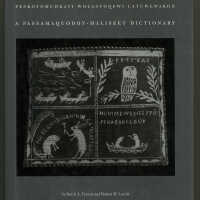

Andrew Steeves of Gaspereau Press | Jeremy Dutcher Workshop & Concert Poster, July 22, 2023 | Letterpress | 2023
Limited edition letterpress poster designed and printed by Andrew Steeves of Gaspereau Press, Kentville, Nova Scotia, 2023. 11" x 17". Edition of 100 copies. The Jeremy Dutcher concert held on July 22, 2023 at the Tides Institute & Museum of Art's North Church in Eastport, Maine was the first time that the Passamaquoddy/Maliseet language had ever been sung, spoken or heard in the 204 year history of the North Church building constructed in 1819.
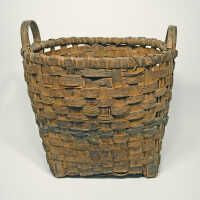
Artist Once Known | Herring Scale Basket [Passamaquoddy]
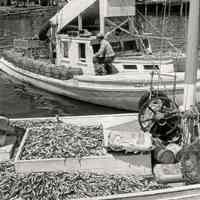
A large late 19th century herring basket made by the Passamaquoddies. It stands about 15” tall by about 19” in diameter. Made of woven strips of ash with an ash wood handle, thousands of such baskets were used in the fishing and particularly the sardine industry of the northeastern coast of Maine and southwestern coast of New Brunswick in the late 19th and early 20th centuries. Many were brought by canoes to the sardine factories from the nearby Passamaquoddy communities. The baskets were used to transport freshly caught herring from the holds of small sail powered carrier boats that brought the herring from where they had been caught in fish weirs to the sardine factory wharves. There the herrings were brought from the boats to the wharf decks one basket at a time using a simple hand pulled pulley and rope system. The baskets of fish were then dumped on tables where the heads of the herring were cut off by young laborers using large knives. The cut herring bodies were then poured back into baskets and lugged by hand to the next step in the then very labor intensive process of turning herring into canned sardines. This herring basket example is rare as few survived once the sardine industry became much more mechanized early in the 20th century and such baskets were no longer needed. Later the 20th century, such baskets were used by the thousands once again to deliver herring scales by boat to the newly developing pearl essence industry in the region that used herring scales in the production of such products as nail polish. Examples of these later herring baskets are much more common and are often marked with a large letter on the side of the basket to denote which pearl essence factory the basket belonged. The earlier late 19th century herring basket was found for sale on eBay by a seller in Quebec and purchased by the Tides Institute for its collections. When the basket arrived at the institute, it still had a few herring scales attached to the ash strips of the basket. Artist: Unknown Artist Classification: North American Basket Old Accession Number: 1516 Circa: 1920 Description: Herring Scale Basket. Passamaquoddy. Purchased on Ebay from Marc Boily of Quebec in 2003. Basket still had a few herring scales on it when first received in the mail.
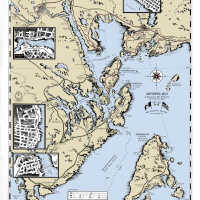
Artsipelago Map 2022 with Passamaquoddy and English Place Names
Artsipelago Map 2022. with Passamaquoddy and English Place Names
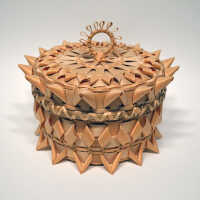
Basket with Lid [Mi’Kmaq] | Jane Zumbrunnen
Artist: Jane Zumbrunnen Classification: North American Basket Old Accession Number: 659 Description: Mi’Kmaq Basket with Lid. May 21, 2003. Second Shelf from Bottom.
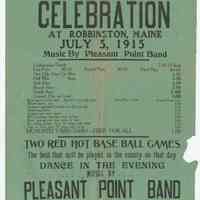
Celebration Poster, Robbinston, Maine, July 5, 1915 | Music by Pleasant Point Band
Printed in Eastport, Maine. Gift of Hank Young of Eastport, Maine, c.2022.
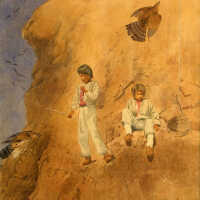
Charles Caleb Ward (1831-1896) | Cliff Climbers, Grand Manan | 1869
An 1869 watercolor (9.5 inches by 11.5 inches) by New Brunswick artist, Charles Caleb Ward of Peskotomuhkati/Passamaquoddy youths gathering gull eggs on the cliffs of nearby Grand Manan island in New Brunswick. Historically, for the Passamaquoddies, Maine’s current political boundary line was non-existent and Passamaquoddies homeland and territory extended to both sides of the border. In the nineteenth century and long before, they were frequently on Grand Manan for fishing and sealing, to collect gull eggs found on the steep island cliffs and for other activities. In 2004, the Tides Institute learned of the existence of this painting from a tip from Donald Soctomah, long time Passamaquoddy tribal historic preservation officer. The watercolor was coming up for auction at Heritage Auction in Dallas, Texas and the Tides Institute was able to mount the successful bid after raising the necessary funds to cover the bid. It is one of two paintings by Ward in the Institute’s collections. The other is an oil painting portraying a Passamaquoddy hunter in the woods of Charlotte County, New Brunswick. Charles Caleb Ward did many paintings of the Passamaquoddies during this time while living and working in St. George, New Brunswick. He was born in Saint John, New Brunswick in 1831. Later he spent time in Liverpool, England to learn about the shipping business, but also learned figure painting with the English artist, William Henry Hunt. Ward also lived in New York City for awhile where he studied landscape painting with artist, Asher B. Durand, and maintained a studio in the city. He died in 1896. Artist: Charles Caleb Ward Medium: Watercolor Classification: Watercolors Circa: 1869 Old Accession Number: 169 Purchased in 2004 from Heritage Gallery and Auctioneers, Dallas, Texas.
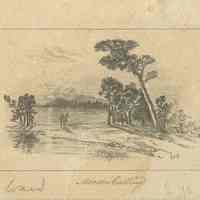
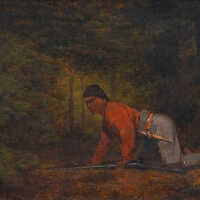
Charles Caleb Ward | Passamaquoddy Scout |
Artist: Charles Caleb Ward Medium: Oil on canvas Old Accession Number: 17
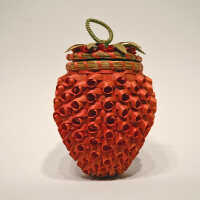
Clara Keezer (1930-2016) | Small Strawberry Basket [Passamaquoddy] |
A Passamaquoddy strawberry splint ash and sweetgrass basket by master basketmaker, Clara Neptune Keezer. The basket stands five and a half inches high and three and a half inches wide. Keezer was born in Sipayik, Maine in 1930. She came from a long line of basketmakers before her, learning how to make baskets from her grandmother and her mother. She made her first basket at age eight. At this time, basketmaking was in decline among the Passamaquoddy, Penobscot and other tribes of Maine and Keezer became involved in revitalizing this craft tradition using traditional basketmaking materials of splint brown ash and sweetgrass. One particular traditional basket form she excelled at was the strawberry basket that she took to a new more elegant form and intricate level. She also made blueberry and corn shaped baskets as well as a basket in the shape of a bell. Her baskets soon began to be exhibited elsewhere including in the influential Lost and Found Traditions: Native American Art 1965-85 exhibit that opened at the American Museum of Natural History in New York City in 1986. Ralph T. Coe, the curator of the exhibit, had spent the decade before traveling across the United States, seeking out examples of indigenous art and craft that were undergoing revival and reinvention. Of Clara Keezer, he said, she "is the finest splint craftswoman I met in the Northeast.” Sixteen years later, in 2002, Keezer was recognized as a National Heritage Fellow for her basketmaking talents by the National Endowment for the Arts. She continued basketweaving and teaching young people basketmaking techniques until her death in 2016 at the age of 86. The Tides Institute acquired the strawberry basket through eBay auction. Artist: Clara Keezer Classification: North American Basket Old Accession Number: 625 Description: Passamaquoddy. Small red color strawberry basket. Top Shelf.
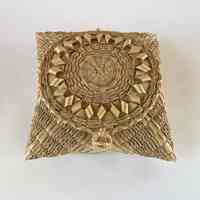
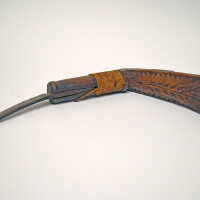
Crooked knife with carved handle [Passamaquoddy] | Unknown Artist
Artist: Unknown artist Classification: North American Basket Old Accession Number: 638 Description: ?Passamaquoddy. Crooked knife with carved handle. Second Shelf from Top.
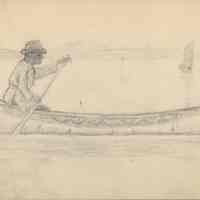
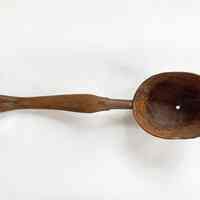
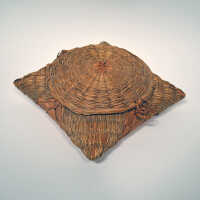
Handkerchief Pillow Basket with Large Circular Lid [Passamaquoddy or Penobscot] | Unknown Artist
Artist: Unknown artist Classification: North American Basket Old Accession Number: 649 Description: ?Passamaquoddy or Penobscot Handkerchief Basket. Large circular lid. Middle Shelf.
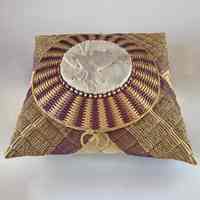
Handkerchief Pillow Basket with Moose bone carving of Eagle | Jeremy Frey | Passamaquoddy | 2014
On loan from Passamaquoddy Cultural Heritage Museum, Motahkomikuk/Indian Township, Maine
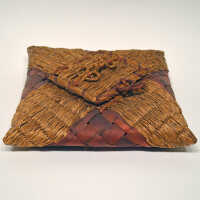
Handkerchief Pillow Basket with Small Square Lid (Passamaquoddy or Penobscot) | Unknown Artist
Artist: Unknown artist Classification: North American Basket Old Accession Number: 646 Description: ?Passamaquoddy or Penobscot Handkerchief Basket. Small square lid. Middle Shelf.
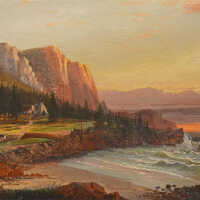
Harrison Bird Brown (1831-1915) | Grand Manan Island, New Brunswick | c.1870
An oil painting of a scene along the coast of Grand Manan Island, New Brunswick by Portland, Maine based artist, Harrison Bird Brown. The painting dates to about 1870. The Tides Institute raised the necessary funds to secure the painting at auction in Detroit. The painting shows encampments along a section of Grand Manan’s shoreline known as “Indian Beach” that was frequented by Passamaquoddies who would come there for the summer months to harvest porpoise and fish from the nearby waters. They would dry the harvest on the seawall along the beach. The camps they built to live in were used only during the summer months. They did not spend the winters there. A larger similar oil painting by Brown titled, “Camping on Grand Manan with the W.H. Pratt of Boston Offshore” shows much the same scene and is in the collections of the Portland (Maine) Museum of Art. Brown was an American painter who was born in Portland, Maine in 1831. He is best known for his marine paintings as well as his landscape paintings of the White Mountains of New Hampshire. Aid from art critic and patron, John Neal, allowed Brown to become Portland’s most successful nineteenth century artist. He and others established the Portland Society of Art in 1882 that would later become known as the Portland Museum of Art. During his life time, Brown exhibited his work at the National Academy of Design. He moved to London in 1892 to live with his daughter and he died there in 1915. Artist: Harrison Bird Brown Medium: Oil on canvas Classification: Paintings Old Accession Number: 75
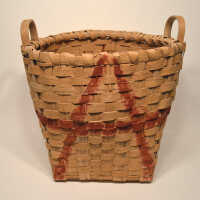
Herring Scale Basket [Passamaquoddy] | Unknown Artist
Artist: Unknown Artist Classification: North American Basket Circa: 1950 Old Accession Number: 1517 Description: Herring Scale Basket. "A" painted on basket stands for Argenta Pearl Essence Factory that was located on Sea Street in Eastport, Maine.
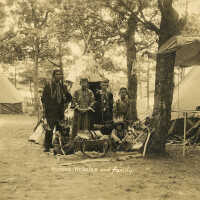
Horace Nicholas and Family |
Classification: Photographs Circa: 1921 Old Accession Number: 1622 Description: Photograph of Horace Nicholas and family (Passamaquoddies) from Maine. Photo was taken at Plymouth, Massachusetts in 1921 during the 300th anniversary of the Plymouth Colony.
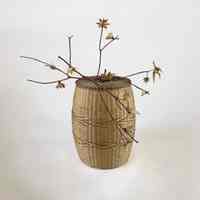
Humming Bird Basket | Geo Neptune | Passamaquoddy | 2010
On loan from the Passamaquoddy Cultural Heritage Museum, Motahkomikuk/Indian Township, Maine
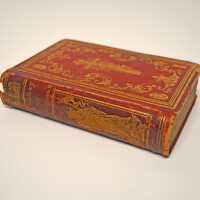
Indian Good Book | Eugene Vetromile
Artist: Eugene Vetromile Circa: 1857 Old Accession Number: 1594
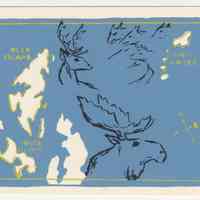
Legend of the Islands | Screen Printed Card | Micmac (Mi'kmaq) Indian Craftsmen, Big Cove Reserve, New Brunswick
Back of Card reads: THE LEGEND OF THE ISLANDS One day, as Glooscap was paddling his canoe near the International border at St. Stephen, he saw some wolves chasing a moose and a deer, who in their fear ran into the sea. They would have been killed or drowned had Glooscap not turned them all into Islands. Today they are known as Deer Island and The Wolves Islands which are part of Canada, while Moose Island is off the coast of Maine. Original tapestry, 100' x 3', at Travel Bureau, St. Stephen, N. B. Designed by Marjory Donaldson and woven by Ivan H. Crowell. Screen printed by Micmac Indian Craftsmen, Big Cove, Reserve, N. B. Card No. 7 Printed in Canada LEGEND OF THE ISLANDS: — DEER ISLAND, MOOSE ISLAND (EASTPORT), THE WOLVES! Front cover of card, one of five cards each featuring different art work on the front, that recently came into our collections. The cards were screen printed and produced by “Micmac Indian Craftsmen” of Big Cove, New Brunswick in the 1960s. Thousands of such cards were produced, but they became largely lost to time until a recent exhibition, Wabanaki Modern: The Artistic Legacy of the 1960s “Micmac Indian Craftsmen”, opened last year at the Beaverbrook Art Gallery in Fredericton and brought them to light again. Curated by our own John Leroux (we’ll claim him as he is on our board of trustees; in real life he is Manager of Collections and Exhibitions at the Beaverbrook), the exhibition recently won a major national Canadian museum award. The exhibition heads to the Abbe Museum in Bar Harbor next where it opens later this year. The back of the card posted here gives the Legend of the Islands: One day, as Glooscap was paddling his canoe near the International border at St. Stephen, he saw some wolves chasing a moose and a deer, who in their fear ran into the sea. They would have been killed or drowned had Glooscap not turned them all into Islands. Today they are known as Deer Island and The Wolves Islands which are part of Canada, while Moose Island is off the coast of Maine.
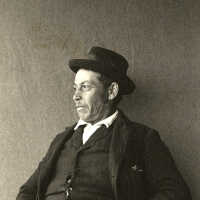
Louis Kutrim[?], Guide, Duck Lake, Maine | William Lyman Underwood
Artist: William Lyman Underwood Medium: Photograph Circa: 1896 Old Accession Number: 1435 Description Louis ____, Guide, Duck Lake
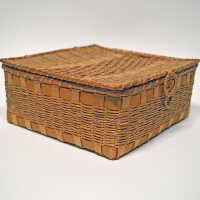
Low Square Shaped Basket with Lid [Passamaquoddy] | Unknown Artist
Artist: Unknown artist Classification: North American Basket Old Accession Number: 655 Description: Passamaquoddy. Low Square Shaped Basket with Lid. Written inside lid: ____ Present From Mrs Brown, Feb. 6, 1897. [Brown may have been wife of Passamaquoddy State Indian Agent]. Second Shelf from Bottom.
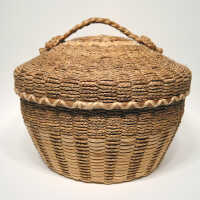
Mary Mitchell Gabriel (1908-2004) | Large Fancy Basket [Passamaquoddy]
A large Passamaquoddy brown ash splint and sweetgrass fancy basket by Mary Mitchell Gabriel. It measures 11 1/4 inches wide and 9 inches high. The basket cover is topped by Gabriel’s trademark braided frog handle that she invented. The basket has a particularly tight weave, another characteristic that her baskets are known for. The bottom of the basket is signed “Mary Gabriel.” Gabriel was the first Maine indigenous American to receive the prestigious National Heritage Fellowship from the American National Endowment for the Arts in 1994. Eleven such fellowships were presented that year and Gabriel was the only recipient from New England. Gabriel was born in 1908 in Motahkomikuk/Indian Township in northern Washington County, Maine. Her mother and grandmother were basket makers, and her father built birch-bark canoes, paddles, and snowshoes. She learned basketmaking from her grandmother and made her first basket when she was about seven years old. Later as an adult and a single mother with seven children, Gabriel moved to Bangor, Maine and earned a living working at the Emple Knitting Mill for 25 years. She continued to make baskets when she could. After the Maine Indian Land Claims Settlement of 1980, Gabriel returned to Motahkomikuk and greatly expanded her basketmaking. She bought the sweetgrass and brown ash splints from other members of the Passamaquoddy tribe. Gabriel died in 2004. The Tides Institute purchased this basket from a collector of Gabriel’s baskets one year before Gabriel passed away. Artist: Mary Mitchell Gabriel Classification: North American Basket Old Accession Number: 1194 Description. Passamaquoddy. Large fancy basket.
Molly Neptune Parker (1939-2020) | Medium Size Fancy Basket [Passamaquoddy]
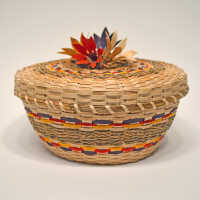
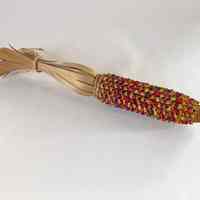
A colorful Passamaquoddy fancy basket (7 1/2” wide x 5 1/2 high”) made by Passamaquoddy master basketmaker, Molly Neptune Parker. She wove the basket together using thin strips of split ash and strands of braided sweetgrass adding a series of carved flowers to the top that was a signature characteristic of her baskets as its was her mother’s who was also a basketmaker. This basket is one of three baskets, including an acorn shaped basket, made by Parker in the collections of the Tides Institute. Parker specialized in making fancy baskets, a style of decorative basket developed by the Passamaquoddies and other Native Americans in the latter part of the 19th century to sell to European-American tourists who begin to visit the area in increasing numbers at the same time. Parker was born in 1939 in Motahkomikuk/Indian Township in northern Washington County, Maine. She made a great many baskets over her life, among other forms some were in the shape of strawberries, others in the shape of acorns that she was particularly known for. To make a fancy basket might take five days from start to finish. In 2012, the National Endowment for the Arts named Parker a National Heritage Fellow. She was also a founder and president of the Maine Indian Basketmakers Alliance that sought to preserve, revive and extend the basketmaking craft. She taught basketmaking workshops in the area and sold her work locally as well as across the United States. She died in 2020. Artist: Molly Neptune Parker Classification: North American Basket Circa: 2008 Old Accession Number: 1518 Description: Passamaquoddy. Medium size fancy basket.
Muselenk Place Name Bronze Plaque | 2023
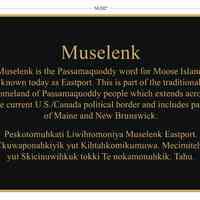
Bronze plaque (14" wide by 9" high) for Passamaquoddy place name, Muselenk, with description in English and Passamaquoddy. English wording by Donald Soctomah, director of the Passamaquoddy Cultural Heritage Museum and director of the Passamaquoddy Historic Preservation Office at Motahkomikuk, Maine. Passamaquoddy translation by Dwayne Tomah, director of the Sipayik Museum at Sipayik. Plaque is to be placed in the summer of 2023 on the front of the main building of the Tides Institute & Museum of Art in downtown Eastport, Maine. This is the first time that the Muselenk place name is publicly visible in Eastport and the first time that the Passamaquoddy language is publicly visible in Eastport. Muselenk Muselenk is the Passamaquoddy word for Moose Island, known today as Eastport. This is part of the traditional homeland of Passamaquoddy people which extends across the current U.S./Canada political border and includes parts of Maine and New Brunswick. Peskotomuhkati Liwihtomoniya Muselenk Eastport. Ckuwaponahkiyik yut Kihtahkomikumuwa. Mecimitehc yut Skicinuwihkuk tokki Te nokamonuhkik. Tahu.
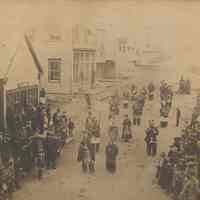
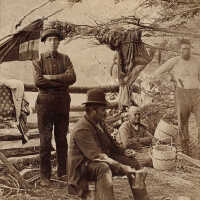
Passamaquoddy Basket Making, Campobello Island, New Brunswick | Davis Loring
Artist: Davis Loring Classification: Photographs Circa: 1885 Old Accession Number: 1634 Description: Passamaquoddies on Campobello Island, New Brunswick.
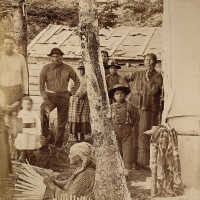
Passamaquoddy Basket Making, Campobello Island, New Brunswick | Davis Loring
Artist: Davis Loring Classification: Photographs Circa: 1885 Old Accession Number: 1633 Description: Passamaquoddies on Campobello Island, New Brunswick.
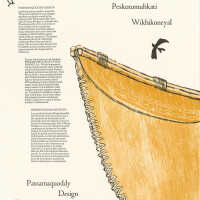
Passamaquoddy Design | David Wolfe / David Moses Bridges | 2010
A letterpress printed poster, “Peskotomuhkati Wikhikoneyal,” produced by the Tides Institute in 2010 in collaboration with letterpress printer and designer, David Wolfe, of Wolfe Editions of Portland, Maine and Passamaquoddy artist, David Moses Bridges. In English, the title of the poster is “Passamaquoddy Design” and in French, “Dessin Passamaquoddy.” Two hundred and fifty copies of the 15 7/8” (width) x 22 3/8” (height) tri-language poster were printed as part of a limited edition. The poster image was carved by David on birch bark, reinforced with a wood backing and then inked and printed directly on to the surface of the poster paper. Passamaquoddy design motifs have been used for centuries. There are hundreds of such designs and they are deeply rooted in the culture of the Passamaquoddy. David Moses Bridges was a contemporary Passamaquoddy artist and he used many many of these design motifs - sometimes traditional ones, sometimes adaptations, sometimes new ones of his own creation - in his birchbark canoes and birchbark containers. This poster reproduces one of the traditional motifs that David used in his work. The two tone color between the birchbark surface and the motif carving accentuates the design and its simplicity. David died in 2017. The Passamaquoddy text was written and translated by Joan Dana, Brenda Dana Lozada and Wayne Newell with assistance of Donald Soctomah. The French text was written and translated by Ross Paradis with assistance of Sheila Jans. Photo caption: Letterpress printed poster, “Peskotomuhkati Wikhikoneyal,,” 15 7/8” (width) x 22 3/8” (height), 250 copies, 2010. Letterpress printed poster produced by the Tides Institute in collaboration with letterpress printer, David Wolfe, of Wolfe Editions of Portland, Maine and Passamaquoddy artist, David Moses Bridges. Artist: David Wolfe / David Moses Bridges Medium: Letterpress Dimensions: 15 7/8”w x 22 3/8”h Classification: Prints Circa: 2010 Old Accession Number: 895 Description: Poster designed and printed by David Wolfe. Part of the Hand Line Press series of posters produced by the Tides Institute & Museum of Art. A limited edition of 250 copies produced in 2010. Partial funding for this poster and related workshops comes from the Maine Arts Commission. Image printed directly from birch bark and wood. Passamaquoddy text written and translated by Joan Dana, Brenda Dana Lozada and Wayne Newell with assistance of Donald Soctomah. French text written and translated by Ross Paradis with assistance of Sheila Jans.
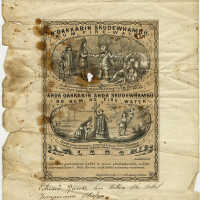
Passamaquoddy/English Temperance Pledge | 1870
A large Passamaquoddy/English language temperance pledge broadside that dates to 1870. The pledge is signed by Edward Quick of Eastport, Maine and by Catholic Jesuit priest, Eugene Vetromile, who served the Catholic churches at both Eastport and the nearby Passamaquoddy community at Sipayik, Maine in the mid-19th century. During his time as a Jesuit priest, he wrote several books on Wabanaki history and worked on a Wabanakii language dictionary as well. The Tides Institute acquired the broadside from a descendant of the Quirk family who wanted to see the broadside preserved and accessible in an institution in the region where the broadside originatted. Thanks to Donald Soctomah, historic preservation officer for the Passamaquoddy Tribe, the broadside was recently translated by Robert Leavitt and Margarett Apt. Their line by line translation is as follows: N'dakkabin = Rum Skudewhambu = firewater Peseku wonismuhinoh, nanquitchidahamal matchi Niweskum, anda kegus kepkuattasseu, metchinabi, te alihkle Alamkik If I lose track and drink, I will try to think of God, and not drink anything, otherwise I would die and go to Hell. Anda Dakkabin = no rum Anda Skudewhambu = no firewater Peseku esma wonismiu, nanguitchdahamal ketchi Niweskum, If I lose track and drink, I will try to think of God, n’messeli messinemon, sipkauso, tehetch ulitahaso lannihahali. I publicly show it, he will live a long life, he will be happy, Amen. Nia … niak’dihlel ndamina gatosmiwon hokbe te messi skudewhambu; I am going to swear that I will not drink any kind of liquor; wibitte acquamalsiane, lhite Doctol, niakdihlel ndamina wonsmiu. as soon as I feel better, I will go to the doctor, and I will not forget. Pledge No Drinking - Father Vetromile 1870 Translations by Margaret Apt & Robert Leavitt (2021) N'dakkabin = Rum This looks more like ntahkopim “my cold drink” (the word does not appear in the text below) Skudewhambu = firewater Sqotewop (literally, “fire-water”) anda dakkabin = no rum Ma-te ntahkopim (originally may have been ntama ntahkopim) anda skudewhambu = no firewater Ma-te sqotewop (originally may have been ntama sqotewop) Peseku wonismuhinoh, nanquitchidahamal matchi Niweskum, anda kegus kepkuattasseu, metchinabi, te alihkle Alamkik Pseqossomiyan, ntoqecitahama kci-Niweskum, ma-te keqoss nkotuwossomiw, nmehcin-op naka ntoli Lamkik. If I lose track and drink, I will try to think of God, and not drink anything, otherwise I would die and go to Hell. Peseku esma wonismiu, nanguitchdahamal ketchi Niweskum, Pseqossomiyan, ntoqecitahama kci-Niweskum, If I lose track and drink, I will try to think of God, n’messeli messinemon, sipkauso, tehetch ulitahaso lannihahali. nmessuwi-messunomon, sipkawsu-tehc, wolitahasu, niyalic. ??? I publicly show it, he will live a long life, he will be happy, ???Amen. Nia … niak’dihlel ndamina gatosmiwon hokbe te messi skudewhambu; Nila … Nila nkoti-wolaman, ntama-na nkotuhsomiwon psiw sqotewop; I am going to swear that I will not drink any kind of liquor; wibitte acquamalsiane, lhite Doctol, niakdihlel ndamina wonsmiu. woli-te aqamolsiyan, ihik taktalk nkoti-li, ntama-na nunitahasiw. as soon as I feel better, I will go to the doctor, and I will not forget. Temperance Pledge. Edward Quirk has taken the total Temperance Pledge. Eastport [Maine], January 8, 1870. Signed by Edward Quirk and Eugene Vetromile, Pastor. Purchased from Roger Quirk of Lubec, Maine in 2012. Old Accession Number: 1062
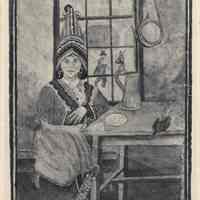
Portrait of Denny Neptune Soccabeson | Lt. Alexander Henry Charles Villiers (d. 1847-1849) | Photograph of Original Watercolor Painting
Photograph of original watercolor painting. Original painting is now in the collections of Colonial Williamsburg. See web link to Colonial Williamsburg entry on this painting. Description from Colonial Williamsburg web site: An interior scene with a Native woman seated, her arms crossed, on a bench in front of a table set with a pitcher, two dishes (one seems to be slipping off the table), and a feather object hanging over the edge of the table. The woman is dressed in an elaborate costume including a high-crowned, decorated hat completely covering her hair. She wears a cross on a chain around her neck and large hoops in her ears. A small cradleboard supporting a bound figure is propped beside her against a table leg. A water canteen hangs from a strap to the right of the window. The scene outside the window includes two men in military dress marching towards one another; one carries a rifle on his shoulder and the other carries a sword. Two large buildings are situated beyond the marching men. Artist unidentified. Label Text from Colonial Williamsburg web site: Native American women often accompanied their husbands on trading missions, sometimes carrying on the active business of bartering on these excursions. Likely this Passamaquoddy woman came to Fort Sullivan (now part of Eastport, Maine) for such a purpose. Shown seated in one of the barracks buildings, the sitter was the daughter of Francis Joseph Neptune, hereditary leader of the Passamaquoddy who occupied nearby Point Pleasant. Her colorful traditional attire includes a conical cap and overdress with leggings; she also wears two circular silver brooches, earrings, and a pendant cross on a bead necklace. The figure strapped onto the cradleboard in front of her represents a baby, not a doll. The town of Eastport was occupied by British troops during the War of 1812, with a garrison at Fort Sullivan. Access to the fort was strictly controlled during 1814-1818, so it is surmised that this 1817 portrait of Soccabeson was rendered by one of the British officers stationed there. Sketches of the bay and harbor executed by Lt. Alexander Henry Charles Villiers survive, making him a candidate for the portrait artist. A nineteenth-century history of the area describes Villiers as being "extremely fond of drawing."
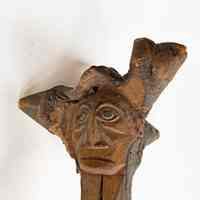
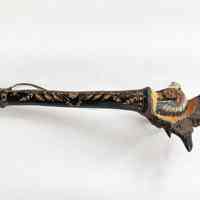
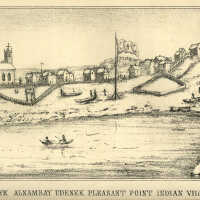
Sibayk Alnambay Udenek Pleasant Point Indian Village | [No Artist Defined]
Old Accession Number: 1590 From Indian Good Book - For The Benefit Of The Penobscot, Passamaquoddy, St. John's, Micmac, And Other Tribes Of The Abnaki Indians - 1856 by Eugene Vetromile
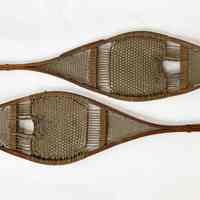
Snowshoes |
Written on one of the snowshoes: Snow Shoe, Indian Made, Canada Brought from Hudson Bay Post, Canada by Horace Nicholas, Passamaquoddy Indian, 1909. Used last by George, Feb. 1, 1923 Jno. and George Hill. 24 Silver Street, Waterville, Maine
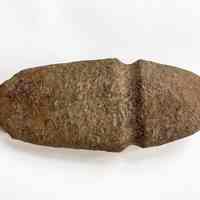
Stone Mallet 1 | Passamaquoddy
This mallet was made from 5,000 to 10,00 years ago. It was found at Shackford's Cove, Eastport, Maine in 1958 by Gerald McGarvey.
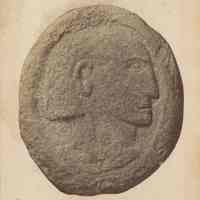
Stone Passamaquoddy Profile | Photograph by Charles Caleb Ward
Found along shores of Lake Utopia, St. George, New Brunswick. The stone profile is now part of the collections of the New Brunswick Museum, Saint John, New Brunswick.
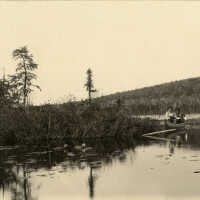
The Long Wait on Duck Lake, Maine | William Lyman Underwood
Artist: William Lyman Underwood Medium: Photograph Classification: Photographs Old Accession Number: 605 Description: 605. William Lyman Underwood. The Long Wait on Duck Lake, c. 1896. Photograph.
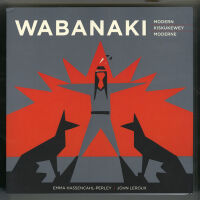
Wabanaki Modern/Kiskukewey/Moderne | Emma Hassencahl-Perley and John Leroux
About the Micmac (Mi'kmaq) Indian Craftsmen collective in New Brunswick during the 1960s.
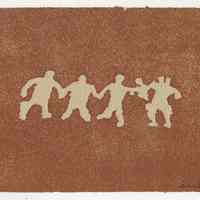
We Are Still Dancing ... | Stephanie Francis | 2008
On back of print: "We Are Still Dancing ..." The image of this print was made by Stehanie Francis and printed on hemp and sweetgrass paper made by Bernie Vinzani with help from Donald and Dakota Soctomah, Patty Vinzani, and Michelle Amato. From: https://pmportal.org/credits "Opening Portal Art Work: "We Are Still Dancing" by Stephanie Francis. The image is taken from a collection of petroglyphs—one of the oldest existing forms of graphic Peskotomuhkati communication. It was created by Stephanie Francis and printed on sweetgrass and hemp paper made by Bernie Vinzani with help from Donald and Dakota Soctomah, Patty Vinzani, and Michelle Amato."
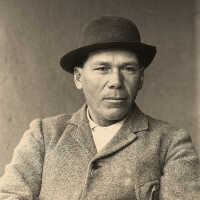
William Lyman Underwood (1864-1929) | Joe Mell, Passamaquoddy Guide at Duck Lake, Maine | c.1895
A photograph portrait by Boston based photographer, William Lyman Underwood, of the well known Passamaquoddy guide, Joe Mell. It dates to about 1895 and was taken in northern Washington County, Maine where Mell used to guide Underwood on his annual hunting and fishing trips to the area for about 30 years. This photograph of Joe Mell is one of 13 photographs in the Tides Institute’s collections taken by Underwood during his trips to northern Washington County in the early 1890s. The photographs were obtained over several years from a collector in California. Underwood was born in Belmont, Massachusetts in 1864 into the wealthy Underwood family that had founded the William Underwood Company, an American canned food company, in 1822. William Lyman Underwood and his brother Loring were at the forefront of nineteenth-century nature photography. Loring trained his camera on human designed parks and gardens, while William concentrated on the wilds of the northeastern U.S. Their work is described in the book Gentlemen Photographers: The Work of Loring Underwood and Wm. Lyman Underwood published in 1987. Joe Mell, whose mother was French and father was Passamaquoddy, became a popular guide around the wilderness forests and lakes of northern Washington County. Mell was extremely well-versed in the ways of the Passamaquoddy. In 1927, William Underwood published the book, Wilderness Adventures, that describes his experiences with Joe Mell. Underwood died in 1929. Photo caption: Portrait photograph of Passamaquoddy guide, Joe Mell, by photographer, William Lyman Underwood that dates to about 1895. Artist: William Lyman Underwood Medium: Photograph Circa: 1896 Old Accession Number: 604 Description: Joe Mell, Passamaquoddy Guide at Duck Lake
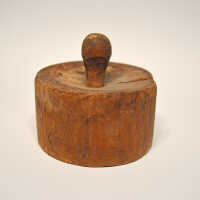
Wood Basket Mold [Passamaquoddy] | Unknown Artist
Artist: Unknown Artist Classification: North American Basket Old Accession Number: 1502 Description: Wood Basket Mold. Passamaquoddy. One of seven Passamaquoddy wood basket molds purchased from Mary Bassett, a Passamaquoddy elder, in 2008.
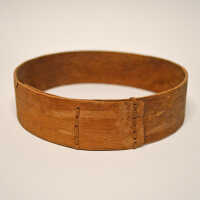
Wood Basket Mold [Passamaquoddy] | Unknown Artist
Artist: Unknown Artist Classification: North American Basket Old Accession Number: 1501 Description: Wood Basket Mold. Passamaquoddy. One of seven Passamaquoddy wood basket molds purchased from Mary Bassett, a Passamaquoddy elder, in 2008.
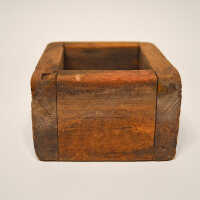
Wood Basket Mold [Passamaquoddy] | Unknown Artist
Artist: Unknown Artist Classification: North American Basket Old Accession Number: 1198 Description: Wood Basket Mold. Passamaquoddy. One of seven Passamaquoddy wood basket molds purchased from Mary Bassett, a Passamaquoddy elder, in 2008.
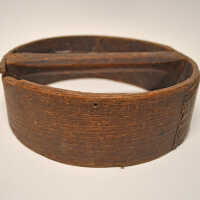
Wood Basket Mold [Passamaquoddy] | Unknown Artist
Artist: Unknown Artist Classification: North American Basket Old Accession Number: 1197 Description: Wood Basket Mold. Passamaquoddy. One of seven Passamaquoddy wood basket molds purchased from Mary Bassett, a Passamaquoddy elder, in 2008.
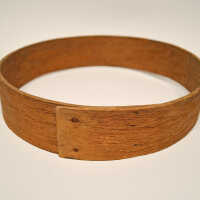
Wood Basket Mold [Passamaquoddy] | Unknown Artist
Artist: Unknown Artist Classification: North American Basket Old Accession Number: 1196 Description: Wood Basket Mold. Passamaquoddy. One of seven Passamaquoddy wood basket molds purchased from Mary Bassett, a Passamaquoddy elder, in 2008.
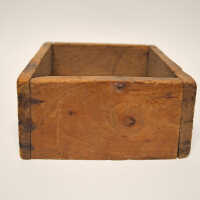
Wood Basket Mold [Passamaquoddy] | Unknown Artist
Artist: Unknown Artist Classification: North American Basket Old Accession Number: 1195 Description: Wood Basket Mold. Passamaquoddy. One of seven Passamaquoddy wood basket molds purchased from Mary Bassett, a Passamaquoddy elder, in 2008.
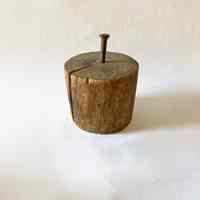
Wooden Basket Mold | Passamaquoddy | c.1900
Wood Basket Mold. Passamaquoddy. One of seven Passamaquoddy wood basket molds purchased from Mary Bassett, a Passamaquoddy elder, in 2008.