Browse and search a portion of the collections of the Tides Institute & Museum of Art available online (now consisting of over 8,000 online records in process of completion). The Online Collections are best viewed using Google Chrome or Mozilla Firefox. Search Hints: To search by phrase or multiple word names wrap your criteria in quotes. Example: “Martin Johnson Heade” or “Grand Manan”. For an overview of the collections, see: Collections Overview.
American Civil War
This collection includes items relating to the American Civil War from this region including items (rifles, swords, uniforms and framed prints and photographs) that were once part of the I.C. Campbell Post No. 1, GAR Civil War Veterans Hall of Pembroke, Maine. The Tides Institute & Museum of Art owns the former Meade Post No. 40, GAR Civil War Veterans Hall in Eastport, Maine and is restoring the second floor former meeting hall with its Civil War murals into a Civil War Memorial exhibition and meeting room.

1864 and Other Stories | John L. Raye
The Civil War
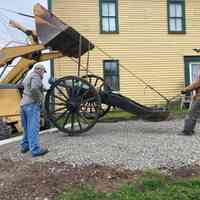
6 Pounder Brass Field Cannon | Cyrus Alger & Company, Boston | 1839
The C.A. & Co. stamped on the center of the right trunnion stands for Cyrus Alger & Company, a South Boston, Massachusetts foundry where this cannon was cast.The 1839 stamped on the center of the left trunnion is the year this cannon was cast. The cannon was one of two similar field cannons that were once part of Fort Sullivan in Eastport, Maine. The fort was decommissioned in 1873 and one of the cannons went to Lubec where it stood next to the Civil War monument on lower Main Street and the other one went to the Grand Army Hall on Green Street in Eastport where it stood next to the Hall. Around 1920, the cannon was fired off and damaged a neighboring house. The head of the veterans hall ordered the cannon to removed from its site next to the hall and the cannon was relocated to the front of the Peavey Memorial Library building in Eastport. In March, 2024 the library board voted to gift the cannon to the Tides Institute & Museum of Art. The cannon was relocated on May 9, 2025 to stand once again next to the Grand Army Hall on Green Street. • From Eastport Sentinel, August 20, 1919, p. 1: From account of recent City Council meeting. "A vote was then passed, thanking Fred Finch for furnishing blocks for the cannon at the Library Park, and the City Clerk was instructed to publish the same in the Sentinel and to communicate it to Mr. Finch by letter." Below is email to Border Historical Society of Eastport, Maine from Sanford Walker, June 18, 2010. Print copy in collections of Tides Institute & Museum of Art. Hello, My name is Sanford Walker. I am an amateur historian and Revolutionary War re-enactor. I recently passed through Eastport and noticed the cannon on the front lawn of the Library I do not know who owns the gun nor if the owner is aware of the historical importance of it; the cannon is a Model 1838 six pound field gun and is sitting on what appears to be a mostly original carriage made prior to 1839. This carriage is possibly one of two in existence; the carriage is described by Mr Matt Switlik in his article “US Field Gun Carriages – Their History and Evolution" which I have attached. According to Mr. Jim Bender (m1861artillery@yahoo.com) the gun is registered in the National Register of Surviving Civil War Artillery. It was cast by Cyrus Alger in Boston MA and assigned their registry number of 14, it was inspected by Mr James Wolfe Ripley (JWR) and weights 695 pounds. An oddity of the Model 1838 (and Model 1835) cannon is that they do have the normal “US” marked on the upper surface between the trunnions. Again, obviously, I do not know if the owner has the resources to properly protect the gun and carriage, both from the elements and thieves but I would suggest that if at all possible the gun and carriage be protected in a more suitable manner given its historical significance. Thank you for your time Sanford Walker 4900 NW Coves Dr Kansas City MO 64151 (603) 934-7237 Below is letter from Jules J. Arel address to Joanne O'Grady of Eastport, Maine, August 26, 1994. Print copy in collections of Tides Institute & Museum of Art. Dear Ms. Grady, First of all, many thanks for your help in my search for the gunnade cannon. I am enclosing photos of the two cannon that were located. I hope you can pass them on to the historical society, along with the following information. The Napoleon in front of the library is a six-pounder. It was cast in 1839 by the Cyrus Alger company in South Boston Mass. It's serial number is 695, and it weighs 1568 pounds. The carriage shows considerable deterioration from being exposed to the weather and should have several costs of water seal applied to it. The muzzle of the cannon should have a wooden plug several inches thick fitted in order to prevent rain and melted snow from standing in the barrel indefinitely. Maybe you can find a historical society member who will volunteer to do this. The cannon we located in the highway department storage yard is an English 12-pounder which dates to 1760-1770 and weighs 2240 pounds. It desperately needs to be moved to a protected area. Possibly the highway department would move it into one of your large work sheds. It wouldn't take up much room. If the school has sand-blasting equipment it could be used to clean the cannon. It should then be painted with a light coat of good quality black oil base enamel paint. The piece should be stored on wooden blocks, off the floor. All of this work could be done in possibly two hours. It's really a shame to see such a historical treasure in that condition. There still remains the question of the other cannon, the gunnade, which hopefully is on Treats Island. I know I'm imposing on you but ... would have any idea how I would go about getting someone to take me to the island, and the cost? Seeing mas you are familiar with the island I wonder if you might “volunteer” to go along? at your convenience. It would save a lot of searching time. Again, many thanks for all of your help Sincerely, Jules J. Arel From The Quoddy Tides newspaper, Eastport, Maine, June 23, 1995: Library cannon to return for 4th of July The future can best be known by knowing the past. If one understands yesterday, one can take action today to make a happier tomorrow. The wheeled cannon on the library lawn illustrates this by symbolizing some of the self-sacrificing aspects of American heritage. The bronze military field cannon, with its large iron-rimmed, all-terrain wheels, was cast in Boston, Mass., in the 1830s. It stood at Eastport's Fort Sullivan prior to the move to the library lawn. The Peavey Memorial Library cannon restoration project was sponsored by the Eastport Area Rotary Club, with repair of the cannon's wooden parts undertaken at Shead High School. The following persons have all generously and skillfully contributed to the cannon restoration project. Under the direction of industrial arts teacher Maurice House, students Robert MacDonald and David Keezer made meticulous and detailed drawings and notes of the cannon, its wheels, its wooden frame, and all of its iron works, to ensure that nothing be altered or last. Student foreman Kris Kilby and students Paul Smith, John Barnes, Dennis Lincoln, Scott Jarret and Adam Jamieson, using native prime oak generously contributed by Tommy Pottle of Pottle's Sawmill, restored the damaged wood and metalwork. A piece of the cannon’s original wood was used (for a variety of reasons — some sentimental) in repairing the elevation lowering and raising mechanism. House hopes to complete the work on the last section, the wheels, this all. John Knapp transported the cannon to Shead for repairs and will transport it again for its return to the library for the Fourth of July restoration ceremony at noon. Appreciation is extended to Ferne Johnson and Skip McGarvey of the library board for their assistance and ideas, to Wayne Wilcox, Vince Lodge, Buddy Allen, Mike Apt and Ed Martin for theirs and Shead's Nick Gamertsfelder. And last but not least, sincere appreciation is extended to the people of Eastport for their continuing support and encouragement.
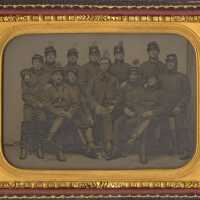
Ambrotype Photograph of First Maine Cavalry Civil War Veterans, c. 1860 | Photographer Once Known
FIRST MAINE CAVALRY, CIVIL WAR, EARLY 1860s! Period American Civil War ambrotype photograph that was recently donated to our collections that shows soldiers from Eastport, Maine in the First Maine Cavalry of the Union Army. Photograph dates to the early 1860s. We’re not sure if all 12 men in the photograph are from Eastport, but eight are identified as being from Eastport. Left to right, unidentified, Ebed Shackford, James Williams, George Andrews (standing), unidentified (seated), James Stayner, Andrew Bibber, Hugh Thompson, Loring Bell, unidentified (standing), Charles Bell (seated), unidentified.

American Civil War Artillery Officers' Saber | From Shiloh Relics
Gift of John L. Raye, 2020.
American Civil War Trunk | Walter F. Bradish
The only Walter Bradish I could find listed as being from Eastport was Walter F. Bradish who was a private in Twenty-Ninth Maine. They were at the battles of Donaldsonville and Port Hudson. Gift of Donald Raye.
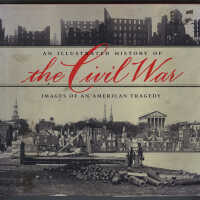
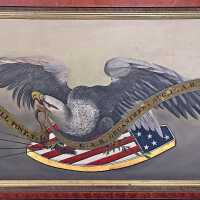
Benjamin Murray | Pembroke, Maine | Civil War
From: https://www.worthpoint.com/worthopedia/civil-war-colonel-general-15th-maine-440055641 Civil War General Benjamin Bixby Murray, Jr. (1828 – 1906) Murray was from Pembroke, Maine and enlisted on Dec. 6,1861, as a Captain, and commissioned into the 15 th Maine Infantry. He rose to the rank of Lt. Colonel and Colonel of the 15 th Maine, and was brevetted Brigadier General. Post war he was Adj. General of Maine, and a United States Marshal. The 15 th Maine formed a part of Gen. Banks' Red river expedition, during which it marched more than 700 miles in two months, and participated in the battles of Sabine cross-roads, Pleasant Hill, Cane river crossing and Mansura plains. Here’s a RARE 1874 Letter Signed by Murray on attractive “State of Maine, Adjutant General’s Office, Augusta” Letterhead to Lt. Henry A. Pratt enclosing a check for pay & travel for attending election of Major 1 st Regiment Maine Volunteer Militia. This HISTORIC DOCUMENT measures approx. 5 1/2” x 9” and is in VERY GOOD CONDITION, with paper folds –– PERFECT FOR FRAMING WITH A PERIOD CDV PHOTOGRAPH or ENGRAVING OF THE GENERAL!! Note that the picture of Murray is not included with the Autograph. A Rare Piece of American Military History/Memorabilia! <<::>> HISTORY of the MAINE FIFTEENTH INFANTRY (Three Years ) Fifteenth Infantry.--Cols., John McCluskey, Isaac Dyer; Lieut.-Cols., Isaac Dyer, Benjamin B. Murray, Jr., Pembroke; Majs., Benjamin Hawes, Franklin M. Drew, James H. Whitmore, John R. Coates. This regiment was raised principally in Aroostock county, and was organized at Augusta, Me., from Dec. 6 to 31, 1861, to serve for three years. It was mustered into the U. S. service on Jan. 23, 1862, and embarked from Portland March 6 for Ship island, Miss., at which date it numbered 962 men, rank and file. The regiment remained encamped at Carrollton, La., from May 19 to Sept. 18, during which time it suffered much from malarial diseases. In September it went to Pensacola, Fla., where it remained until June 21, 1863. Here the health of the men so improved that the number in hospital was reduced to less than one-quarter. During the first year of its service the 15th lost by desertion, discharge and death 329 men, although it had never been in battle. On its return to New Orleans in June, 1863, it joined Gen. Banks' expedition to Texas and rendered conspicuous service in the capture of Fort Esperanza, in Matagorda bay. While at Matagorda peninsula, from Jan. 17 to Feb. 28, 1864, three-fourths of the original members of the regiment reenlisted for another term of three years. Returning to New Orleans in March, the regiment formed a part of Gen. Banks' Red river expedition, during which it marched more than 700 miles in two months, and participated in the battles of Sabine cross-roads, Pleasant Hill, Cane river crossing and Mansura plains. In June, 1864, it was ordered to New Orleans, and on July 5 embarked on transports for Fortress Monroe, Va., where it arrived on the 17th. Six companies were then ordered to Bermuda Hundred, and the remaining companies participated in the campaign up the valley in pursuit of Early's army. The command was reunited at Monocacy Junction, Md., Aug. 4, when the veterans of the regiment who had reenlisted received a 35 days' furlough, returning to the field Sept. 27. In October it went to Martinsburg, where it remained until Jan. 7, 1865. The original members of the regiment who had not reenlisted were mustered out on Jan. 18, 1865, but the reenlisted men, recruits, volunteers, drafted men and substitutes forwarded from Camp Berry, Portland, were sufficient to reorganize the regiment, which was ordered to Washington in April, and went to Savannah, Ga., on June 4. On the 13th, it embarked on transports for Georgetown, S. C., where it was assigned to the 3d separate brigade, Department of South Carolina, and remained here until the date of muster out, July 5, 1866, whence the men went to New York, where they were finally paid and discharged. Source: The Union Arm... HIDE
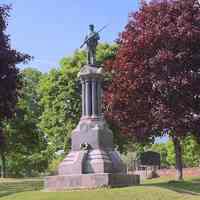
Calais Civil War Monument | Memorial Park, Calais, Maine
Calais, Maine Town/County: Calais/Washington Location: Memorial Park, Main Street Type: Soldier Materials: Calais granite, bronze Date Erected: 1893 Date Dedicated: May 30, 1893 Maker/Sculptor: Maine Red Granite Company of Calais Source of Funding: $3,000 raised by the Ladies' Memorial Society of Calais, a women's group which originated with the Calais Sanitary Commission, a women's aid organization that functioned during the Civil War. Principal inscriptions: In Grateful Remembrance Of/The Men Of Calais/Who Upon Land And Sea Sacrificed Their/Lives That The Nation Might Be Preserved/And That Government Of The People/By The People And For The People Should/Not Perish From The Earth/1861-1865 References: Calais Advertiser, May 31, 1893
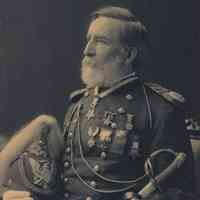
Charles H. Smith
Photograph of Charles H. Smith. Placed on permanent loan in 2025 by the Eastport Library Association in Eastport, Maine. Loan Agreement is on file. From Collection of Charles Henry Smith Materials, Colby College Special Collections, Waterville, Maine: Charles Henry Smith was born on November 1, 1827 in Hollis, Maine. He graduated from Waterville (Colby) College in 1856, and became the principal of Eastport High School until 1860. After the call for Volunteers to serve in the Civil War, Smith enlisted and was recruited Captain of Company D of the 1st Maine Cavalry in 1861. He was made Major, Lieutenant Colonel, and then Colonel in 1863. He was in command of the 1st Maine Cavalry at Gettysburg. He was mustered out of the 1st Maine Cavalry in August of 1865. After discharge from the Civil War, he was a lawyer in Eastport from 1865-1866, and also served in the Maine Senate in 1866. He reentered the regular army after the Civil War and remained until his retirement in 1891. He commanded forts at Fort Lyon, Colorado; Fort Leavenworth, Kansas; Fort Brown, Texas; and was in command of all the troops around New Orleans during the Reconstruction riots in 1872. In 1879 he was in command of troops to expel invading Kansas settlers from the Indian Territory. In 1895 he received the Congressional Medal of Honor for gallant and meritorious service in the Battle of St. Mary's Church, June 1864, where he was severely wounded in the thigh. He died in Washington, DC in July of 1902, and is buried in Arlington Cemetery with high military honors. The Smith Collection contains various materials gathered about Charles Henry Smith, including correspondence during and post-Civil War years - primarily documenting his service in the US Army - with both Maine and non-Maine military and political personalities, such as: David M. Gregg, Oliver Otis Howard, Harris Merrill Plaisted, Eugene Hale, John L. Hodsdon, J.A. Milliken, W.E. Miller, E.R. Platt, F.A. Pike, Joshua Lawrence Chamberlain, E.O.C. Ord, and others, as well as some descriptions from the field written by Smith to various military figures. The collection also contains several personal documents, including diplomas, military and legal appointments, certificates of membership in various associations, and application for the medal of honor. The collection also contains several 1st Maine Cavalry artifacts.
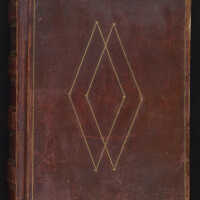
Charles T. Eldridge | Eastport, Maine American Civil War Handwritten Enlistment Book | 1871
A massive 381 page hand written oversized leather bound volume that details the participation by residents of Eastport, Maine in the Union military operations in the American Civil War. The volume was the work and labor of love of Charles T. Eldridge of Eastport, Maine who was himself a veteran of the American Civil War. He completed the work in 1871 and he was able to undertake the research for the volume while stationed in Washington, D.C. where he had access to military records regarding the War. The volume’s official title is: “Eastport: Enlistments in the Regular and Volunteer U.S. Army and Navy from 1861 to 1866, compiled from Official Records by Charles T. Eldridge.” For many years the volume resided with the Peavey Memorial Library of Eastport, Maine. But use of the volume over time led to its wear and tear to the point where the library was considering placing the volume with the Maine State Library for better preservation of the volume. Fortunately a trustee of the Peavey library approached the Tides Institute about whether the institute might be willing to take on the volume, preserve it and keep in this region. The Tides Institute agreed to do this and in 2018 the Peavey Library placed the volume with the institute. Soon afterwards the institute had the volume restored and digitized by the Northeast Document Conservation Center in Andover, Massachusetts. The institute was able to raise the necessary funds privately. Photo caption: Title page of 381 page hand written leather bound volume that details the participation by residents of Eastport, Maine in the Union military operations in the American Civil War. The volume was the work of Charles T. Eldridge of Eastport, Maine who was himself a veteran of the American Civil War. He completed the work in 1871. Placed on permanent loan in 2018 from the Eastport Library Association in Eastport, Maine. Loan agreement on file. Eastport. Enlistments in the Regular and Volunteer Service, U.S. Army and Navy. From 1861 to 1866. Compiled from Official Records by Charles T. Eldridge at Washington City, D.C., 1871. From Eastport Sentinel, December 12, 1917, p, 2: EASTPORT MAN LONG IN SERVICE Col. C.T. Eldridge Spent More Than Half Century in Service. Interment Here Wednesday Afternoon. The burial of Col. Charles T. Eldridge, who died in Washington D.C, on Sunday, Dec. 2, took place at the cemetery here at noon Wednesday immediately after the arrival of the remains on the 11:30 train. George R. Ray, Warren S. Kane, E.S. Waide, James L. Irvine, John P. Hutchison, Fred Campbell, George W. Norton and W.C. Hawkes acted as pall bearer and brief services were conducted by Rev. Dr. H.O. Millington of the Brookland Baptist church of Washington. Mrs. Eldridge and Frank Eldridge of Providence, a brother of Mr. Eldridge were present returning with Dr. Millington to their homes on the afternoon train. Col. Eldridge was born in this city about 75 years ago and was educated in the public schools. He enlisted on October 11, 1862 as a private in Co. H, 26th Maine Volunteers and saw service under Butler in the Louisiana campaign for nearly two years being mustered out in 1863. In April he was appointed commissary clark to Major B.A. Chadbourne and served with him until April, 1865, when he resigned to accept a position as clerk in a bureau of the War Department. This position he held for 52 years, in the course of which he met and developed acquaintances with many government officials. Mr. Eldridge was a penman of exceptional ability and among other samples of his work was a part of the original ritual of the Knights of Pythias, an order which was founded at Washington during the first years of his residence there. He also compiled a record of all the enlistments from Eastport during the Civil War — a beautifully executed book of 269 pages, 16 inches in width by 24 inches in length and five inches in thickness. This book was presented to the Public Library of this city by Mr. Eldridge and has for long been one of the show pieces of the library. Mr. Eldridge is survived by his wife and three brothers, William of Oregon, Frank of Providence and Mayor Fred T. Eldridge of this city.
Cherryfield Civil War Monument | Pine Grove Cemetery, Cherryfield, Maine
Cherryfield Town/County: Cherryfield/Washington Location: Pine Grove Cemetery Type: Shaft Materials: Italian marble Date Erected: 1874 Date Dedicated: July 4, 1874 Maker/Sculptor: S.P. Bradbury of Bangor Source of Funding: $1,200 from Town of Cherryfield Principal inscriptions: In Memory of The/Citizen Soldiers of The Town of Cherryfield/Who Lost Their Lives In The/War For Subduing The Rebellion of/1861-5 References: Dedication of the Soldiers' Monument at Cherryfield, Maine, July 4, 1874, Portland, 1874
Civil War Artillery Short Sword | Found/Bought in Eastport, Maine.
Gift of John L. Raye, 2020.
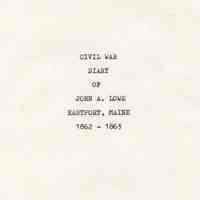
Civil War Diary of John A. Lowe, Eastport, Maine, 1862-1863
Copied from original then In possession of Alice Green, Eastport, Maine, Click on the web link to view the typescript copy of the Civil War Diary of John A. Lowe of Eastport, Maine, 1862-1863.
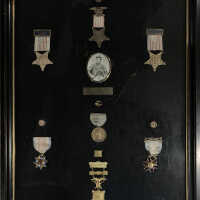
Civil War Musician's Sword | Ames Company, 1862
Gift of John L. Raye, 2020.
Civil War NCO (Non-Commissioned Officer) Sword | Collins & Company
Gift of John L. Raye, 2020.
Civil War Rifle A
From GAR Campbell Post No1, Pembroke, Maine. From Collections in care of Pembroke, Maine Masonic Lodge, 2020.
Civil War Rifle B
From GAR Campbell Post No1, Pembroke, Maine. From Collections in care of Pembroke, Maine Masonic Lodge, 2020. Has related bayonet B.
Civil War Rifle C
From GAR Campbell Post No1, Pembroke, Maine. From Collections in care of Pembroke, Maine Masonic Lodge, 2020.
Civil War Rifle | Remington's, Ilion, New York | 1863
From Walter Emery Estate. Came down through the Emery family of Eastport, Maine. May have belonged to Caleb Emery. Gift from estate of Walter Emery, 2018. From paper found in the covered patch box in the butt stock of the rifle: 4/11/1978: Remington 1863 percussion contract rifle. "Zauave Rifle." Total made: 12,501 between 1862-1865. .58 caliber. Very good condition. Value - April, 1978, $500. Robert J. Maroni.
Civil War Rifle | Springfield, 1863
Gift of John L. Raye, 2020.
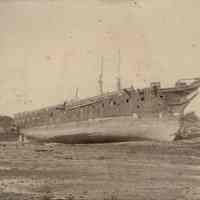
Civil War Ship, U.S.S. Minnesota | Broad Cove, Eastport, Maine | 1901
Photograph of the U.S.S. Minnesota at Broad Cove in Eastport, Maine just before it was burned in 1901. The Minnesota was built in 1861, a American Civil War craft of Merrimack and Monitor fame.
Civil War Sword A
From GAR Campbell Post No1, Pembroke, Maine. From Collections in care of Pembroke, Maine Masonic Lodge. Has related sword case A.
Civil War Sword B
From GAR Campbell Post No1, Pembroke, Maine. From Collections in care of Pembroke, Maine Masonic Lodge. Has related sword case B.
Civil War Sword C
From GAR Campbell Post No1, Pembroke, Maine. From Collections in care of Pembroke, Maine Masonic Lodge. Has related sword case C.
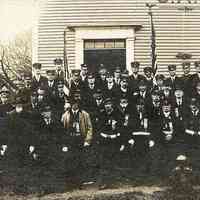
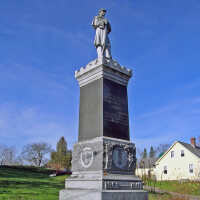
Dennysville Civil War Monument | Main Street, Dennysville, Maine
Dennysville, Maine Town/County: Dennysville/Washington Location: Main Street Type: Soldier Materials: Granite Date Erected: 1915 Date Dedicated: August 9, 1916 Maker/Sculptor: Red Beach Granite Company Source of Funding: Public subscription Principal inscriptions: In Grateful and Loving/Remembrance Of The Men Of/Dennysville/Edmunds/Marion/Who Offered Their Lives/A Willing Sacrifice That/The Nation Might Be Saved/1861-1915 References: Bangor Daily News, August 11, 1916; Rebecca W. Hobart, Dennysville, 1786-1986, Ellsworth, 1986, p. 67.
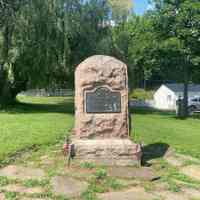
Eastport Civil War Monument | 33 Washington Street, Eastport, Maine | I7-0B3-07 | District #117
Located on City of Eastport property between House #116 and House #118. Granite monument erected in 1938 with bronze plaque which reads: 1861 1865/Erected/In Memory Of/The Men Who Served/The Union On/Land And Sea/By/The Citizens Of Eastport/Under The Auspices Of/The Sons Of Union Veterans/Of The Civil War.” The original stone walkway that was installed as part of the monument was unearthed a few years ago. From The Quoddy Tides, May 22, 2009, p. 8: Monument Honors Civil War Veterans by Susan Esposito Seventy years ago, in honor of Eastport's Civil War dead, the Sons of Veterans erected a monument on a vacant lot between Washington and Sullivan streets. Approximately 800 Eastporters had served on land and sea during the War of the Rebellion. When the Red Beach granite memorial was set up at the end of 1938, The Eastport Sentinel described it as "standing six feet in height and of a rough finish, [standing] in the center of what was once a grass tennis court, reached from both streets by a flagstone pathway." The inscription on the Washington Street side reads, ”1861 GAR 1865 / Erected In Memory of the Men Who Served The Union On Land and Sea By The Citizens of Eastport Under the Auspices of The Sons of Union Veterans of the Civil War.” The monument had been approved a year before that when Commander Howard Savage of Meade Camp, Sons of Veterans, announced that the members had voted to buy the lot of land connecting the Kane property on Washington Street and erect a suitable memorial to the soldiers of the Grand Army of the Republic. The December 15, 1937, issue of The Eastport Sentinel reported of the original plan, “The plans are being worked out so that the lawn, sidewalk and stone will be parts of a harmonious design adapted particularly to that location, with a view not only to beautifying that section of Washington and Sullivan Streets but of rendering more accessible attractive grounds surrounding the high school and the beautiful terraced steps leading up to them.” Commander Savage said, “The members of the camp felt that they have completed the work for which their organization was established, and that further memorial observance may well be sponsored by younger service groups. Meade Camp will accordingly disband after it has arranged for this memorial fund, for which money amounting to about a thousand dollars is in the camp treasury.” Added the Sentinel, “Eastport has never had a soldiers monument, partly because no suitable site has been available previously. Funds have several times been started for the purpose, however. The Sons of Veterans believe that the memorial they are planning will serve the purpose of remembrance and honor just as truly as a monument, and with more both of dignity and utility, an opinion that will be held by the great majority of people here.” • Eastport Sentinel, December 15, 1937, p.1: "Sons of Veterans Plan Memorial. To Buy Kane Lot on Washington Street, Build Cement Walk to Sullivan Street Place Memorial Tablet. Commander Howard Savage of Meade Camp, Sons of Veterans announced Saturday that at a meeting of that organization held Friday evening it had been voted to buy the lot of land connected with the Kane property on Washington Street, and to have erected there a suitable memorial to the soldiers of the Grand Army. This will not take the form of a monument, but will be something perhaps quite as attractive, and certainly more useful,—a cement sidewalk running from Washington Street to Sullivan Street near the foot of the steps leading to the High School grounds, thru a lawn in which will be set, on a suitable base, a boulder of native granite, bearing a bronze tablet appropriately inscribed. The plans are being carefully worked out so that the lawn, sidewalk and stone will be parts of a harmonious design adapted particularly to that location, with a view not only to beautifying that section of Washington and Sullivan Streets but of rendering more accessible attractive grounds surrounding the High School and the beautiful terraced steps leading to them. The transfer of the Kane lot will be made immediately, but work on the sidewalk and the stone may not be started until spring, altho it is probable that the entire undertaking will be completed by next Memorial Day, when it would be fitting that a dedication program be conducted in connection with the usual Memorial services. Commander Savage said the members of the Camp felt that they have completed the work for which their organization was established, and that further Memorial observance may well be sponsored by younger groups. Meade Camp will accordingly disband after it has arranged for this memorial fund for which money amounting to about a thousand dollars is in the Camp treasury. Eastport has never had a soldiers monument, partly because no suitable site has been available previously. Funds have several times been started for the purpose however. The Sons of Veterans believe the memorial they are planning will serve the purpose of remembrance and honor just as truly as a monument, and with more both of dignity and utility an opinion that will be held by the great majority of people here." • Eastport Sentinel, May 25, 1938, p. 1: "Memorial Day Plans Completed. Parade in Afternoon; No Oration this Year; Kane Lot Purchased. .... Of interest in connection with Memorial Day is the fact that the deed of the Kane lot on Washington Street passed yesterday, and work will soon be started for the erection of a Soldiers Memorial there. The plans include the building of a walk leading from Washington to Sullivan Street as an approach to the foot of the High School steps; the setting up of a natural boulder bearing a memorial tablet of bronze, and the creation of a small park where seats will be available for visitors or others who may wish to pause there for a moment's rest while walking about town. When the general plan was decided on last summer it was hoped that the project could be completed for dedication this year, but that proved inpracticable, and the work will be done, it is expected, during the coming season." • Eastport Sentinel, November 16, 1938, p. 1: "Sons of Veterans Honor War Dead. Erect Monument on Former Kane Lot in Memory of Men Who Served the Union on Land and Sea. In fitting tribute to the "Boys in Blue" who left Eastport in 1861-65 to fight for the Union on land and sea, the Sons of Veterans of Meade Post, G.A.R., have erected a splendid Civil War memorial on the former Kane lot between Washington and Sullivan Streets. Expenses were taken care of by the local patriotic order while the labor was done by WPA. Hewn out of native Red Beach granite, standing six feet in height and of a rough finish, the monument stands in the center of what was once a grass tennis court, reached from both streets by a flagstone pathway. The inscription on the side facing Washington Street reads as follows: 1861 GAR 1865 Erected In Memory of The Men Who Served The Union On Land and Sea By The Citizens of Eastport Under the Auspices of the Sons of Union Veterans of The Civil War Plans are now under discussion by the Sons of Veterans regarding its dedication, which probably will be solemnized on Memorial Day, 1939." • Eastport Sentinel, May 31, 1939, p. 1: "Memorial Day Fittingly Observed." No mention of any dedication of the Civil War monument.

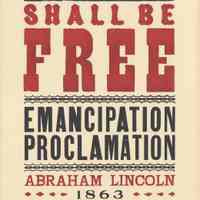
Emancipation Proclamation Poster | 2013 | 16" x 23" | Numbered 1124 of 5000 copy edition
Gail Anderson was commissioned by the US Postal Service to design a commemorative stamp celebrating the 150th anniversary of the signing of the Emancipation Proclamation in 2013. Gail and USPS art director Antonio Alcala collaborated with Jim Sherraden of Nashville’s famed Hatch Show Print to produce the final version of the stamp, which was also made into 5000 letterpress posters. The initial run of 40,000,000 stamps sold out (!) and the USPS released an additional edition of 10,000,000. https://musicrow.com/2013/01/hatch-print-helps-develop-stamp-for-u-s-postal-service/: Hatch Print Helps Develop Stamp for U.S. Postal Service January 8, 2013by Jessica Nicholson usps stampNashville’s Hatch Show Print, one of the oldest working letter print shops in America, was recently tapped to assist in designing and producing the U.S. Postal Service’s 2013 Emancipation Proclamation (Forever ®) stamp, which commemorates the 150th anniversary of the proclamation signed by President Abraham Lincoln on Jan. 1, 1863. The stamp is one of three Civil War-era commemorative stamps to be released, though Hatch Show Print was not involved in the design process for the other two stamps. Stamp designer Gail Anderson and Antonio Alcala, an art director who works closely with the U.S. Postal Service to find talented designers, spent two days at Hatch Show Print last spring, working alongside Hatch Show Print manager Jim Sherraden in the final design of the stamp. “It is just great that in the 21st century, we are able to draw on a process such as letterpress printing, to add texture and authenticity to a project such as this,” Celene Aubry, project manager for this project at Hatch Show Print, tells MusicRow. This is the first stamp issue where Hatch Show Print has had a hand in the process. Hatch Show Print’s archive of wood types and ornaments that match the era of the Emancipation Proclamation made it a natural fit for the project’s design and production needs. Hatch Show Print opened in 1879, 16 years after the Emancipation Proclamation was signed. The stamp was originally printed poster-size. “When the [stamp] committee saw the posters and heard about Gail and Antonio’s experience at Hatch, they decided they wanted a run of posters to sell alongside the stamps,” says Celene. 5,000 posters were printed. “Once the final design was so enthusiastically accepted by the stamp committee and they decided to have Hatch print the additional posters, we spent about a week and a half here at the shop printing, trimming, numbering and packing up the 5,000 posters,” says Celene. The stamp was issued on Jan. 1, 2013. To purchase the 2013 Emancipation Proclamation (Forever ®) stamp, visit usps.com.
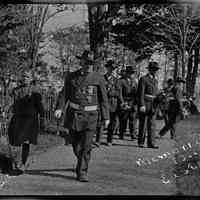

George W. Sabine | American Civil War Diaries
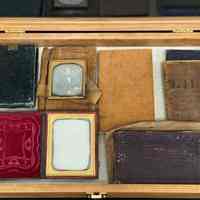
CIVIL WAR FIELD DIARIES kept by George Sabine of Maine, 3 vols. Three highly detailed leather-bound duodecimo pocket notebooks kept during the Civil War by GEORGE W. SABINE (1832-1865) of Eastport, Maine, while commanding Company K, 18th Regt. Maine Volunteers, and subsequently while serving in Maine’s 1st Heavy Artillery Regt. ALTOGETHER TOTALING approx. 282 pp. of diary entries, military engagement sketch-diagrams, related drawings, dollar accounts, etc., plus blanks. Sabine fully names many of his fellow combatants. TOGETHER WITH his pocket diary for 1860 (recording his regional travels, election results, birth of his only child, wife’s health, named steamship departures and arrivals, weekly sermon topics preached by named ministers, etc.), his inscribed leather wallet, two daguerreotypes, the circa 1860 browned muslin ditty bag (inscribed in ink with Sabine’s name and town) in which these notebooks have descended, and one LEONARD HALL’s highly detailed 48-page 1848-1851 pocket notebook of grocery purchases from JOHN CHAMPNEY. From John Raye, Canton, Connecticut in email, March 24, 2024: The George Washington Sabine Diaries George Sabine was born in Eastport and lived there for all of his life and is now resting at Hillside Cemetery. This set of diaries are quite special as they begin in 1860, a pivotal point in the history of the country and in particular, Washington County. These well written and legible documents cover in detail life in Eastport leading up to the fervor of the Civil War. Temperance parades, named ship arrivals and departures, ministers and sermon content, birth of a child, city business, and even attending a literature club discussing the merits of Edgar Allen Poe’s poetry. The three war journals outline George’s beliefs and his recruitment of volunteers at Fort Sullivan just prior to the outbreak of hostilities and then cover the incredible battles of the war. They name his friends from Eastport who died at his side in battle in places like Spotsylvania, Cold Harbour and Petersburg where he led his troops as an acting Lt. Colonel of the First Maine Heavy Artillery. His last entry reports Rebel snipers picking off officers the night before a pivotal battle. He was one of them. I can not stress enough the importance to Eastport of this period of history as recorded so accurately in these amazing diaries. They are invaluable and deserving of recovery and your support on this effort. John L. Raye Author of Island Sacrifice From Kilby's History of Eastport and Passamaquoddy, p. 361: George W. Sabine, captain. Promoted major and lieutenantcolonel. Fatally wounded June 17, 1864; died May 28, 1865. Emma Augusta Bucknam married Henry H. Wadsworth to become Emma Augusta Bucknam Wadsworth quilt dates to 1895 and signature (in thread) in the quilt: "Aunt Emma 1895" Emma's sister in law was Adelaide Wadsworth Sabine, she was married to George Sabine (killed during the Civil War at Petersburg) quilt was made for and given to Adelaide and George's daughter, Marion (Emma's niece and hence the "Aunt Emma 1895" woven in thread in the quilt Marion passed the quilt on to her daughter _______________ Marion's daughter in turn passed the quilt onto to her daughter, Louise Peck (Marion's granddaughter) of Cambridge, Massachusetts (Louise Peck now has Civil War diaries of George Sabine). From John L. Raye by email, August 29, 2022: Emma Augusta Bucknam Married Henry Howard Wadsworth both of Eastport. Emma was the maker of the quilt. It was made for her niece Marion Sabine daughter of George Sabine and Frances Adelaide Wadsworth Sabine, (both from Eastport) Henry Howard Wadsworth's beloved sister. Marion Sabine Paine's ( married name ) daughter Emily Paine Fried (married name) inherited the quilt which was given to her daughter Louise Wadsworth Fried Peck (married name) who gave the quilt to John L. Raye also a descendent of Emma Augusta Bucknam Wadsworth. John gave the quilt to the Tides Institute and Museum of Art. The quilt was signed "from Aunt Emma 1895". This quilt has found its way home through direct decent. From Vital Records of Eastport Sentinel, Eastport, Maine, 1818-1900, p. 348: Marriages In Eastport 28 Dec 1882, Rev. Edward Houghton, Marion Wadsworth d/o Addie W. and the late Maj. Geo. W. Sabine of Eastport to Fred A. PAYNE of Albany, NY. From Vital Records of Eastport Sentinel, Eastport, Maine, 1818-1900, p. 367: Marriages, In Washington DC, 11 Mar 1884, by Rev. Shippen, Prentiss M. CLARK of St. Paul, Minn to Mrs. Addie W. SABINE of Eastport.
Harrington Civil War Monument | Forest Hills Cemetery, Forest Hills Road, Harrington, Maine
Harrington Town/County: Harrington Location: Forest Hills Cemetery, Forest Hills Road Type: Shaft Materials: Italian marble, granite Date Erected: Date Dedicated: July 4, 1871 Maker/Sculptor: S. P. Bradbury of Bangor Source of Funding: Principal inscriptions: Erected/To The Memory Of The/Citizen Soldiers/Of The Town Of/Harrington/Who Lost Their Lives In/Suppressing The Rebellion Of/1861/Consecrated/July 4, 1871 References: Bangor Whig & Courier, June 27, 1871; Machias Union, July 4, 1871; July 18, 1871
Harry Harrington | Civil War Mural | Grand Army Hall, 6 Green Street, Eastport, Maine | c.1880s
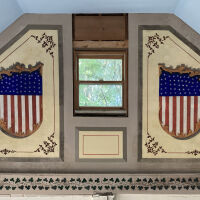
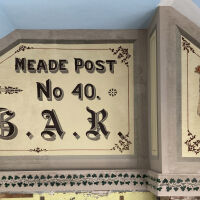
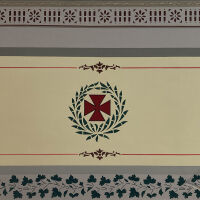
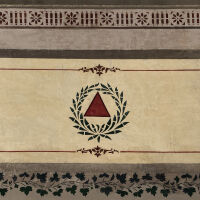
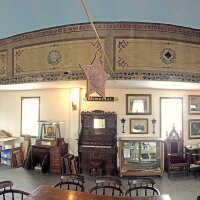
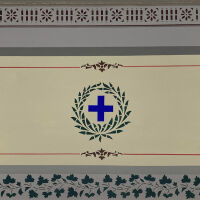
A Civil War mural running the length of the upper walls of the second floor of a former Civil War GAR (Grand Army of the Republic) Veterans Hall building in Eastport, Maine that is owned by the Tides Institute. It is the only such Civil War mural in Maine. The original two and a half story GAR Hall building dates to the 1820s and was first used as a Baptist vestry. When the Baptist Church established a new vestry space within its own separate church building in 1881, their vestry building became available to the local GAR veterans group that was organized after the American Civil War. The second floor of the building became the meeting room for the veterans group and they had the longer north and south walls decorated with a series of four panels, making a total of eight, each with a distinctive Union Army Corp badge numbering from one to eight. The shorter end east and west walls of the room were decorated with the name of the local GAR post (Meade Post No. 40) and with American flag shields and draped flag designs. The mural was very likely painted by local decorative painter, Harry Harrington, as he painted a similar mural in an adjacent Armory building at about the same time. This building and mural did not survive. A dropped ceiling, installed in the middle of the room in the early 20th century long hid the mural from view, but in 2010, after the hall building was sold to new owners, the mural was rediscovered and the dropped ceiling removed. The mural suffered considerable water damage over the years as it was painted with a distemper water soluble paint. The Tides Institute has had the mural restored by Tony Castro, an experienced restorer, of New Gloucester, Maine.
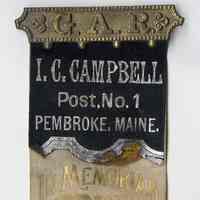
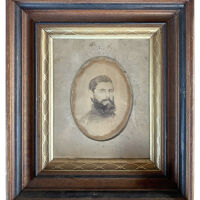
Isaac Campbell, Pembroke, Maine, 2nd Lieutenant, 6th Maine Infantry, Company F, Civil War
PEMBROKE CIVIL WAR VETERAN, 1860s! Photo that recently came into our collections is of a Pembroke, Maine American Civil War veteran. It dates to the 1860s. Housed in a deep 13" x 15" wood frame, the photo came from the former Pembroke Civil War veterans post that shared space within the Pembroke Masonic Lodge building that closed a couple of years ago. There was no identifying information on the photo or frame as to who the veteran might be. We guessed perhaps it was Isaac Campbell — the Pembroke veterans post had been named for him. So we searched the Maine State Archives digitized online collections of nearly 2500 small (carte de visite) photo portraits of Civil War veterans from throughout Maine. We typed Isaac Campbell into the search field and sure enough up came a small identical photo to the larger one that we had just come into our collections: Isaac Campell, Pembroke, Maine, 2nd Lieutenant, 6th Maine Infantry, Company F. He was killed during the Battle of Spotsylvania Courthouse, Virginia in May, 1864 at the age of 22/23.
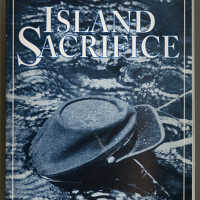
Island Sacrifice | John L. Raye
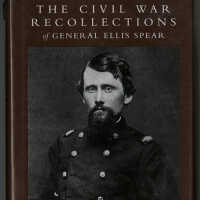
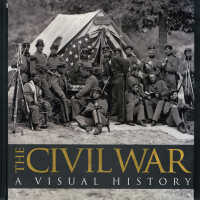
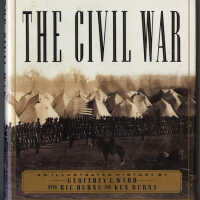
The Civil War. 2 copies.
Jonesport Civil War Monument | 162 Main Street, Jonesport, Maine | In front of Peabody Memorial Library
Jonesport Town/County: Jonesport/Washington Location: Peabody Memorial Library, 162 Main Street Type: Monument Materials: Granite, bronze Date Erected: Date Dedicated: Maker/Sculptor: Source of Funding: Principal inscriptions: Erected By/The Grateful People Of Jonesport/In Memory Of/Our Heroes/Who Gave Their Lives For Our Country/And In Honor Of/Our Soldiers And Sailors
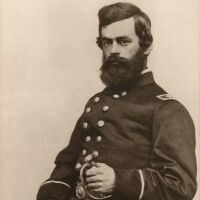
Joseph S. Cony | American Civil War Union Navy | Eastport, Maine
Joseph Cony and the Life of His Two Swords (2022) By John Raye Joseph Saville Cony’s short life swept like a comet over the horizon of the Civil War before it returned whence it came. Born in 1834 in Eastport, Maine, a little island city once one of the nation’s busiest ports, was where he called home. He grew up with the sea all around him, so it was no surprise that he ventured onto it at a young age. Volunteering in the Navy in1862, he served as acting Ensign aboard the Union Warship USS Western World. That year he commanded several successful small boat raids along the Carolina coast. He was young, brave, ambitious, and determined to make his mark. Cony was issued two USN swords befitting his rising star. The first was an officer's dress sword with an embellished blade and name engraving; an attractive weapon. The second was particularly special – an Ames 1862 officer’s cutlass with the U.S.N. cut out on the brass hand cover. This cutlass likewise featured a prominent engraving of his name. It was a serviceable weapon that would later see much action. By 1863 Cony was the executive officer of the U.S.S. Shokokon. In command of a daring expedition, he took one of the Shokokon’s long boats along with six seamen and left a path of glory the U.S. Navy would not soon forget. His raiding party surprised a much larger rebel force in an encampment at New Topsail inlet, near the Confederate stronghold of Wilmington, North Carolina. Cony’s small force captured ten soldiers, a large howitzer, eighteen horses, extensive salt works, and most importantly, destroyed the blockade runner, Alexander Cooper. This was an extraordinary feat and was well documented in USN historical ledgers and military correspondence. Much of the North’s strategy in winning the Civil War, right from the original “Anaconda Plan,” was to cut off the Confederate states' lines of supply and commerce from the outside world. The Navy was to contribute immensely to this effort, and control of the Mississippi was critical in blocking rebel commerce. Closing Atlantic Ports and the Gulf of Mexico were important to impede the Confederates’ supply chain. Grant’s successful collaboration with the Navy at the siege of Vicksburg, and the Union Navy winning the Battle of Mobile Bay and the taking of Atlanta, were huge advancements for the North. Yet Wilmington, North Carolina and its “Gibraltar” - Fort Fisher - was still open in the fall of 1864, allowing arms, ammunition and other critical supplies to reach the Confederacy. And for good reason: Fort Fisher was considered impregnable. Joseph Cony would now play important roles in amphibian attacks on the Carolina shore and at two subsequent battles at Fort Fisher. USN archives document how General Peck lauded Cony’s landing expedition on the North Carolina shore while attached to the U.S.S. Britannia. General Grant, meanwhile, was mired in Petersburg, Virginia and demanded Fort Fisher be closed to destroy the Rebel supply line. Grant sent the incompetent but well-connected General Butler to accompany the Navy in storming Fort Fisher in December 1864. Acting Master Cony did his part in shelling the Fort, but Butler’s Army contingent didn’t coordinate with the Navy, making the battle a disaster for the North with hundreds killed and wounded. After the Christmas of 1864, Grant wanted results, and this time Joseph Cony would play a bigger role. Now General Terry would lead the Army forces and would coordinate well with Admiral Porter. Cony would lead his ship’s bombardment of the Fort with accuracy. Then he would volunteer for the all -Navy and -Marine contingent that would try to breach the wall of the Fort on one side as the Army attacked the other side. While the soldiers were armed with rifles and bayonets, the brave Navy volunteers had only a cutlass and a revolver. The Navy assault should have been timed to coincide with that of the Army, but the Navy, possibly seeking glory, went against the enemy first. Cony was in the front that was battered by rebel coordinated rifle and cannon fire. Only a few times in USN chronicles does the war detail such ferocious rebel fire. Men fell all around Cony in an awful slaughter with three hundred sailors killed or wounded. Only one Navy volunteer made it up the ramparts. The Navy, after a valiant and repeated charge, was forced to fall back. Despite its retreat, it nevertheless succeeded in splitting the fort's defenders, thus allowing the Army to break through on the other side. The North had taken the fort. Once again, Cony had proved invaluable. The battle of Fort Fisher was a major step in winning the Civil War. Tragically, Cony’s time at sea did not end with glory. He died shortly after the war when the merchant ship he commanded sank off Cape Hatteras in 1867 in a violent storm. Almost a century later, in recognition of his important role in the war between the states, the name Cony was to grace a Destroyer in World War II, U.S.S. Cony (DD-508). The U.S.S. Cony served in World War II, Korea, Vietnam, the Bay of Pigs and the Cuban Missile Crisis. The ship was built at Bath Iron Works in Maine, and sponsored in 1942 by Alice Sleight of Eastport Maine, the closest living descendant of Joseph Saville Cony. She would pray daily for the safety of the sailors and officers of the Cony, and as Eastport’s librarian, would scour the newspapers to learn of the ship’s likely whereabouts. The ship and crew would play a critical role in the battle for supremacy in the Solomon Islands. The Cony would be awarded eleven battle stars over the course of a campaign culminating in the last line of battle confrontation with the Japanese Navy, wherein she sank an enemy destroyer. Unfortunately, a number of sailors would die, in a desperate attack by dive bombers and fighters trying to sink the Cony. The damaged ship would be repaired and continue fighting until the end of the World War II and through the 1960’s In the meantime, Joseph Cony’s swords would reside in the Sleight home in Eastport, a reminder of his valiant career. In 1947, the U.S.S. Cony was recommissioned and once again sponsored by Alice Sleight. In a speech given by John F. Kennedy, it was mentioned, “Joseph Cony, from Eastport, served with distinction in the war between the states specializing in amphibian landings along the southern coast.” The U.S.S. Cony would win two more battle stars in Korea and served in Vietnam as well, but she was most prominent in the Cold War. The USS Cony was part of the Hunter-Killer Task Group Alpha, a squadron of eight antisubmarine warfare destroyers, that were equipped to hunt down Soviet submarines during the Cuban Missile Crisis. There the cool of Cony’s captain and crew, as well as a Soviet submarine captain, arguably saved our lives from a nuclear holocaust. Joseph Cony’s swords remained at rest atop Alice Sleight’s piano in their Eastport house on Key Street. Alice Sleight, now retired, was aging, and passed the Cony swords to her daughter, Ann Harrison, who was most honored to possess them. Going forward a few decades Ann had given them some thought about where they should go, and it was on her birthday celebration, July 10, 2019, that she told her daughter, Jill Hume Harrison, that they should be given to a museum on permanent loan. When her daughter went to retrieve them from atop their hutch, she was stunned to find them missing. After checking with her brother, William, Jill notified the Boothbay Harbor, Maine Police Department. Likely suspects were personal care attendants who were assisting Ann in her recovery after a car accident. It turned out that other items were stolen as well – jewelry, money, electronics,, an antique silver tea service, gold coins, a gold watch, and other family heirlooms. Perhaps Dr. Jill Harrison had inherited some of Joseph Cony’s tenacity and persistence.. She would need those traits and more to discover who had stolen the swords and to get them back to Maine, especially so when the police seemed to have given up on the case as unsolvable. Jill suspected a home health care worker and her husband, especially since she had been told that not all employees had passed a criminal background check. Indeed, the police issued a search warrant for one worker’s home when the radio frequency from a stolen smart speaker device was picked up there. The speaker was there but not the swords. This worker's husband had a criminal past, but by then, which turned out to be over a year later, the swords had long been gone. The police checked some pawn shops to no avail in 2019, so now the real work began. Dr. Jill Harrison worked the phone and the internet with superb skill and pluck. Black of night deals at an auction house parking lot were hinted at. Dr Harrison had to follow up, but where? She contacted every auction house between Germany and Hawaii that dealt in historic arms. She also contacted historic arms dealers who had internet businesses, or brick and mortar establishments, and Ebay. It was tedious work, but by tenacity, and when necessary, intimidation coupled with some luck, leads opened up. The swords had first sold in Maine for less than $700 in December 2018. Then they started to move across the country, their price increasing from one transaction to the next. Finally they were bought by a collector in Baltimore at an auction for $7,500. By this time, there had been a chain of ownership that formed a dubious provenance. A Civil War collector from near Fort Fisher bought the swords in good faith for $17,000. Luckily, Dr. Harrison had photographed the swords for a presentation to the U.S.S. Cony’s veterans. Even better, the swords were unique because each weapon was engraved with Joseph S. Cony’s name by the hilt. These were high-end swords in great condition, owned by a legend after whom a legendary World War II destroyer was named. They were quite a prize for the collector! Dr. Harrison had the evidence of theft, proof of ownership, and the name and address of the improper new owner. Miracle of miracles, the swords were shipped to the Boothbay Harbor Police Department and returned to the Harrison family in December 2021! When Dr. Harrison called the Boothbay Harbor Police Chief and told him she had found the swords, he said he had to pick himself up off the floor. The collector, through a broker, offered the Harrisons $20,000 to buy the swords back. He also offered to give them to the Fort Fisher Museum upon his death. Dr. Harrison replied that she didn’t think her ancestor, who fought for the North, would want his swords at Ft. Fisher but rather in Maine, where they belonged. They would not be for sale at any price. Watch for the swords to be on display in Maine in the near future, including at the Tides Institute and Museum of Art in Eastport, the city Joseph Cony called home.
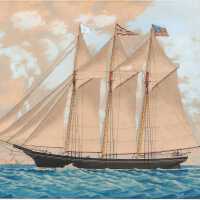
Louis Roust | Pembroke, Maine Schooner, George K. Hatch | 1876
A 19th century watercolor ship portrait painting of the Pembroke, Maine built three masted schooner, George K. Hatch. The painting dates to 1876 and is the work of artist, Louis Roust. Nothing is known about the artist. The schooner, at 285 tons, was built in Pembroke in 1874 by either S.C. Foster or Aaron or A.& G. Frost. The schooner was named for a prominent resident and merchant of Pembroke, George K. Hatch, who was born in 1836. Hatch served in the American Civil War and then returned to Pembroke where he served as postmaster in 1870. He died in 1877, three years after the schooner named for him was built. James Murphy was master of the schooner from 1874 to 1878 and James Hardenbrook was master in 1886. In 1888 the ship was wrecked in the Caribbean Sea on Turks Island and in 1892 was subsequently sold, repaired and transferred to Saint John, New Brunswick and its name change to Alianza. The painting was secured at an auction in Los Angeles in 2021. There were a great many sailing vessels of all kinds built in this region, including in Pembroke, Maine, during the 19th century and into the early 20th century. Many of them had ship portrait paintings done of them, but unfortunately very few of these portraits survive in this region. This is why the Tides Institute felt it was important to secure the ship portrait of the schooner, George K. Hatch, when it came up for auction and see it brought back to this region. Photo caption: Watercolor painting (17” x 24”) of the schooner, George K. Hatch, by artist, Louis Roust. The schooner was built in Pembroke, Maine in 1874 and the painting dates to 1876. 19th century ship portrait of the Pembroke, Maine built three masted schooner, George K. Hatch. The watercolor painting dates to 1876 and is the work of artist, Louis Roust. The schooner was built in Pembroke in 1874. In 1888 the ship was wrecked in the Caribbean Sea on Turks Island and was subsequently sold, repaired and transferred to the British flag under the name Alianza. Painting was secured at an auction in Los Angeles in 2021.
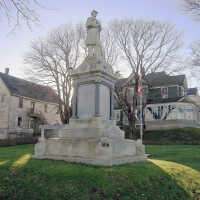
Lubec Civil War Monument | Main Street, Lubec, Maine
Lubec Town/County: Lubec/Washington Location: Main and Pleasant Streets Type: Soldier Materials: Quincy granite, Black Beaver Lake granite Date Erected: 1904 Date Dedicated: September 19, 1904 Maker/Sculptor: Source of Funding: Public subscription through the Lubec Monument Association Principal inscriptions: North side: 1904/Lubec/To Her Loyal Sons Who On Land And Water/1861-Imperiled Their Lives For The Union-1865 East side (base):William H. Brawn Post/No. 138 GAR East side (shaft): Gettysburg/Petersburg South side (shaft): Rappahannock Station/Fort Fisher West side (base): On Fames Eternal Camping Ground/Their Silent Tents Are Spread/And Glory Guards With Solemn Bond/The Bivouac Of The Dead West side (shaft): Maries Heights/New Orleans References: Bangor Daily News, September 20, 1904, September 21, 1904; Bangor Daily Commercial, September 21, 1904
Machias Civil War Monument | 92 Court Street, Machias, Maine | In front of Porter Memorial Library
Machias Town/County: Machias/Washington Location: Court Street Type: Soldier Materials: Granite Date Erected: 1886 Date Dedicated: October 14, 1886 Maker/Sculptor: Hallowell Granite Company Source of Funding: $3,500 from the Ladies Monument Society assisted by public subscription Principal inscriptions: Erected To The Memory Of The/Soldiers And Sailors/Of Machias/Whose Lives Were Given For/Liberty And Their Country/1861-1865 References: Machias Union, June 1, 1886; June 15, 1886; October 12, 1886; October 19, 1886; Machias Republican, October 9, 1886; October 16, 1886
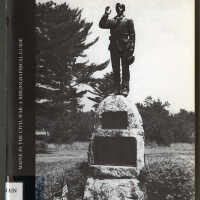
Memorial Park | Main Street, Calais, Maine | Calais Residential Historic District
Built:c. 1891 Address: Main Street Calais, Maine National Register HISTORIC DISTRICT National Register of Historic Places Continuation Sheet CALAIS RESIDENTIAL HISTORIC DISTRICT Section number 7, Page 11: 15. Memorial Park, c. 1891 - C Main Street City Park is a square area of about two acres bounded by Main, Germaine, Peace, and Lafayette Streets. Its level grass surface is punctuated by a variety of recently planted shade trees, and three structures: a Civil War monument, fountain, and reconstructed wooden bandstand. The mo'nument, erected is its most impressive ornament. Its sculpted and polished tripartite granite base supports a shaft of eight columns on which is mounted an infantryman with his rifle held crosswise to his body. This pose is an unusual one among Civil War monuments in Maine. Like the war memorial, the fountain is of polished dark granite, in this case featuring a shaft rising from the trough that is surmounted by a sphere. The hexagonal bandstand has an enclosed lower half above which are six posts linked by a balustrade and supporting a polygonal roof.
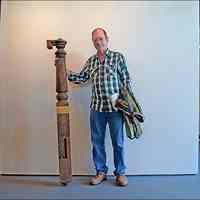
Newell Post, c.1855 | American Civil War U.S. Navy steam screw frigate, U.S.S. Wabash
Classification: Furniture Old Accession Number 2249 Description: Newell Post from Civil War ship, Wabash. The newell post came from the Civil War ship, Wabash, that was burned at Broad Cove, Eastport, Maine on June 26, 1913. Gift of Wayne Wilcox, Eastport, Maine. • From Eastport Sentinel, June 11, 1913, p.2: Battle ship Wabash to be Burned on Coney’s Beach. Following the fate of the old-time warships Vermont and Minnesota that were towed here from the Charlestown navy yard several years ago and burned to recover the copper and other metal contained in their oaken hulls, a sister ship of the Minnesota has now been brought here. The old wooden battleship, the U.S.S. Wabash, one of the few remaining specimens of the type of frigate that made America supreme on the seas, was towed out of Boston harbor last Thursday bound for Eastport. She arrived here Sunday forenoon in tow of the Lehigh Valley tug Perth Amboy and was grounded at extreme high water on Coney’s beach, Broad Cove, to be burned for her junk. The great rise and fall of the tide at this place, leaving the hulk high and dry on the beach during a part of each day, prompts the owners to bring these old craft way down here and incurring the expense of tonnage for some three hundred miles. The Wabash’s only passengers on her final voyage were “Indian Charlie,” steward on the vessel when it was a training ship, and Charlie’s dog Swea. The Wabash went out of commission at the Charlestown navy yard April 20, 1912, after having served as receiving ship there for 36 years. She was succeeded by the scout cruiser Salem.
Pembroke Civil War Monument | Pembroke, Maine
Pembroke, Maine Town/County: Pembroke/Washington Location: Not located (not erected?) Type: Soldier Materials: White metal Date Erected: (1889) Date Dedicated: Maker/Sculptor: Brainard Cushing of Rockland Source of Funding: Principal inscriptions: References: Mount Desert Herald, Bar Harbor, March 29, 1889
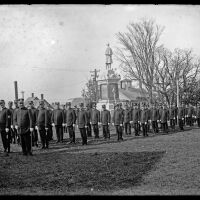
Photographer Once Known | Lubec, Maine Glass Plate Negative, Number 19
Lubec Civil War monument, Main Street, Lubec, Maine. Gift from the Estate of Sheila Fernald Malloch, 2022.
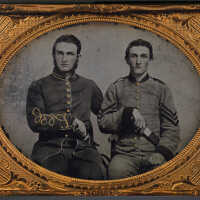
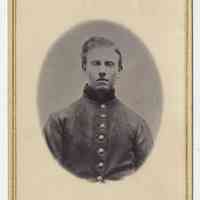
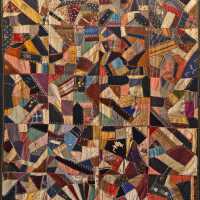
Sarah Preble Livermore (1867-1961) | Crazy Quilt | Eastport, Maine | c.1890s
Gift from estate of Frances Whalen Strout, 2020. From Anna Whalen House, 7 Key Street, Eastport, Maine. A late 19th century “crazy quilt” from this region that came into our collections in 2020.. It dates to the 1890s and had come down through the Livermore and Whalen families of Eastport, Maine before it was donated to us by descendants of the family. The quilt measures 63” high and 51” inches wide and includes a piece that has a large cursive “L” with the numbers 84 and 94 on either side of the letter as well as a piece that is a ribbon for the 13th reunion of the 1st Maine Cavalry of the American Civil War. Crazy quilts hit their heyday in the 1880s to early 1890s, putting this quilt in the middle of the craze. They were usually dated, as were needle point samplers, with the dates of their completion so this quilt may have been a 10 year project, begun in 1884 and finished in 1894. The quilt most likely was made by Sarah Preble Livermore who was born in 1867 and would have been 17 when she started the quilt. The large cursive “L’ stands for Livermore and Sarah’s last name would have still been Livermore until 1892 when she married Leveret Whalen and took the Whalen last name. In addition, Sarah’s mother, Ellen Bucknam Livermore, wrote poems to Sarah about gifts she was giving her, including sewing needles. Sarah clearly took an interest in the crafts of the time as she also did some china painting as well. As for the 1st Maine Cavalry ribbon, one of Sarah’s uncles was Brevet Brigadier General Charles H. Smith, who had married Mary Livermore, and was an honored veteran of the American Civil War, having been awarded the Medal of Honor for his heroism. He entered the Civil War as a captain in the 1st Maine Cavalry regiment and later took command of the regiment. Sarah Preble Livermore Whalen Hayes (1867-1961) married Leverett Mitchell Whalen (1850-1912) in 1892 and then George Hume Hayes (1851-1935) after Leverett died. At the time the quilt was made, Sarah would have been living in the large 7 Key Street house in Eastport that had been in the Whalen family for generations. It stayed in this house after Sarah’s death as the house and quilt were inherited by Sarah’s daughter, Anna K. Whalen (1894-1986) who continued to live in the house until her death. Anna had no children and when she died, the house, quilt and other household furnishings were inherited by Anna’s niece, Frances Whalen Strout (1933-2020). Frances sold the house and moved the quilt and most of the household furnishings to her ranch style home with attached garage in Brewer, Maine. She converted her garage into a 19th century parlor room filled with the furnishings from her aunt’s Eastport house including the quilt. Frances had no children and when she died the quilt along with many with many other of the family furnishing were placed with the Tides Institute in 2020.


Ship Desk, c.1855 | American Civil War U.S. Navy steam screw frigate, U.S.S. Wabash
Classification: Furniture Circa: 1860 Old Accession Number: 2215 Description: From the U.S.S. Wabash. Gift of Ruth McInnis, Eastport, Maine in memory of her son, Bruce McInnis. The Civil War Ship, The Wabash, was burned at Broad Cove, Eastport, Maine on June 26, 1913.
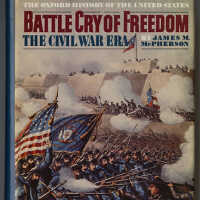
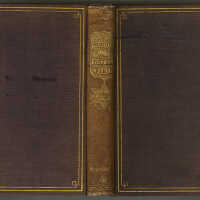
The Bivouac and the Battle-Field; or, Campaign Sketches in Virginia and Maryland. | George F. Noyes, Captain U.S. Volunteers
George F. Noyes was from Eastport, Maine. The Civil War.
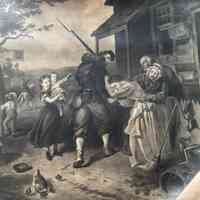
The Departure | American Civil War | P.O. Vickery, Augusta, Maine | 1868
The piece is by F.O.C. Darley (Felix Octavius Carr Darley), well known illustrator and artist. Printed by P.O. Vickery of Augusta, Maine--a prolific printer from that period. The engraver, I believe, is William W. Rice and it's dated 1868. Measures approximately 22" X 26.5"
The Soldier in Our Civil War
Gift of Jeanne and Robert Peacock, Eastport, Maine, 2024.

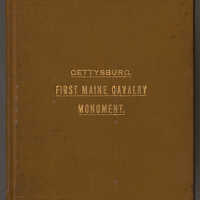
Unveiling of Monument to the First Maine Cavalry at Gettysburg, Oct. 3D, 1889
To the Survivors and Friends of the First Maine Cavalry, Heroic! Invincible! Immortal! This Historical Souvenir is gratefully Dedicated to General Charles H. Smith. Inscribed inside front cover: Augusta M. Bibber from Gen. C.H. Smith, 1889. The Civil War.